Ex-Bose Product Manager's Sleep Earbuds Raise Over $200K on Kickstarter in 2 Days
Campaign Teardown · · PledgeRadar Editorial
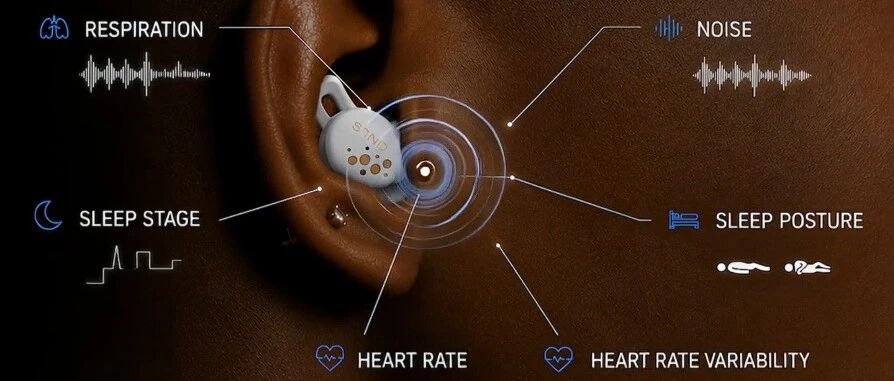
SOND DreamBuds are 12-signal closed-loop sleep earbuds designed to actively adjust audio intervention during sleep. Unlike devices that provide post-sleep data, DreamBuds collect 12 physiological signals—including heart rate variability, respiratory rate, sleep stages, body position, and cardiogram—in real time, using a cloud-based AI sleep coach to dynamically adapt audio solutions. They are intended for users seeking proactive sleep optimization and intervention for sleep disorders. The DreamBuds officially launched on Kickstarter on May 28, 2026, coinciding with SOND emerging from stealth mode. Within just two days of launch, the campaign secured over $200,000 from hundreds of backers. SOND had previously offered a $1 early reservation channel, garnering significant interest. Mass production is targeted for Q2 2026. While public information indicates an overseas project initiator with no prior delivery history (only two past support records), the project team's background is notably strong, likely appealing to many backers.
Key Product Features and Design
The 12-signal closed-loop system differentiates DreamBuds from mainstream sleep trackers like Oura Ring and Apple Watch, which primarily record and analyze data post-sleep. DreamBuds' core innovation lies in its real-time sensing and immediate intervention. It simultaneously collects 12 physiological signals—including respiratory rate, heart rate variability, cardiopulmonary coupling, sleep stages, body position, snoring detection, and cardiogram. Based on this data, the AI system generates and adjusts audio intervention content in real time throughout the night, rather than processing data only in the morning. The stability of the 12-sensor array signals during extended in-ear wear and the synchronization accuracy between signals are fundamental engineering variables determining the precision of the AI's intervention timing.
The DreamBuds charging case integrates Wi-Fi, Bluetooth, an OLED display, physical buttons, and a speaker, allowing the entire system to manage sleep audio and AI interaction independently, without requiring a smartphone. This eliminates the mandatory reliance on a phone for users who prefer not to keep one by their bed. Placing core computing and communication functions in the charging case rather than the earbuds themselves is a reasonable engineering trade-off, reducing the earbuds' size, weight, and battery burden for enhanced comfort during extended night wear. The stability of the charging case's Wi-Fi and data transmission in a home network environment, along with the compliance of cloud-based user privacy data processing, represent important trust thresholds for broader user adoption.
A cloud-based AI sleep coach continuously analyzes historical sleep data and real-time signals to select or instantly generate audio content from over 500 proprietary sleep audio solutions, matching the user's current state. The AI coach employs a passive response design, never initiating conversation; users must double-tap an earbud to trigger voice interaction, preventing sudden awakenings during deep sleep. This interaction design detail reflects the team's understanding of the unique sensitivities of sleep intervention scenarios. The actual intervention effectiveness of the AI audio solutions is currently supported by SOND's self-conducted comfort studies and Beta test data, with independent third-party randomized controlled trial data not yet publicly available.
The earbud sensor array features an outward-facing, artistic pattern rather than a traditional hidden design, creating a distinctive visual identity. Equipped with wideband drivers, the product supports high-fidelity audio playback, allowing it to switch between sleep audio and daily music listening. Designing the external sensors as a visual feature, rather than concealing them, is a deliberate brand design decision. The pressure distribution and ear canal comfort during prolonged side-sleeping will directly determine a user's ability to consistently use the product—a core user experience challenge common to all in-ear sleep devices.
Team Background and Funding
SOND, a sleep technology startup based in Boston, Massachusetts, was co-founded by two MIT graduates. CEO Yadid Ayzenberg previously served as Bose's Global Head of Sleep Products, leading the development of the Bose Sleepbuds series. Co-founder Amir Lazarovich was formerly a Senior Software Engineering Manager at Google. The company officially emerged from stealth on May 28, 2026, simultaneously announcing the completion of $7 million in funding. Investors include MIT-affiliated E14 Fund, Crosslink Capital, Ubiquity Ventures, Alumni Ventures, Meach Cove Capital, and Boston Scientific co-founder John Abele. This combination of funding background and founder resumes is notably rare among sleep earbud crowdfunding projects, serving as a significant credibility booster. However, achieving over $1 million in funding will depend on marketing investment and sustained momentum.
Market Landscape and Competitive Positioning
Sleep technology is a rapidly growing health consumer category. The global sleep technology devices market was valued at approximately $24.85 billion in 2024 and is projected to grow at a high CAGR of about 18.5% to reach approximately $134.6 billion by 2034. Focusing on the sleep earbud sub-segment, the market is estimated to be worth $1.5 billion to $3.2 billion in 2025, with stable growth projected at a CAGR of 10% to 12%. Earbud form factors are expected to account for about 67% of the market share in 2025, making them the fastest-growing product type. Growth drivers include the expanding global population affected by sleep disorders (estimated to impact 2 billion people), mainstreaming sleep health awareness, and the rapid penetration of AI technology into health devices.
In terms of the competitive landscape, Bose Sleepbuds were pioneers in the sleep earbud category, but their product was positioned purely for passive noise masking and was discontinued in 2022, leaving a clear market void. Ozlo Sleepbuds currently hold the highest recognition in the premium sleep earbud market, emphasizing ultra-small size and long battery life, with a focus on comfortable wear rather than active intervention. Anker Soundcore Sleep A30 targets the mid-range market with AI noise cancellation and app integration. QuietOn focuses on passive noise reduction without audio functions. The existing market is almost entirely limited to noise masking and post-sleep data review. No product currently collects real-time physiological signals during sleep to actively adjust audio intervention. In this regard, DreamBuds is a true category creator, not merely a competitor. Consumer willingness to purchase and price acceptance for sleep intervention, rather than just sleep tracking, have not yet been validated on a large scale. The $449 early bird price positions DreamBuds clearly in the premium segment of the sleep earbud market, and its $650 retail price will require sufficiently convincing proof of efficacy to be sustainable.
Sleep intervention devices represent the next evolutionary direction after sleep tracking. SOND DreamBuds, with its technological depth and team background, possesses the conditions to become a category definer. Its true success will hinge on whether its real-time intervention effects can be supported by independent clinical data, convincing users that the product improves not just sleep data, but their genuine mental state the following morning.
No existing product actively adjusts audio intervention based on real-time physiological signals during sleep. DreamBuds is a true category creator.