G·GRIP Pro: Smart Golf Club's Kickstarter Campaign Underperforms Despite Tech Accolades
Campaign Teardown · · PledgeRadar Editorial
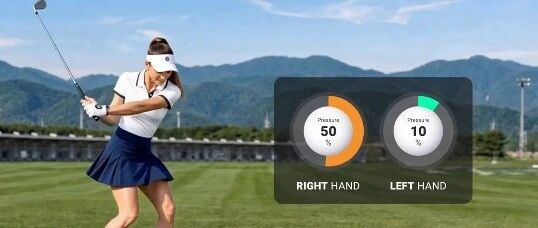
The G·GRIP Pro is a smart 7-iron developed by South Korean company SGLAB. It incorporates pressure sensors within the grip, along with motion sensors and Edge AI, to directly measure changes in hand grip pressure, swing path, clubface angle, and tempo. This data is then compiled into actionable training feedback, targeting amateur golfers and coaches who aim to quantify their swing mechanics.
G·GRIP Pro: An Innovative Smart Golf Club
The G·GRIP Pro officially launched on Kickstarter on October 6, 2026, and concluded its campaign on November 15. Despite its innovative features, the project had a slow start, raising less than $50,000 within its first two days.
Prior to its crowdfunding launch, G·GRIP had already received significant industry recognition, including two CES 2025 Innovation Awards in the Fitness and Sports & Fitness categories, followed by another CES Innovation Award in 2026. The brand also showcased the product at major events such as the PGA Show and VivaTech. This suggests that the Kickstarter campaign was positioned as a final step towards formal commercialization, rather than the product's initial public introduction.
SGLAB's marketing strategy deliberately avoided positioning the G·GRIP Pro as merely another launch monitor. Instead, they consistently highlighted a specific pain point for golfers: knowing a shot went wrong, but lacking insight into *when* grip pressure was too tight, if hand balance was off, or how these factors impacted the clubface and swing path. This approach focused on diagnosing the root cause, which is often more intuitive than simply presenting additional swing parameters.
Key Product Features
**Grip Pressure Measurement: From Feel to Data Curve**
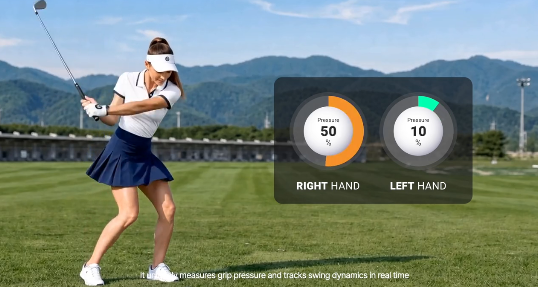
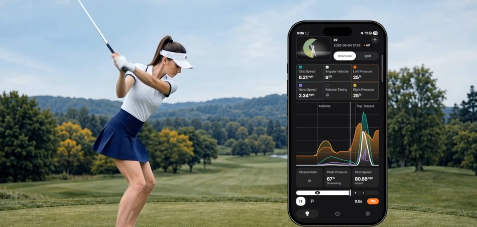
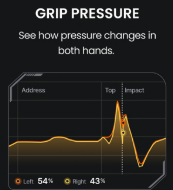
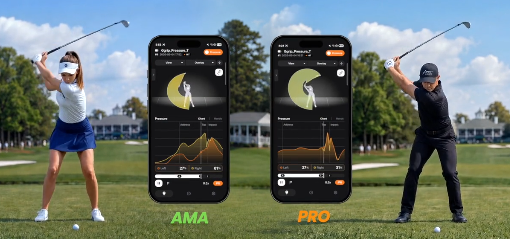
The most distinctive feature of the G·GRIP Pro is its pressure sensors directly embedded within the grip. These sensors record the pressure changes exerted by both hands and individual fingers throughout the entire swing, which are then visualized as detailed pressure maps within the accompanying app.
This functionality offers genuine training value, given that grip pressure significantly influences wrist release, tempo, and clubface control. Being integrated into the grip, it provides data closer to the source than external wristbands or cameras. However, it's crucial to note that attributing a mishit solely to grip pressure changes based on correlation can be misleading, as optimal grip patterns vary among golfers. Consequently, this feature is best utilized as a long-term personal comparison tool rather than a universal guide for a 'correct' pressure.
**Pressure + Motion Sensor Fusion: Beyond Hand Movement to Club Path**
The club's internal motion sensors synchronously record data points like Swing Path, Face Angle, and Tempo. These are then analyzed in conjunction with Grip Pressure, a system the company terms 'Grip Intelligence.'
This integrated design offers greater analytical potential than isolated grip pressure measurement. The product's ability to truly explain causes hinges on consistently correlating specific hand pressure applications with clubface closure and path changes. It's important to note, however, that these clubface and trajectory data points are derived from the club's internal IMU calculations, not direct measurements from high-speed cameras or radar. Consequently, their absolute accuracy would benefit from third-party verification against established systems like TrackMan or high-frame-rate motion capture.
**3D Swing Visualization: Reconstructing Individual Club Trajectories**
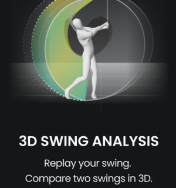
The G·GRIP Pro can generate 3D swing trajectories using its built-in motion sensors, enabling users to visualize club movement from multiple perspectives.
This feature is better suited for comparing subtle differences between a golfer's current and previous swings, rather than providing a complete reconstruction of human biomechanics. As the system lacks cameras or body sensors, changes in shoulder, hip, knee, and center of gravity are not directly captured. Essentially, it offers excellent club analysis but cannot substitute for a full 3D human swing analysis system.
**SwingDNA: Turning Your Best Shot into a Training Template**
The system stores personal historical swing data, allowing users to designate a consistent or ideal swing as a reference template. Golfers can then repeatedly compare their grip pressure, tempo, and trajectory changes against this benchmark. The brand refers to this personalized model as 'Swing DNA.'
This approach is arguably more practical than directly comparing amateur golfers to professional player data. Given the inherent individual differences in golf swings, focusing on improving one's own swing consistency is often a more realistic goal. A critical prerequisite, however, is that the sensor data collection remains consistently stable; otherwise, any perceived differences might simply be measurement errors.
**Vibration + Headphone Instant Feedback: No Need to Constantly Check Your Phone**
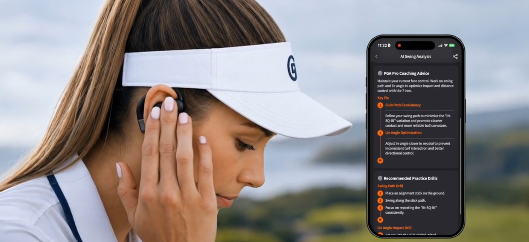
The club supports haptic vibration feedback and can also deliver audio cues through headphones, enabling users to receive immediate alerts during practice if their current grip pressure or movement deviates from a predefined range.
This feature offers greater practical utility on the driving range than aesthetically pleasing data graphs, as golfers primarily need to establish a kinesthetic memory linking feel to data. However, real-time feedback must not be overly complex, as it risks disrupting the swing rhythm. The ultimate effectiveness of this function will largely depend on SGLAB's ability to distill numerous data points into one or two genuinely actionable signals for immediate correction.
**Authentic Club Form: Integrated Data Collection Without External Devices**
Crucially, the G·GRIP Pro is not an add-on sensor for an existing club; it is a complete, integrated club. SGLAB emphasizes that its weight and balance are engineered to replicate the feel of a standard golf club, while also featuring IP68 water resistance, wireless charging, and approximately 8 hours of battery life.
This integrated design eliminates the issue of external sensors altering grip feel and streamlines the setup process for each training session. However, its limitations are equally clear: the data collected is specific to this G·GRIP club and may not perfectly translate to the swing dynamics of a golfer's entire set. SGLAB's ongoing development of a 'Regrip' smart grip for its next generation implicitly acknowledges that expanding data collection to users' existing clubs will be a critical challenge for future commercialization.
Company Background and Crowdfunding Strategy
SG LAB Inc., the company behind the G·GRIP Pro, is headquartered in Seoul, South Korea, with an additional studio in Jeju. Founder and CEO Eddie Cho is a former PGA professional, and official company information states he possesses approximately 25 years of experience in golf instruction and the industry. The company initiated its research and development into smart clubs and pressure-sensing technology around 2016.
The product's core technology leverages SGLAB's proprietary nanomaterial pressure sensing, integrated with high-frequency motion sensors and AI algorithms. The company has secured ISO9001 and ISO14001 certifications, and the product consistently earned CES Innovation Awards in both 2025 and 2026.
From a crowdfunding fulfillment perspective, however, the G·GRIP Pro represents SGLAB's inaugural large-scale sales effort to a global audience on Kickstarter. While the company possesses a strong track record of R&D and industry showcases, there are no prior Kickstarter delivery achievements to serve as a direct reference for backers.
Market Landscape and Competitive Positioning
Estimates for the global Golf Swing Analyzer market vary significantly among research institutions. QY Research, for instance, projects the market to be approximately $624 million in 2025, growing to $650 million in 2026, and an estimated $813 million by 2032, representing a compound annual growth rate (CAGR) of about 3.8%. This growth is largely driven by an increasing number of amateur golfers adopting sensors and AI to quantify their practice sessions.
The existing competitive landscape for golf swing analyzers is quite mature. Products like BlastGolf, priced at $149.95, attach directly to the grip end and measure parameters such as speed, tempo, and face rotation. The Hack Motion Core, currently around $275, specializes in wrist movement analysis and includes a 'Virtual Coach.' At a higher tier, launch monitors like the Garmin Approach R10 primarily focus on output metrics such as ball speed, clubhead speed, carry distance, and shot trajectory.
The G·GRIP Pro's unique differentiation positions it squarely between these existing solutions. It neither primarily measures ball flight outcomes nor relies on wrist-worn sensors. Instead, its core focus is on directly analyzing the intricate interaction between the golfer's hands and the club.
This approach holds significant promise, as grip pressure has long been recognized as a crucial, yet historically difficult-to-quantify, variable in golf instruction. However, the market risk is equally direct: if the grip pressure data fails to consistently correlate with actual shot performance issues, users may ultimately perceive it as merely a novel set of curves with limited practical training value.
The true validation for the G·GRIP Pro lies not just in its ability to measure individual finger pressure, but in whether these grip pressure variations can consistently explain changes in clubface and swing path, ultimately guiding golfers on precise adjustments for their next shot.
The G·GRIP Pro's true test is whether grip pressure variations can consistently explain changes in clubface and swing path, guiding golfers on precise adjustments.