Gweike MCore Dual-Laser Desktop System Hits $2M on Kickstarter in 3 Days
Campaign Teardown · · PledgeRadar Editorial
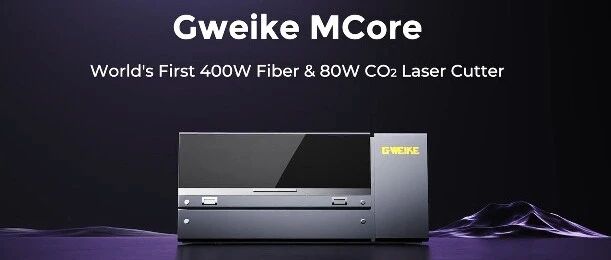
The Gweike MCore is a desktop dual-source laser processing platform from Jinan Gweike Laser, integrating an industrial-grade 400W fiber laser for metal cutting and an 80W CO₂ laser for non-metal processing into a single desktop unit. This enables it to cut 5mm carbon steel, 20mm non-metals, and engrave all materials, targeting small manufacturing studios, independent creators, jewelry makers, and rapid prototyping teams. Launched on Kickstarter on May 26, 2026, the MCore surpassed $2 million in funding within three days. This marks Gweike's second significant crowdfunding campaign on the platform, following its previous MSeries 6-in-1 laser device, which raised $3.4 million in May 2025 with an average pledge of approximately $9,250, making it one of the highest-funded desktop laser projects. This prior success provided strong credibility for the MCore's launch. MakeMagazine published a positive review on the launch day, praising its product positioning and technical specifications.
Dual-Source Laser System for Metal and Non-Metal Processing
The MCore's primary differentiator is its integration of two entirely independent laser systems into a single desktop unit: a 400W fiber laser for metal processing, capable of cutting through 5mm carbon steel or 3mm stainless steel in a single pass, and compatible with brass, copper, aluminum alloys, and titanium alloys. An 80W CO₂ laser handles non-metal processing, achieving cutting depths of up to 20mm in wood or acrylic.
Traditionally, small studios requiring both metal and non-metal processing capabilities would need to acquire at least two separate machines, each with its own exhaust, air lines, and workbench. The MCore consolidates these processes into one device and a single workflow, saving not only procurement costs but also the time spent switching equipment and recalibrating parameters between tasks. The optical path precision and switching reliability of the two light sources on a shared work surface are critical validation points for the product's long-term stability.
Smart Conveyor System for Large-Format Continuous Processing
The MCore features a smart conveyor belt system that supports continuous processing of long materials exceeding the workbench dimensions. Materials are fed from one end and advanced axially in segments, theoretically allowing for the processing of boards or tubes of any length. This offers a substantial boost in production efficiency for studios that need to process long metal profiles, large-format wood panels, or engage in batch production.
The stepping accuracy of the conveyor belt and its feeding stability across different material thicknesses directly impact the precision of jointing after segmented processing, making these critical engineering variables for achieving precise workpieces.
16MP HD Camera Vision Positioning & One-Key Electric Height Adjustment
The machine incorporates a built-in 16MP industrial camera, enabling precise material positioning through visual recognition. This works in conjunction with a one-key electric height adjustment function that automatically matches the optimal focal length for workpieces of varying thicknesses.
The visual positioning system reduces the time users spend on manual measurements and repeated test cuts, significantly improving efficiency for repetitive batch processing scenarios. Key variables affecting the long-term reliability of visual positioning include distortion control and calibration accuracy of the camera in high-brightness metal cutting environments, as well as lens cleaning and maintenance after extended use.
Industrial-Grade Air Compressor for Clean Edges
Gweike also introduced a complementary all-in-one industrial air compressor (1.2MPa/220V), featuring an oil-free compressor, dryer, and multi-stage filtration. This system continuously blows away molten metal when cutting carbon steel up to 4mm thick, preventing slag reflux and achieving clean cut edges with a surface roughness of ≤3.2μm, effectively eliminating the need for secondary grinding.
Gas-assisted cutting is a necessary process for achieving smooth cut surfaces in metal laser cutting, often simplified or omitted in consumer-grade equipment. Integrating an industrial-standard air line solution into a complete product suite is a key part of the MCore's strategy to bring industrial quality to the desktop, though it also means users will need to allocate additional budget and installation space for this air system.
Rotary Axis Attachment & All-Material Engraving Compatibility
The MCore supports a dedicated rotary axis attachment, enabling circumferential engraving on cylindrical or irregularly shaped workpieces, suitable for custom processing of items like rings, cups, and metal tubes.
Its all-material engraving mode is compatible with mainstream materials such as metal, wood, leather, and ceramics, further expanding the single device's operational scope. The synchronization accuracy between the rotary axis attachment and the main unit, along with the ease of changing attachments, are experience details that will influence actual user frequency.
Company Background: Gweike Laser
Founded in 2004 and headquartered in Jinan High-tech Zone, Shandong, Gweike Laser is one of China's earliest manufacturers to mass-produce laser cutting machines, having exported five units to the US in 2004. The company currently operates three production bases, covering over 100 acres, with a historical annual CO₂ laser equipment production capacity of 4,000 units. Gweike has secured approximately $14.85 million to $15.3 million in cumulative funding through multiple equity financing rounds, with investors including AddorCapital, Huize Equity Investment, Shandong LanHai Venture Capital, and Jinan Financial Holding Group. Its consumer-focused sub-brand, Gweike eCloud, began independent operations in 2021, establishing an after-sales service network in over 150 countries globally, including an East Coast warehouse and return service center in the United States.
Global Market Analysis
The global desktop laser engraver market was valued at approximately $1.15 billion to $2.18 billion in 2024 (with significant variations across research institutions) and is projected to grow at a CAGR of about 9.7% to 11.2%, reaching $3 billion to $5.1 billion by 2033. This growth is driven by the increasing penetration of maker culture, expanding demand for personalized custom goods in small and medium-scale laser processing markets, and falling laser equipment prices that encourage more users to shift from outsourced processing to in-house capabilities. Technologically, hybrid (CO₂ + fiber) desktop devices represent a major innovation direction, offering a return on investment significantly higher than single-material solutions, which aligns perfectly with the MCore's product positioning.
In terms of competitive landscape, the consumer-grade desktop laser equipment market has shown a clear trend towards mainstream brand concentration in recent years. The xTool F2 Ultra (60W MOPA + 40W diode, $3,499) and Gweike Cloud G3 (60W MOPA + 40W diode) are currently among the most competitive dual-source desktop devices, but neither can cut 5mm metal. Glowforge primarily focuses on CO₂ single-source lasers, with its user base concentrated in wood and leather crafts. Professional brands like Epilog and Trotec target the enterprise market, with price points in the tens of thousands of dollars.
The MCore differentiates itself by genuinely offering industrial-thickness metal cutting. Its 5mm carbon steel cutting capability has virtually no mature direct competitors in existing consumer-grade desktop laser equipment, allowing it to bridge the long-standing gap between hobbyist and industrial-grade machines and directly target small manufacturing studios and jewelry processors with real metal processing needs. The primary market risk lies in the significantly higher safety requirements associated with metal cutting (mandatory air lines, fire prevention, smoke management) compared to ordinary laser engraving, which inevitably narrows the target user base. Additionally, the maintenance of the 400W fiber system and the lifespan of the laser tube represent ongoing operational costs after frequent use, requiring users to have a clear estimate of the total cost of ownership before purchase.
Integrating industrial-grade metal cutting capabilities into a desktop device is a genuinely innovative direction with significant technical barriers.