immurokIK-1: Wireless Fingerprint Key Secures $300K in 2 Weeks on Kickstarter
Campaign Teardown · · PledgeRadar Editorial
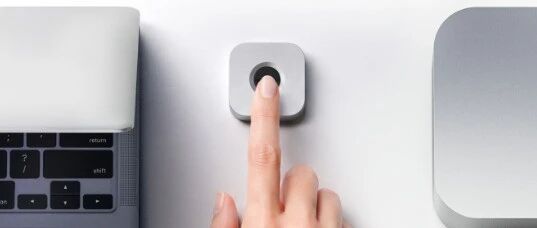
The immurokIK-1 is a wireless fingerprint authentication key designed for Mac, Windows, and Linux desktop users. It enables computer unlocking, sudo authorization, SSH/Git signing, and TOTP and API key release through on-device fingerprint recognition, Bluetooth LE encrypted communication, and local key storage. Its target audience clearly leans towards developers, Linux users, and those who work across multiple desktop computers.
Campaign Launch and Early Reception
The immurok launched on Kickstarter on August 18, 2026, securing nearly $300,000 in two weeks. Its sub-$70 price point was a significant factor in its rapid spread. An analysis of its crowdfunding user structure from Kickstarter community data shows over 1,400 backers from the United States, with the UK, Germany, Australia, and Japan following closely. Approximately 80% of these backers are repeat Kickstarter users who have previously supported other projects. This demographic generally has a high acceptance of niche hardware, developer tools, and open-source devices, aligning well with immurok's target audience. In terms of marketing, the team avoided the serious tone typical of traditional security hardware companies. Instead, they focused on the specific problem of Mac mini, Mac Studio, closed-lid MacBook, mechanical keyboard, and Linux desktop users lacking convenient fingerprint access. This, combined with an initial launch price of $50, publicly available GitHub source code, and a new scenario where AI Agents require human approval for high-privilege operations, made the product easily understandable to developers.
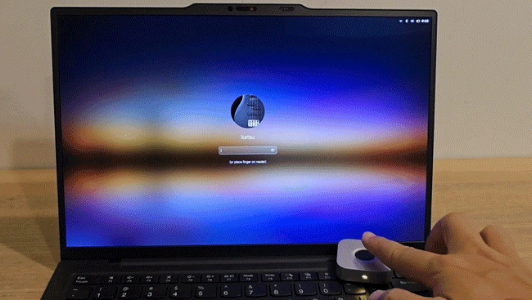
Android Guys conducted approximately two weeks of practical use with the Linux version, acknowledging its ability to provide sudo fingerprint authorization via PAM, local SSH key storage, and overall hardware quality. However, they also noted that Linux configuration still requires command-line installation, lacks direct integration with native GNOME/KDE fingerprint interfaces, and the entire experience relies on Bluetooth. A larger question in community discussions centered on whether a third-party fingerprint device could obtain such high system privileges, which is precisely what immurok needs to prove most.
Early Development Challenges and Security Disclosures
The project team has also openly disclosed real development risks. In late August, the brand revealed that 15 out of 50 pre-production units experienced failures, a 30% defect rate. This was ultimately traced to two extra capacitors placed around the crystal oscillator on an older PCB version, a problem resolved after design correction and increased factory self-inspection. On September 6, the team publicly admitted a security vulnerability in the old PAM local socket, where a malicious process under the same user privileges could theoretically forge an "OK" response, thereby bypassing fingerprint authentication to gain sudo privileges. Linux 0.6.0 and Windows 0.5.0 have since incorporated new privilege isolation and caller verification, and macOS hardening solutions have been merged. However, the team still publicly lists two authorization boundary issues that have not been fully resolved. For security hardware, this transparent approach to fixing vulnerabilities is a positive sign, but it also indicates that the software security model is still in a rapid iteration phase.
Product Core Features
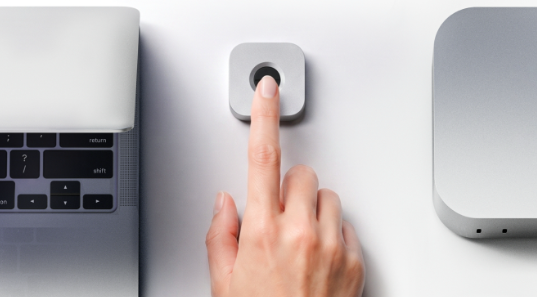
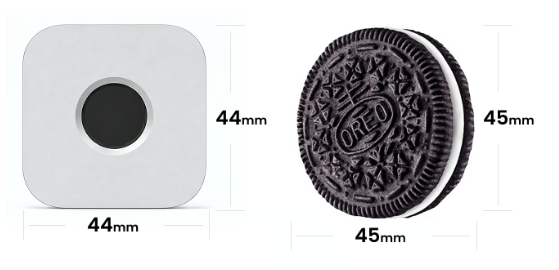
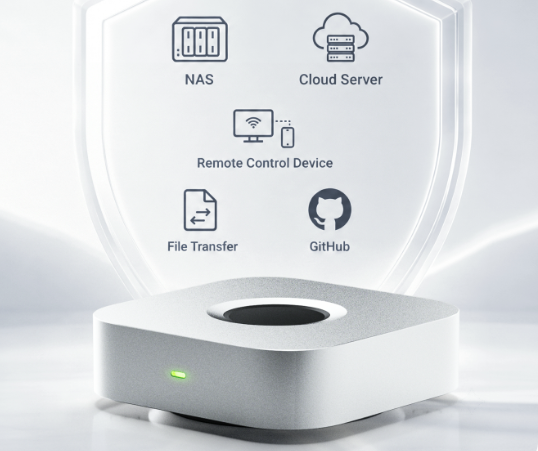
immurok offers wireless biometrics for three systems, providing one button for desktop authentication. The immurok connects via Bluetooth LE, supporting macOS 13 and above, Windows 10/11, and major Linux distributions such as Ubuntu, Fedora, Arch, and Debian. Measuring approximately 44×44×14.2mm and weighing about 40g, it doesn't require a permanent USB connection and can be conveniently placed next to a mechanical keyboard, Mac mini, or workstation.
The device aims to address the fragmentation of desktop biometrics. Apple offers Touch ID, but standalone Touch ID is currently largely tied to Apple's own keyboards. While USB fingerprint solutions exist for Windows and Linux, few simultaneously offer wireless connectivity, cross-platform compatibility, and developer privilege control.
It's crucial to distinguish between fingerprint unlocking and Apple's Touch ID. The immurok does not operate within Apple's Secure Enclave ecosystem. Particularly in macOS lock screen scenarios, because Apple does not open its biometric interfaces to third parties, immurok actually stores the Mac login password in the system Keychain. After successful fingerprint verification, it then simulates keyboard input of the password. While the functional experience is similar, the underlying security mechanisms are entirely different.
Fingerprints remain entirely on the device, with the computer only receiving verification confirmation. The device utilizes an R559S capacitive fingerprint module, with fingerprint template storage and matching performed entirely within the sensor. The CH592F main controller itself does not read raw fingerprint images, and the computer does not store fingerprint templates.
During the initial pairing between the device and a computer, a shared key is established via ECDHP-256. Subsequent authentication notifications are verified using HMAC-SHA256. Therefore, what is transmitted over Bluetooth is the verified result of a successful finger match, not the fingerprint data itself.
This architecture emphasizes local isolation more than typical USB fingerprint scanners that send data to the computer for matching. However, it still cannot be equated with Apple's Touch ID system, which features deep hardware integration between the sensor and the Secure Enclave.
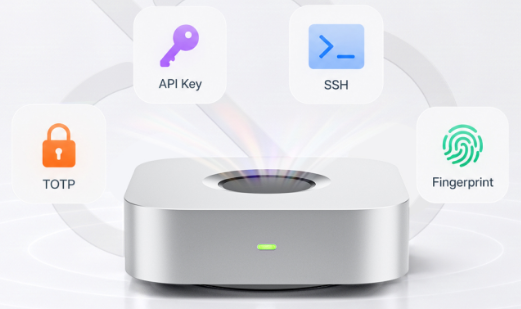
The immurok also functions as a hardware vault, storing 32 SSH keys, 128 TOTP secrets, and 50 API keys. The immurok can store up to 5 fingerprints, 32 SSH keys, 128 TOTP secrets, and 50 API keys. SSH private keys are generated and signed directly within the device, theoretically never leaving the hardware. TOTP and API secrets are also stored on the device and require fingerprint confirmation before release, setting it apart from ordinary fingerprint readers.
While inexpensive USB fingerprint modules can unlock a computer for a few tens of dollars, immurok aims to occupy the layer of local identity combined with developer keys. Especially for engineers who daily SSH into servers, sign Git commits, and frequently use sudo, a single fingerprint can replace numerous repetitive inputs.
It offers developer workflow integration for sudo, SSH, and Git. On Linux and macOS, immurok can integrate with PAM to handle sudo authorization. The SSH Agent forwards signing requests to the hardware, where the private key within the device completes the ECDSA signature.
Consequently, when users execute sudo, log into a server, or sign a Git commit, they can convert the action of entering a password or reading a private key into a single physical fingerprint confirmation.
This is arguably immurok's most valuable product differentiator. While YubiKey excels at website and enterprise identity authentication, and Apple Touch ID specializes in native operating system authentication, immurok integrates a wide range of developer terminal workflows.
A new feature is the AI Agent fingerprint gate, where high-privilege commands require human approval. This represents a relatively new use case within the project: coding agents like Claude Code, Cursor, and Codex increasingly need to execute `git push`, `sudo` commands, or read API keys. immurok provides an `imkrun --agent` mechanism where, when an agent is about to perform a high-privilege operation, the system displays the full original command. Only after the user physically presses their fingerprint is the subprocess allowed to continue.
The value of this design lies not in the "AI" aspect itself, but in adding a genuine human confirmation point for automated agents. As the permissions of AI tools continue to expand, such "Physical Approval" could become a new use case for hardware authentication devices. The project's latest security log, disclosed on September 6, revealed that the device currently has a 10-second authorization cooldown that can be continuously extended by requests. Truly limiting how many secrets a single fingerprint can approve will require further implementation at the firmware level.
The device features an auto-clear function upon opening the casing, limiting device loss risk to the hardware itself. The device features an internal tamper switch. If the casing is opened, the firmware deletes pairing keys, the on-device KeyStore, Bluetooth bindings, and all fingerprint templates. The team even specifically designed a mechanism to continue erasure after power loss, preventing attackers from interrupting the process by cutting power.
For a device that simultaneously stores SSH, OTP, and API secrets, this feature is far more critical than a standard drop-resistant casing.
Its limitations are also clear: this is a protection against physical disassembly attacks and does not imply that the device meets financial-grade Secure Element standards or is a hardware security module with independent security certification.
The codebase is publicly auditable. The macOS, Windows, and Linux clients, including the PAM module, currently use the Apache 2.0 open-source license, and the code can be directly viewed on GitHub.
The hardware, firmware, and other core repositories, however, use BSL 1.1. This license allows viewing, modification, and research, but restricts the sale of competing hardware using this code until 2030, after which it is planned to automatically convert to Apache 2.0.
Therefore, the "Source Open" claim in the project title is valid, but describing it as fully open-source hardware would not be entirely accurate.
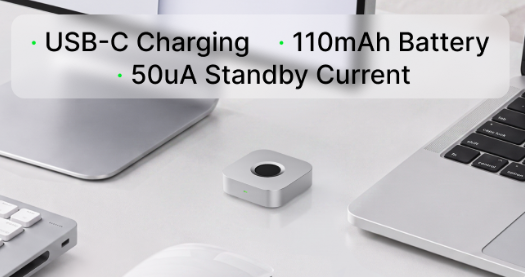
With 50µA standby current and a 110mAh battery, wireless authentication no longer becomes another charging burden. The device uses a 110mAh LiPo battery and Bluetooth LE. The official standby current is approximately 50µA, allowing for over a month of typical use, with a claimed maximum standby time of 60 days. It charges via USB-C. Fingerprint recognition time is stated to be under 500ms.
For an authentication device intended for long-term desktop use, these parameters are more practical than pursuing extreme performance. It must always be online when a user needs authorization, rather than requiring a weekly recharge.
Market Positioning and Competitive Landscape
The Kickstarter project creator is listed as SuperDog, based in Singapore. Information about the team is currently limited. Delivering thousands of security hardware units for the first time means their supply chain and after-sales capabilities still require real-world validation.
Recent data from Grand View Research projects the global consumer electronics biometrics market to grow from $8.2 billion in 2026 to $17.8 billion in 2030, with a compound annual growth rate of approximately 21.3% from 2025-2030. Fingerprint recognition alone accounted for over 40% of market revenue in 2024. This growth is primarily driven by the replacement of device passwords, enterprise identity authentication, remote work trends, and increasing consumer demand for passwordless experiences.
However, immurok is entering a market with existing competition. Apple's Magic Keyboard with Touch ID starts at $149, offering a true system-level Touch ID experience, but it is exclusively for Apple Silicon Macs and must be purchased as part of the entire keyboard.
immurok's pricing, between $59 and $69, falls at the lower end of this price range, but its product strategy is entirely different. Apple sells a native system experience, YubiKey sells FIDO identity authentication, and Kensington sells USB biometrics. In contrast, immurok offers wireless desktop fingerprint authentication combined with a local developer key vault. This also defines its greatest market risk: if a casual consumer merely wants to unlock Windows, numerous inexpensive USB fingerprint readers are available. If Mac users prioritize security levels, Touch ID remains the more native solution. For enterprises requiring a mature FIDO2 and hardware authentication system, Yubico already boasts years of deployment experience.
The niche market where immurok can truly establish itself comprises individuals who simultaneously use mechanical keyboards, Mac/Linux desktops, SSH, Git, sudo, and AI Coding Agents.
While this demographic may not be exceptionally large, the willingness of 3,700 people to pay for such a specific solution in less than three weeks indicates that it addresses a long-standing need that mainstream hardware manufacturers have not seriously tackled.
For security hardware, this transparent approach to fixing vulnerabilities is a positive sign, but it also indicates that the software security model is still in a rapid iteration phase.