Iris Green PICOAR HUD for Cyclists Raises Under $150K in First Two Weeks
Campaign Teardown · · PledgeRadar Editorial
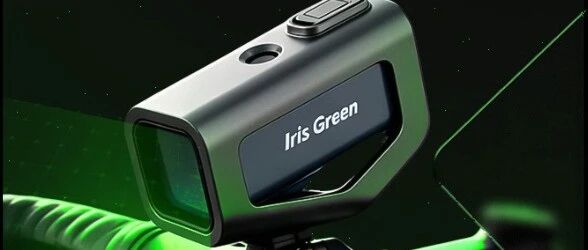
Iris Green, from Irisarworld, introduces what it claims is the world's first vehicle-mounted PICOAR head-up display (HUD) for cyclists. This innovative device projects essential riding data—such as navigation, speed, heart rate, and blind spot warnings—directly into the rider's forward view via a handlebar-mounted micro-projection module. Designed for road cycling, urban commuting, and daily safety, it eliminates the need for AR helmets or any wearable gear. Prior to its Kickstarter launch, Iris Green utilized a pre-order strategy, offering a $129 VIP early bird price with a $1.99 deposit on its official website, a tactic increasingly adopted by crowdfunding projects to gauge early interest. However, as Irisarworld's debut crowdfunding effort, the campaign appears to be struggling with marketing, lacks a history of product delivery, and its mass production capabilities remain unverified. Consequently, the project has secured less than $150,000 in its first two weeks online.
Key Product Features
Iris Green's primary differentiator is its 'no-wearable' approach. Unlike existing cycling AR solutions that rely on expensive AR glasses, often requiring specialized lenses and facing limitations in rain or strong backlight, Iris Green mounts a micro-projection module directly onto the handlebars. This projects information onto a transparent lens in the rider's line of sight, allowing them to see data without altering their existing gear or habits. A critical engineering challenge for this design is maintaining sufficient image brightness and readability in strong daylight, as combiner-based solutions typically have lower brightness ceilings than opaque AR glasses.
The device offers comprehensive cycling data, including real-time navigation prompts, current speed, heart rate, and rear-vehicle warnings. It connects via Bluetooth to cycling computers and smartphone apps, ensuring compatibility with popular ecosystems like Garmin and Wahoo. For riders, the safety benefit of having data in their direct line of sight, rather than frequently looking down at a bike computer or phone, is significant. The practical experience will depend on the projection's latency and stability, ensuring no jitter on bumpy roads, and the real-time synchronization of data from various sources.
Its non-wearable design means the device attaches directly to the handlebars, making it compatible with any helmet or cycling glasses. This broadens Iris Green's potential user base beyond the enthusiast segment willing to spend $400–$600 on dedicated AR glasses. Installation stability and vibration resistance are crucial, especially for gravel or mountain biking, and the long-term impact of vibrations on the optical system will require thorough real-world testing.
The early bird pricing of $129 positions Iris Green significantly below existing AR cycling glasses, which typically range from $300 (Engo2) to over $650 (Everysight Raptor). While this low price point effectively lowers the psychological barrier for new users, it also suggests potential cost constraints on hardware components like optical elements, projection brightness, and waterproof durability. These three aspects are critical for determining the product's value proposition at its $129 price.
Market Landscape and Competition
The smart bicycle accessories market is experiencing rapid growth, with an estimated global valuation of $1.66 billion in 2024, projected to reach $6.95 billion by 2034, at a compound annual growth rate (CAGR) of approximately 15%. Within this, the cycling computer market alone is expected to grow from $725 million in 2025 to $1.2 billion by 2035, driven by increasing urban cycling safety awareness, widespread adoption of GPS navigation, and the normalization of sports data tracking.
The cycling AR HUD segment is a niche with clear technological direction but has yet to achieve mainstream adoption. Key competitors include Garmin's Varia Rearview Radar, which dominates safety sensors but lacks HUD functionality. Everysight Raptor, an early commercial AR cycling glass, offered high performance but at a price exceeding $650; the company appears to be defunct, with products only available on the secondhand market. Engo2 is a more mainstream option at around $299, but requires proprietary lenses. Solos AirGo focuses on lightweight design and Bluetooth connectivity, though with less depth in professional cycling data integration. A common limitation across these products is the requirement for dedicated eyewear. Iris Green's non-wearable, handlebar-mounted solution offers a distinct alternative.
However, the inherent physical limitation of combiner projection in strong sunlight remains a challenge. How Iris Green addresses this at a low cost, alongside ensuring reliability in wet and bumpy conditions, will be crucial for gaining genuine acceptance within the cycling community. While demand for cycling HUDs is real, mainstream penetration remains extremely low, and market success hinges on practical readability in bright conditions and the successful adoption of new user habits.
Campaign Performance and Future Outlook
Despite a promising pre-launch strategy that garnered early interest, Irisarworld's inaugural crowdfunding campaign for Iris Green has struggled to meet its funding goals, securing less than $150,000 in its first two weeks. This performance suggests that marketing efforts may not have kept pace with the product's innovative design. Furthermore, as a first-time crowdfunder without a track record of product delivery, the project faces scrutiny regarding its ability to execute mass production and fulfill pledges. The success of Iris Green will ultimately depend on its ability to overcome known engineering challenges, particularly maintaining projection readability in bright sunlight and ensuring robust performance in varied riding conditions, all while proving its production capabilities.
The core challenge is maintaining sufficient image brightness and readability in strong daylight, as combiner-based solutions typically have lower brightness ceilings than opaque AR glasses.