KiWear Smart Ring Raises Over $300K in First Week on Kickstarter
Campaign Teardown · · PledgeRadar Editorial
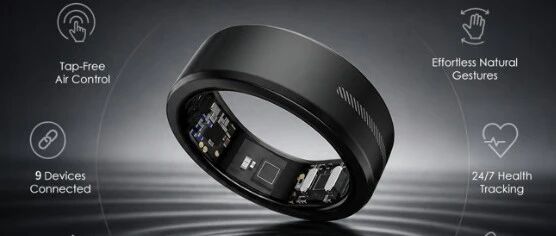
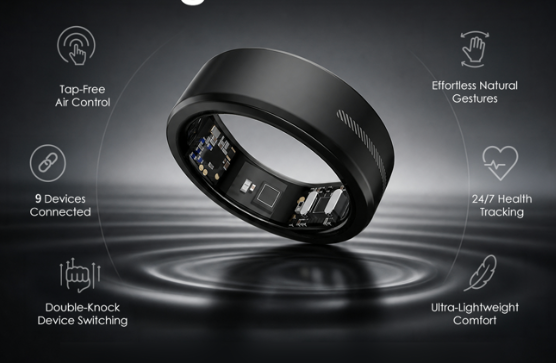
The KiWear Ring is a gesture-controlled smart ring designed to simplify device interaction. Utilizing IMU motion sensors, advanced gesture recognition algorithms, and Bluetooth connectivity, it translates intuitive hand movements—such as swiping, pinching, and circling—into control commands for smartphones, computers, televisions, and smart glasses. The ring also integrates health monitoring features, including heart rate, sleep, activity, and blood oxygen tracking. Its primary audience includes multi-device users, XR/smart glasses enthusiasts, and individuals seeking an alternative to traditional remote controls and touchscreens.
Campaign Launch and Initial Performance
The KiWear Ring launched on Kickstarter on September 2, 2026, with a 35-day campaign set to conclude on October 7. In its first week online, the project surpassed $310,000 in funding, with an average pledge of approximately $240, indicating strong interest in the base model.
The pre-launch strategy involved offering a $199 Kickstarter-exclusive price, $50 less than the public $249 early bird tier, secured with a $5 deposit. This deposit was non-refundable and did not count towards the final purchase price, effectively serving as a low-cost method to pre-qualify highly interested backers. Post-launch, the campaign heavily emphasized the ring's ability to control all devices, its AirMouse functionality, smart glasses control, and health monitoring, packaging a relatively abstract gesture recognition technology into an easily understandable "universal remote" for consumers.
The project is not merely conceptual. KiWear demonstrated a working prototype at AWEUSA 2026, where Tom's Guide experienced its gesture interaction with smart glasses. CasandCharyXR also received a pre-production sample, conducting real-world tests with phones, computers, TVs, and XR devices. Their experience noted the ring's approximately 5g weight and its ability to detect subtle finger movements via internal IMU sensors, even recognizing some operations with the hand in a pocket.
Core Gesture Technology: IMU Non-Contact Control
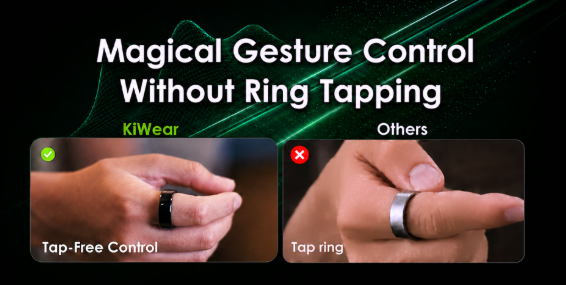
The core of KiWear's technology isn't camera-based hand tracking or EMG electromyography input like Meta's NeuralBand. Instead, the ring's internal motion sensors continuously read minute displacements and directional changes of the index finger. Algorithms then interpret these movements as actions such as swiping, pinching, tapping, circling, or crossing.
The primary practical advantage of this approach is the absence of line-of-sight restrictions. Users can keep their phone in their pocket and don't need to point their hand at a camera, yet they can still change songs, adjust volume, or execute quick commands.
However, this method also has clear limitations. The motion sensors must differentiate between natural hand movements and intentional commands. The official FAQ states that false-positive recognition is still being optimized, which will directly determine if it can evolve from a trade show demo into a truly useful daily input device.
Advanced Control: AirMouse and Seamless Switching
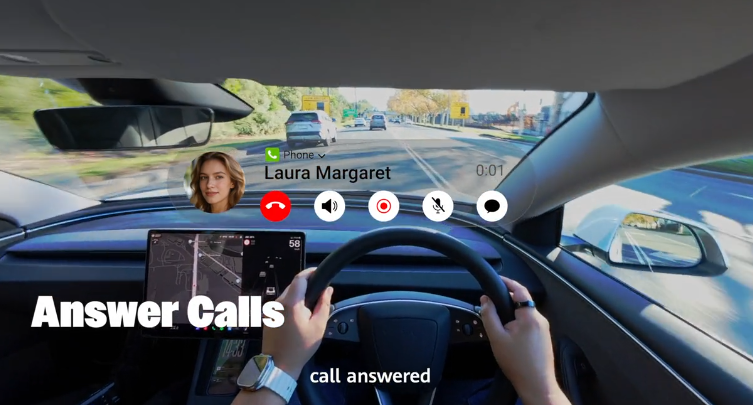
Beyond predefined gestures, the KiWear Ring also supports AirMouse functionality, mapping hand movements to an on-screen cursor for actions like moving, clicking, dragging, scrolling, and navigation. This expands its application from simple tasks like changing music or answering calls to controlling computers, TVs, projectors, and XR interfaces. It eliminates the need for a clicker during presentations and allows for precise navigation on a living room TV without a traditional remote.
The biggest technical challenge for AirMouse is stability. Even a few millimeters of cursor drift can disrupt a click, and human hands naturally exhibit slight tremors. Therefore, the algorithm must simultaneously manage hand tremors, drift, and intent recognition. Pre-production experiences have confirmed the feature's operability, but extensive user testing for prolonged, precise cursor control is still needed.
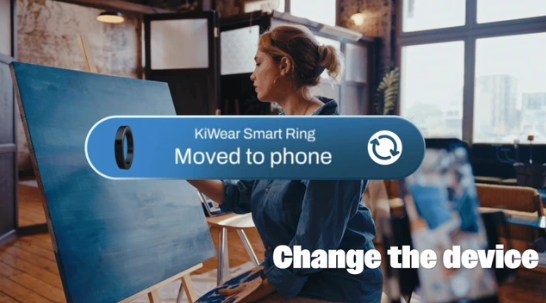
The KiWear Ring can store up to eight Bluetooth devices, plus one supported Tesla vehicle. Crucially, two Bluetooth devices can maintain an active connection simultaneously, allowing users to switch between them with a designated gesture. Other stored devices can be selected via the app without requiring re-pairing.
This design is more significant than merely supporting eight devices. If users had to re-open Bluetooth settings every time they switched from a Mac to a TV, the concept of cross-device control would be undermined. The dual-active connection ensures that common combinations like computer+phone or TV+phone can truly operate continuously.
Design Specifics and XR Integration
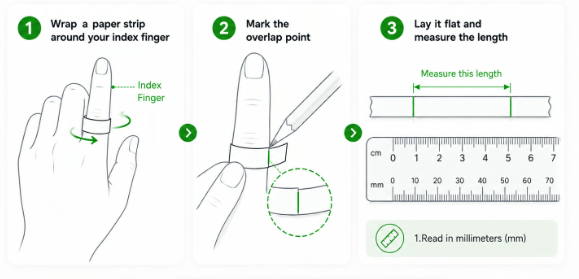
A critical limitation, though rarely highlighted in promotional materials, is that KiWear's gesture functions require the ring to be worn on the index finger of the dominant hand. The brand's sizing guide explicitly states that the internal sensor layout and gesture algorithms are calibrated for this specific placement. While health features like heart rate and sleep monitoring will still function if worn on the middle, ring, or pinky finger, core gesture controls such as swiping, pinching, circling, and cross-device switching will not operate correctly.
This indicates that KiWear's recognition is not a fully abstract, arbitrary gesture AI but rather highly dependent on a fixed wearing posture. The benefit is increased algorithmic certainty, but the trade-off is that users lose the flexibility of switching fingers, a common feature in other smart rings, and precise ring sizing becomes even more crucial.
KiWear's most promising use case may not be with smartphones, which already have highly mature touchscreens, but with AR glasses, which do not. If users must pull out their phone every time they need to navigate a menu while wearing smart glasses, the inherent value of the glasses diminishes.
KiWear has previously collaborated with Qualcomm on smart ring reference designs. Official press releases state that its gesture technology has been incorporated into two generations of Qualcomm's Reference Smart Ring Designs, with the second generation featuring the Snapdragon S7+ Gen1 and showcased at AWEUSA 2026. Tom's Guide also experienced KiWear controlling RayNeo smart glasses' menus, music, and volume firsthand, highlighting a key differentiator from conventional health rings.
Integrated Health Tracking and User Feedback
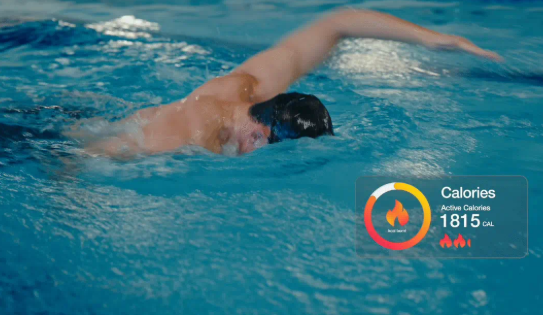
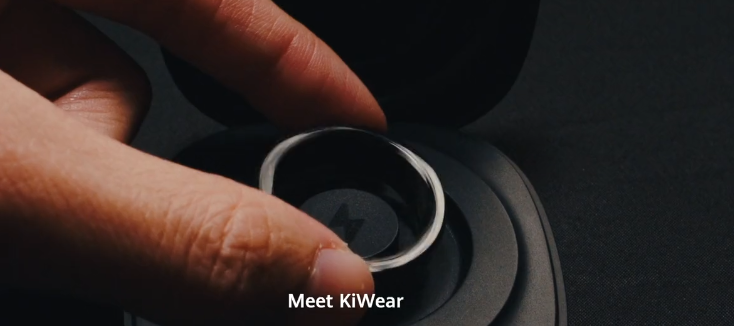
The KiWear Ring also provides heart rate, activity, sleep, and blood oxygen trend monitoring. It features a zirconia ceramic exterior, a hypoallergenic epoxy interior, measures approximately 3mm thick, weighs about 5g, and its pre-launch page indicates 5ATM water resistance.
This integration isn't about challenging Oura directly but rather addressing the user's dilemma of needing to wear a second ring for control if they already have a health-focused smart ring.
KiWear attempts to merge both functionalities into a single product. However, as of now, there's no independent accuracy comparison of its heart rate, sleep, or blood oxygen algorithms against medical devices or established products like Oura. Therefore, the health monitoring features are best viewed as added value rather than a core competency where KiWear has already established an advantage.
The KiWear Ring lacks a screen and a vibration motor. All interaction results are communicated through the controlled device—be it a phone, computer, TV, or smart glasses. While this design choice benefits size, weight, and battery life, it introduces a practical challenge: the ring itself cannot provide haptic feedback to confirm successful gesture recognition.
This is less impactful for scenarios where the result is visually apparent, such as controlling a TV. However, when changing songs with a hand in a pocket or controlling devices without direct visual feedback, the absence of haptic feedback might diminish the user's sense of confirmation.
Market Analysis and Strategic Positioning
Grand View Research, in its 2026 updated data, projects the global smart ring market to be approximately $502 million in 2026, growing to about $2.079 billion by 2033, with a compound annual growth rate (CAGR) of approximately 22.5% from 2026-2033. Bluetooth smart rings already accounted for about 68.7% of revenue in 2025, with health and wellness remaining the largest application type.
The market growth is clear. Oura, notably, filed for IPO in September 2026, reporting revenues of $1.21 billion for the nine months ending June, a 74% year-over-year increase. This demonstrates that consumers have largely accepted wearing small, screenless computing devices, reducing the educational burden for new entrants.
However, KiWear is not directly entering Oura's primary battleground. The Oura Ring, priced between $349-$499, focuses on health, sleep, and recovery, similar to the Samsung Galaxy Ring's health-centric ecosystem. KiWear's closer competitors are gesture controllers like TapXR, which costs $199 and supports keyboard and AirMouse but is worn on the wrist. MudraLink, currently priced at $249, uses neural/EMG input to control Bluetooth devices. Earlier, in 2014, the Nod Ring attempted to control TVs, phones, and smart homes for $149.
The persistent challenges over the past few years have been the simultaneous need for devices to be small enough, recognition stable enough, and a sufficient number of devices willing to accept its commands.
KiWear benefits from a more mature Bluetooth ecosystem, increasing demand for screenless interaction from XR and AI glasses, and consumers' growing familiarity with wearing smart rings all day. However, its biggest risk lies precisely here: if a user only needs to control a phone, using the touchscreen is often faster; for computer control, a mouse remains more precise; and for TV control, a remote has virtually no learning curve.
KiWear's value rapidly increases only when a user has multiple devices around them and cannot conveniently touch a screen. Therefore, use cases like smart glasses, presentations, exercise, cooking, driving, and cross-device office work are more likely to determine if this product can establish long-term usage habits than simply changing a song.
While Oura addresses 'what's happening with my body,' KiWear aims to solve 'what do I want my device to do next.'