Lumysi Smart Health Bracelet Raises $130K in 10 Days on Kickstarter
Campaign Teardown · · PledgeRadar Editorial
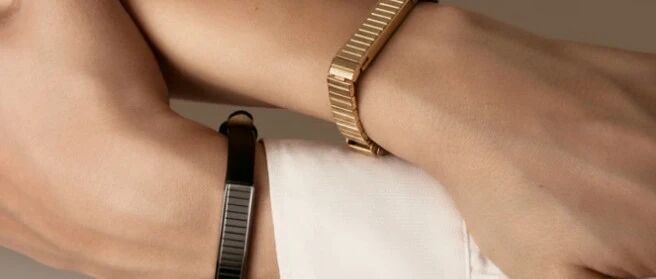
Lumysi is a screenless health bracelet designed with a jewelry aesthetic. It integrates optical heart rate, blood oxygen, skin temperature, and motion sensors into a titanium body, presenting data on sleep, recovery, stress, activity, and women's cycles via a smartphone app. Unlike smartwatches such as the Apple Watch, Lumysi does not receive notifications or have a display. Its core purpose is not to replace smartwatches but to offer continuous body state tracking for individuals who dislike the appearance of traditional fitness trackers but want to wear a device consistently across work, sleep, and formal occasions. The product supports stainless steel, leather, and silicone straps, measures approximately 31.7×8.9 mm, weighs about 25 grams, and is compatible with both iOS and Android. Lumysi launched on Kickstarter on June 24, 2026, raising $130,000 in its first 10 days. We estimate the project's final funding amount may not be substantial, with $200,000 potentially being a significant milestone.
Key Product Features
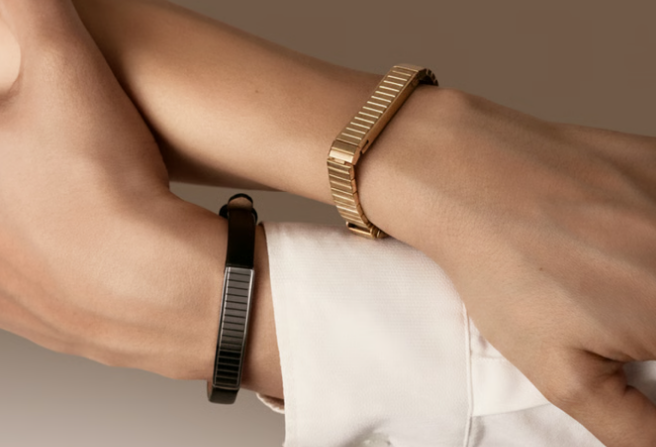
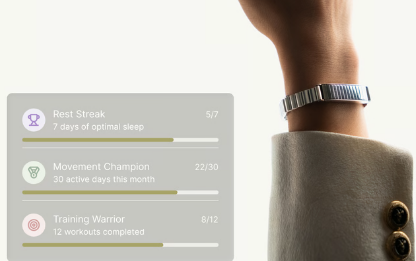
Lumysi's jewelry-inspired, screenless design prioritizes long-term wearability. The device features a titanium sensor casing available in gold, rose gold, silver, and black, with interchangeable metal, leather, and silicone sport straps. The screenless design eliminates notifications and frequent screen illumination, with all data viewable within the companion app.
Compared to smart rings, a wrist-worn band is less likely to experience direct pressure from equipment during activities like gripping barbells or strength training. Conversely, compared to typical fitness trackers, Lumysi is better suited for business or formal attire. Lumysi's true differentiation isn't in creating new health sensors but in addressing the issue of fitness devices not resembling jewelry, which often leads users to remove them.
However, the tightness of metal straps can directly impact the optical sensor's contact with the skin. A loose fit may increase motion artifacts, meaning the balance between a jewelry aesthetic and continuous measurement stability will require real-world testing during mass production.

30+ Metrics, Not 30+ Sensors
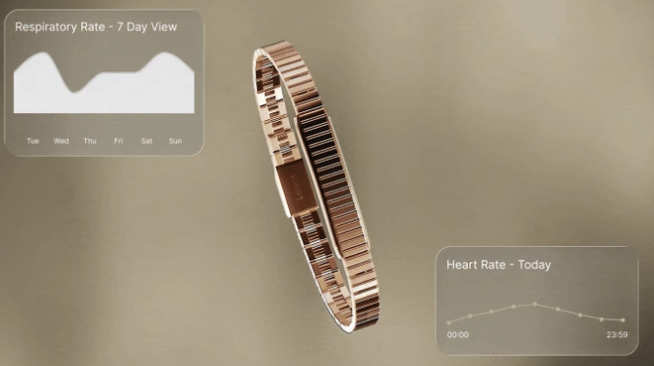
The device primarily incorporates three types of sensing hardware: a PPG optical system with green, red, and infrared LEDs for heart rate, HRV, and blood oxygen trends; a skin temperature sensor for establishing a personal temperature baseline; and an accelerometer to record steps, activity, and sleep motion. The project team states that sensors update every 30 seconds.
The '30+ health metrics' include algorithm-derived results such as sleep stages, recovery scores, stress levels, activity volume, calories, and cycle trends, rather than data directly measured by 30 distinct sensors. The currently disclosed specifications do not indicate ECG, blood pressure, blood glucose, or independent GPS capabilities.
Therefore, the 30+ metrics reflect the quantity of data outputs, not medical diagnostic capabilities. The official statement clarifies that Lumysi is a daily health product and is not intended for diagnosing, treating, or preventing diseases.
AI Insights Translate Data into Actionable Summaries
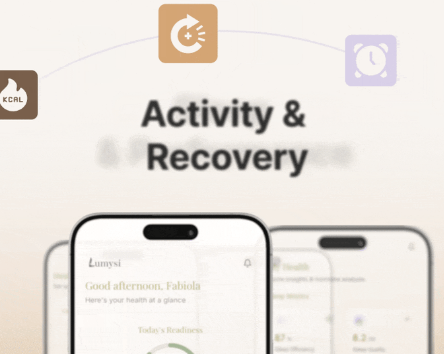
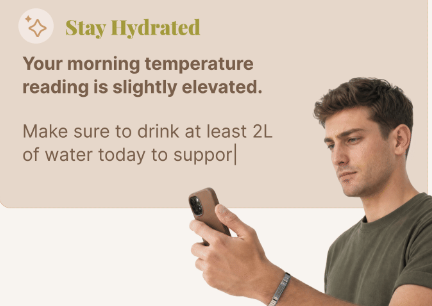
The Lumysi app aims to go beyond simply displaying HRV or sleep duration by correlating sleep, activity, temperature, and recovery data to generate daily status summaries. For instance, if HRV falls below a user's recent baseline while sleep was insufficient the previous night, the system might interpret this as a decline in recovery status.
This design lowers the barrier to understanding health charts, but the AI output remains dependent on the accuracy of the underlying sensors and algorithmic models. The project team has not yet published independent studies comparing Lumysi against medical-grade devices, Apple Watch, WHOOP, or polysomnography, meaning AI interpretations cannot compensate for potential errors in raw data.
**Women's Health: Cycle Tracking, Not Ovulation Detection**
The project offers cycle logging, menstrual phase reminders, cycle-related recovery scores, and features to adjust exercise, hydration, and recovery information based on different phases. Skin temperature trends are also incorporated into long-term body baseline analysis.
These functions are closer to lifestyle management than fertility medicine tools. Wrist skin temperature can be influenced by room temperature, sleep environment, alcohol consumption, and fit tightness. The project team has not disclosed ovulation prediction or cycle identification accuracy, thus it cannot be used for contraception, confirming ovulation, or disease diagnosis.
7-Day Battery Life and 5ATM Water Resistance
The official specifications claim up to 7 days of use on a single charge, with a portable charging case providing one additional full charge. The device boasts a 5ATM water resistance rating, making it suitable for showering, swimming, and daily exercise.
The 'up to 7 days' claim typically corresponds to mixed usage. Continuous blood oxygen monitoring, frequent data synchronization, and intensive sensor sampling could all shorten actual battery life.
Lumysi is being developed by Fabiola Hermosillo, Alfonso, and Miguel. The team's disclosed capabilities span product design, hardware, software, AI, and manufacturing. However, this is the brand's first consumer hardware product, and there is no public record of large-scale deliveries to date.
A product with the same name appeared on Indiegogo in 2025. At that time, the project explicitly stated that the aesthetic and software prototypes were complete, but the prototype was not yet fully functional, and sensor hardware, firmware, and AI software were still in the integration phase. Given the timeline, the period allocated for certification, tooling, algorithm validation, and app refinement appears short. Therefore, we assess the core risk of this project not as the ability to produce a metal bracelet, but rather the sensor accuracy across different skin tones, wrist sizes, and activity states, and whether the initial software can reliably deliver on the promise of 30+ metrics.
Global Market Analysis
According to IDC data, global wearable device shipments reached 611.5 million units in 2025, a year-over-year increase of 9.1%. The trend of screenless recovery bands, popularized by WHOOP, is attracting more manufacturers to the market.
Lumysi faces competitors such as WHOOP, which focuses on training recovery, Oura, which emphasizes sleep and women's health, and traditional wearable brands that are adding screenless products. WHOOP's basic annual membership is currently $199, and Oura's full functionality also relies on a subscription service. This makes Lumysi's lifetime subscription-free benefit for crowdfunding backers a compelling price advantage.
Lumysi's true competitive edge lies in its jewelry-inspired design, rather than leading-edge sensor technology. The project currently lacks independent accuracy testing, and the brand will need to bear long-term costs for app development, AI analysis, and health data storage. If the mass-produced product can maintain stable fit and accurate recording, it could fill an aesthetic gap between smart rings and sports trackers. However, if data quality proves insufficient, even the most refined appearance would only make it a regular bracelet with sensors.
Lumysi's true differentiation isn't in creating new health sensors but in addressing the issue of fitness devices not resembling jewelry, which often leads users to remove them.