M2 Vinyl Flattener: Automated Record Restoration Hits Kickstarter with $150K Funding
Campaign Teardown · · PledgeRadar Editorial

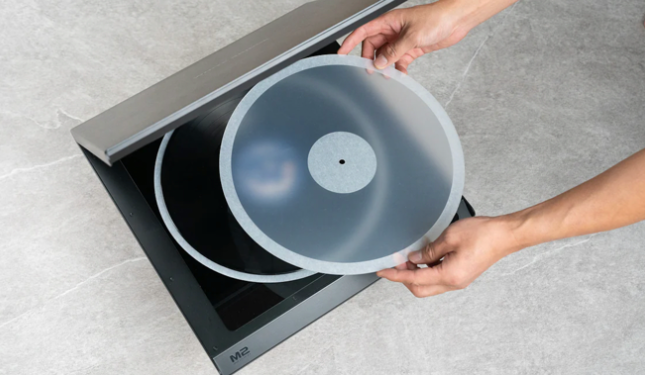
The M2 Vinyl Flattener, from WHITE BRIDGE Technology, is an automated device designed to restore warped vinyl records. It works by sandwiching a deformed record between two highly flat microcrystalline glass plates. Through controlled heating, constant temperature maintenance, and slow cooling, the internal stresses within the PVC material are gradually released, allowing the record to return to a more stable and flat state under the weight of the top cover. It is not a record cleaning machine and cannot repair scratches, groove wear, or surface noise. The M2 primarily targets collectors, used record stores, and high-end audio enthusiasts, addressing issues like dish warps, edge warps, and other deformations that affect stylus tracking. The project launched on Kickstarter on June 19, 2026, with an anticipated end date of August 3. In just half a month, it has garnered over 200 backers and raised approximately $150,000. While the project appears to be a grassroots effort, this funding level is notable, though successful delivery remains the key challenge.
Key Product Features
Traditional low-cost flattening tools often require users to manually control temperature and time, with overheating potentially damaging grooves and insufficient heat yielding no significant results. The M2 features a built-in touchscreen and a comprehensive control program. Users select a preset mode based on record size, weight, and warp severity, and the machine automatically completes the entire cycle. A single treatment typically takes 3 to 4 hours, and severely warped records may require multiple runs. While it lowers the operational barrier of manual timing and external temperature controllers, it does not guarantee that every record will be fully restored in one go.
The M2 utilizes a graphene heating layer, an aluminum thermal conduction structure, and microcrystalline glass contact plates, with sensors continuously monitoring internal and ambient temperatures. The official specifications claim a temperature control accuracy of ±0.2°C and a glass plate flatness of ≤1 micron/meter. The unit weighs approximately 12 kg (26.5 lbs), with the upper structure relying on its own weight to provide consistent, even pressure. Compared to lighter devices, a heavier top cover theoretically helps maintain stable contact across the entire record surface. However, parameters such as 'medical-grade sensors' and 'sub-millimeter flattening precision' are currently based solely on the project's disclosures; independent laboratory reports detailing temperature distribution, flatness, and long-term repeatability are not yet available.
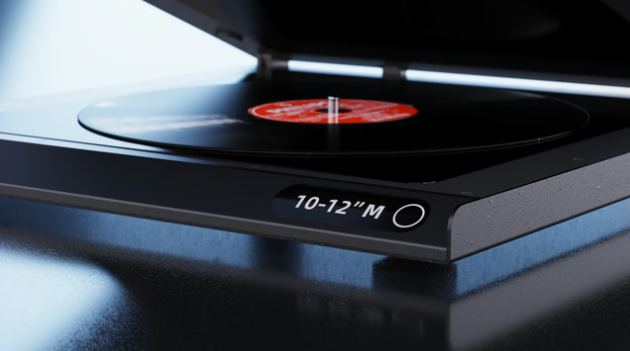
The device offers Light, Medium, Heavy, and Ultra modes, supporting 7-inch, 10-inch, and 12-inch records, including standard 140-gram, heavy 180-gram, and 200-gram+ versions. Light mode is suitable for minor deformations, while Medium and Heavy modes address more significant or noticeable warps. Ultra mode is reserved for records that remain unplayable after multiple Heavy treatments. The project explicitly states that Ultra mode uses higher temperatures and carries a greater risk of record damage, making it unsuitable for rare, colored, or structurally complex records.
Most modern records have outer edges and label areas slightly raised above the sound grooves, preventing direct contact with the glass plates when placed in the device. For older records, flat-edged records, and 7-inch records that lack this protective raised edge, the M2 provides adapter rings to re-establish a protective gap. The device's central spindle can also be removed, allowing it to treat some unopened, still-sealed records with the aid of PE protective pads. This feature is particularly useful for record stores and collectors, but the heat resistance of different sleeve materials, shrink wrap, printing inks, and adhesives can vary. Therefore, 'sealed record flattening' carries higher uncertainty compared to treating unsealed records.


Flattening vs. Sound Restoration
While flattening a record can reduce tonearm oscillation, skipping, and low-frequency vibrations caused by warps, the device cannot eliminate existing scratches, groove wear, pressing defects, or material aging. Records with severe melting, cracking, delamination, or moisture-induced adhesion also cannot be repaired. Colored vinyl, clear records, and picture discs may contain different formulations, inks, or composite films, posing risks of discoloration, delamination, or surface changes when heated. Notably, the official FAQ contains contradictory statements regarding shellac 78 RPM records: one section explicitly lists shellac as an unsuitable material, while another mentions it can be treated with an adapter.
Manufacturing and Delivery Concerns
WHITE BRIDGE states that the M2's design, prototyping, precision machining, assembly, and testing are conducted at its own factory in Beijing. The team behind it reportedly has experience in industrial components and consumer product manufacturing. However, such general statements often do not fully reassure consumers. This is WHITE BRIDGE's first Kickstarter campaign, and the brand currently lacks a track record of large-scale deliveries to global consumers. Consequently, significant breakthroughs in funding beyond the current level may be challenging, with a good outcome likely falling in the $200,000–$300,000 range. Furthermore, given the M2's substantial weight of 12 kg (26.5 lbs), mass production risks extend beyond temperature control calibration and glass plate flatness. They also include potential glass breakage during international shipping, hinge misalignment, after-sales service, and high logistics costs.
Market Landscape and Competition
The US vinyl market has seen 19 consecutive years of growth, with sales reaching 46.8 million units and exceeding $1 billion in 2025. The continuous rise in record sales and collector value has fostered a stable accessories market for cleaning, anti-static, flattening, and storage equipment. Among existing products, the Record Pi sells for approximately $275, using metal pressing plates and an external temperature control system. The Pro-Ject Flatten It is priced at 799 Euros, weighs 4 kg, and has a temperature fluctuation range of about 2°C. The Furutech DF-2 has long been positioned in the high-priced professional market. The M2 differentiates itself with its 12 kg heavy-duty construction, ±0.2°C closed-loop temperature control, touchscreen presets, and vertical storage capability, establishing a mid-to-high-end position between entry-level tools and expensive professional equipment. However, all thermal flattening solutions cannot completely eliminate risks arising from material differences; precise temperature control can only reduce the probability of damage, not guarantee that every record will be restored to its original condition.
The M2 transforms the previously experience-dependent process of record flattening into a more standardized, automatic procedure.