Magpie Tech's AirCannon GPX: A 0.77lb Portable Blower/Vacuum Hits 118 MPH
Campaign Teardown · · PledgeRadar Editorial
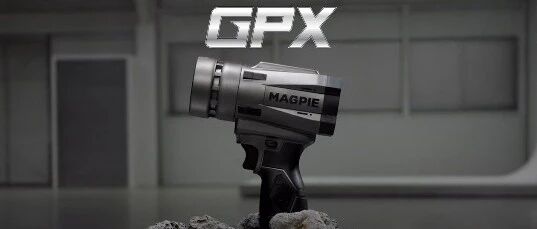
The AirCannon GPX, from Magpie Tech, is a high-power portable blower and vacuum tool designed for versatility. It combines a 16.8V brushless motor, a 140,000 RPM high-speed impeller, and a three-stage airflow guide to deliver 118 MPH wind speed, 237 CFM airflow, and vacuum capabilities within a compact 0.77lb (0.35kg) body. Its target users include those needing to clean cars, computers, workbenches, and perform light outdoor sweeping.
Campaign Overview and Magpie's Track Record
The AirCannon GPX launched on Kickstarter on September 7, 2026, concluding on November 6. In just one month, it secured over $400,000, with an average pledge of approximately $179 per backer. The campaign surpassed $370,000 and 2,000 backers within its first 10 days, indicating that the majority of pledges were concentrated in the initial launch phase, with momentum slowing thereafter.
This isn't Magpie Tech's first venture into this product category. The previous generation AirCannon, launched in 2025, raised $580,000, featuring a claimed 124 MPH output and a 1.3lb body. The GPX further reduces weight to 0.77lb while adding a vacuum mode and a more compact design. Notably, Magpie has a history of successful Kickstarter projects, including QUBE, H500+, and VADER. The QUBE project alone garnered $506,000 from 7,361 backers.
Current public reviews primarily consist of media introductions and crowdfunding prototype evaluations, lacking long-term independent stress tests. A common point of contention regarding its specifications is that the 118 MPH figure represents only the exit wind speed, not necessarily its practical sweeping capability. Factors like CFM airflow, nozzle diameter, sustained output, and performance after battery depletion are crucial for determining its effectiveness in tasks such as clearing wet leaves, sand, or water droplets from a car body. KickstartNew has also highlighted this as a key risk factor for the project.
Key Product Features
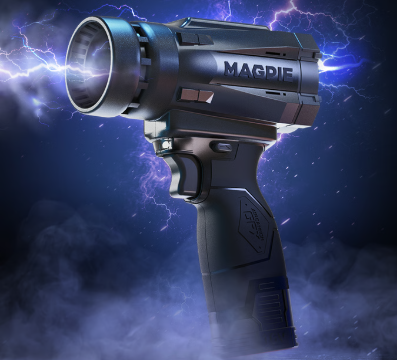
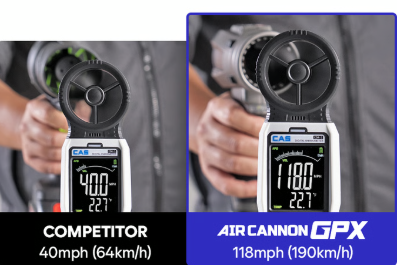
The GPX boasts a maximum claimed wind speed of 118 MPH (190 km/h), an airflow of approximately 237 CFM, and a maximum thrust of about 2.4lb, with the motor speed increased to 140,000 RPM. This combination aims to move beyond simple keyboard dusting.
These specifications significantly surpass those of typical electric computer dusters, approaching the performance range of light portable blowers. This makes it more suitable for tasks like blowing water out of car crevices, clearing sawdust from workbenches, and handling dry leaves.
However, 118 MPH cannot be directly compared to full-sized leaf blowers. Larger leaf blowers rely on wider outlets and higher CFM to move substantial volumes of air. The GPX, in contrast, offers a high-speed, concentrated airstream, making it better suited for localized cleaning rather than large-area yard work.
Triple Vane Airflow System
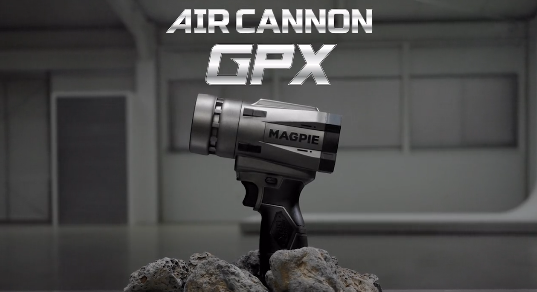
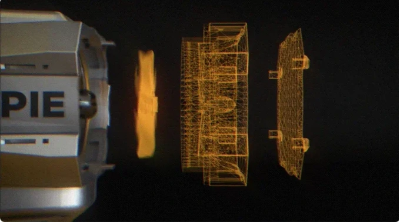
The GPX incorporates what the brand calls a Triple Vane System internally. This design adds 6-blade and 5-blade stators before and after the high-speed impeller, reorganizing the rotational airflow into a more concentrated axial beam.
The potential of this structure is sound; the primary losses in high-speed, small impellers often stem from turbulence and airflow diffusion. Stators can indeed improve effective exit velocity and directionality.
However, the brand's claim of double the output compared to a single rotor is currently based primarily on internal testing. Publicly available information lacks third-party wind tunnel tests, so it's more appropriate to consider this a structural advantage rather than an independently verified performance multiplier.
Blowing and 12,000Pa Vacuum
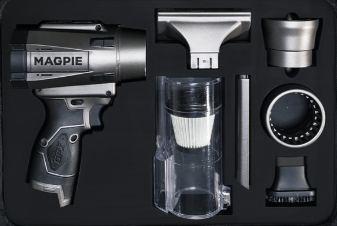
The device features a side switch to toggle between Blow and Vacuum modes. The vacuum end boasts a claimed 12,000 Pa negative pressure, paired with a dust cup and a HEPA filter. Brand specifications indicate a HEPA filtration efficiency of 99.97% at 0.3μm.
This design is particularly well-suited for car interiors, keyboards, and workbenches. The ability to first blow dust out of crevices and then switch to vacuum mode to collect debris offers a more complete solution than a blower-only air duster.
However, its small dust collection capacity means it's not designed to replace a shop vac. While it can handle small stones and wood chips, continuous cleanup of large volumes of debris will be limited by its capacity and filter resistance.
Lightweight Design and Swappable Battery
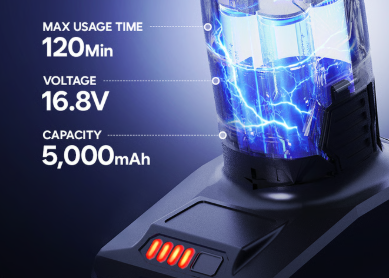
The GPX's bare unit weighs approximately 0.77lb (0.35kg) and measures about 5.4 × 2.9 × 7.8 inches. The 2500mAh battery adds approximately 0.47lb, while the 5000mAh battery adds about 0.94lb.
Its true competitive edge isn't just being smaller than a leaf blower, but rather that its weight won't rapidly accumulate during prolonged single-hand operation, unlike traditional high-power blowers. However, the advertised 0.77lb weight does not include the battery. When equipped with the larger 5000mAh battery, the overall weight increases significantly, meaning that 'extremely lightweight' and 'two-hour runtime' cannot both be interpreted based on the bare unit's specifications simultaneously.
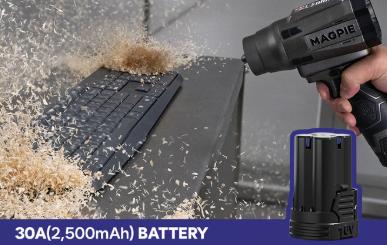
The 30A battery has a 2500mAh capacity, officially rated for up to 1 hour of use. The 60A battery, at 5000mAh, is rated for up to 2 hours, and both batteries are quickly swappable. Charging does not require a dedicated dock, as it directly supports 35W USB-C.
This swappable battery system is better suited for extended work sessions than electric dusters with integrated batteries. However, the 1-hour/2-hour figures represent maximum runtime and do not imply continuous operation at Turbo mode for that duration. Independent tests for actual run time under maximum 140,000 RPM load are not yet available, so these numbers are best understood as the upper limit for mixed low-to-medium power usage.
Versatile Nozzle System
The GPX comes standard with three types of nozzles: the Boost Nozzle amplifies total airflow by entraining ambient air, the Detail Nozzle concentrates airflow into narrow areas, and the Vacuum attachment handles suction.
This approach is more practical than simply pursuing the highest RPM, as car water droplets require broader coverage, while computer crevices demand high concentration—these are fundamentally different airflow needs. However, nozzles also imply performance trade-offs: a narrower outlet may result in higher wind speed, but actual CFM typically decreases. While Boost mode increases entrained air, it does not signify a sudden increase in the motor's inherent output power.
Company Background and Global Market Analysis
Magpie Tech Inc. is a South Korean tool brand, officially established in Seoul in 2018. Its initial focus was on laser rangefinders, levels, and multi-functional measuring tools. Their VH-80 bidirectional laser rangefinder cumulatively raised over $1.2 million through crowdfunding before entering retail channels like Amazon US.
The company currently operates its own production system in South Korea and collaborates with Chinese factories, with public records indicating ISO 9001 and ISO 14001 certifications. Magpie also runs BLAST crowdfunding services, and its team has extensive experience in project operation and fulfillment across platforms such as Kickstarter, Indiegogo, Makuake, and Wadiz.
Grand View Research projects the global electric air duster market to grow from $321 million in 2025 to $335 million in 2026, reaching $587 million by 2033, with a CAGR of approximately 8.3% from 2026-2033. Wireless products accounted for 69% of revenue in 2025, driven by increasing demand for computer and automotive cleaning, alongside consumers' efforts to reduce reliance on disposable compressed air cans.
The broader portable blower market is significantly larger, estimated at $4.8 billion in 2025 and projected to reach $6.87 billion by 2032, with cordless battery-powered products holding the largest share.
The AirCannon GPX positions itself between these two markets. The lower end includes wired electric dusters like the XPOWER A-2, offering around 90 CFM for approximately $45. The higher end features large cordless blowers from tool brands such as Makita and Milwaukee. The GPX's early bird price of $129 is notably higher than typical computer dusters but offers greater portability and lighter weight than full-fledged power tool platforms.
Its primary risk lies in appearing to do everything, yet each niche market has more specialized equipment: large leaf blowers offer higher airflow for yard work; shop vacs provide greater suction and capacity for car interiors; and a $30-$50 electric duster is often sufficient for computer cleaning.
Therefore, the GPX's true value proposition isn't to outperform all professional tools, but to convince users to pay a premium for a tool that is sufficiently compact and capable of handling most incidental cleaning tasks.
Its primary risk lies in appearing to do everything, yet each niche market has more specialized equipment.