MAKERphone 2.0: DIY 4G Phone Raises Over $300K on Kickstarter in 9 Days
Campaign Teardown · · PledgeRadar Editorial
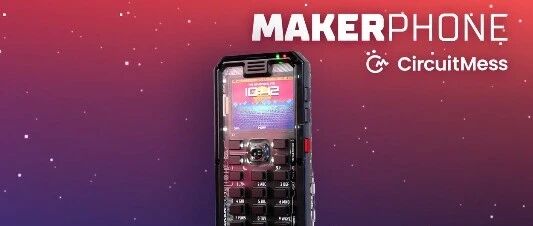
The MAKERphone 2.0 is Circuit Mess's second-generation DIY phone, designed around an ESP32-S3 microcontroller, 4G LTE connectivity, and open-source hardware and software. It allows users to assemble a fully functional phone capable of calls and texts, then program it using MicroPython or Arduino C++. The kit targets STEM education for youth, as well as Makers and adults interested in hardware tinkering.
Campaign Overview
The MAKERphone 2.0 launched on Kickstarter on September 10, 2026, raising over $300,000 within 10 days. During its pre-launch phase, backers could secure a VIP price of $99 by pledging $1. The current public crowdfunding price starts at $129, with an anticipated retail price of $169. The product is positioned not as a budget-friendly phone, but as an educational electronics project that culminates in a functional mobile device. Circuit Mess projects delivery in August 2027, approximately 10 months after the campaign concludes.
Its predecessor, the first-generation MAKERphone, secured $320,000 from 2,154 backers in 2018. Circuit Mess has since successfully funded multiple Kickstarter campaigns, including STEMBox and Batmobile, and the original MAKERphone has accumulated over 6,000 users. The crowdfunding community's interest in the MAKERphone 2.0 largely centers on its open hardware, 4G capabilities, and potential for future LoRa/Meshtastic expansion. However, some concerns have been raised regarding RF certification and carrier compatibility.
Key Product Features
**A Truly Functional DIY Phone**
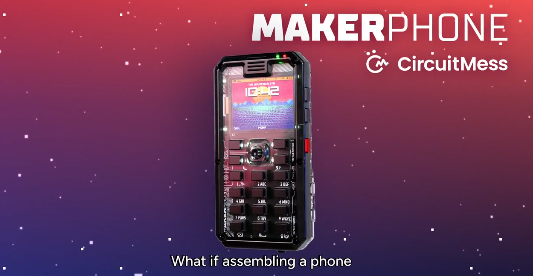
The MAKERphone 2.0 supports Nano-SIM cards, 4G LTE Cat-1, and 2G fallback, enabling voice calls and SMS communication. It also includes built-in Wi-Fi, Bluetooth, a microSD card slot, a 3.5mm headphone jack, music playback, a calendar, an alarm clock, and simple games.
Crucially, it is not a smartphone; it lacks a web browser, app store, maps, or applications like WhatsApp. The creators intentionally frame these limitations as integral to the product's design, positioning it closer to a programmable feature phone rather than a low-cost Android alternative.
**Solder-Free Assembly in Two Hours**
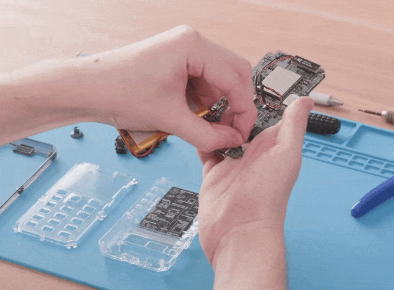
While the original MAKERphone from 2018 required approximately seven hours of soldering, the 2.0 version has been redesigned with screws, connectors, and snap-fit components. The official estimate for assembly is now around two hours, and no pre-assembled version is offered.
This shift makes the 2.0 more accessible for general households and classroom settings, moving beyond the more intensive electronics engineering project feel of the first generation, while still preserving the core experience of building a phone from scratch.
**Open-Source ESP32-S3 for Deeper Learning**
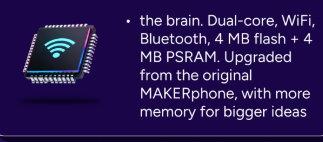
The MAKERphone 2.0 utilizes an Arduino-compatible ESP32-S3 microcontroller, featuring 4MB of Flash and 4MB of PSRAM. Users can program it directly using MicroPython or Arduino C++, and even flash custom firmware.
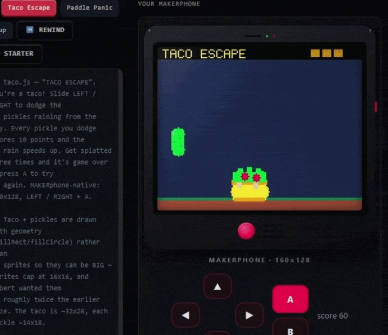
A key differentiator from typical STEM kits is that the code developed doesn't just make an LED blink; it runs on a tangible phone that can be used daily. This sustained utility of the final product fosters greater engagement than single-use experiments.
**AI-Assisted Programming with VibeBoy**
The accompanying VibeBoy AI programming tool enables users to describe games or applications using natural language, which then generates code that can be sent to the phone with a single click. Users can also review and modify the generated code. Each MAKERphone includes three months of unlimited AI access, with a free tier available afterward. The Pro version is currently priced at $4.99 per month.
While VibeBoy lowers the barrier to entry for first-time programmers, its educational value hinges on whether users proceed to understand and modify the code. If interaction remains limited to instructing the AI, the DIY phone could ultimately become another AI-powered toy.
**UMAX Module Expansion**
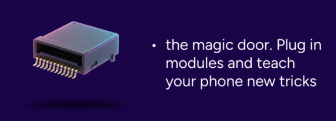
The side-mounted UMAX interface is designed for six planned modules: Camera, 2W Speaker, Flashlight, Temperature and Humidity Sensor, Infrared, and a DIY Perf Board. When a module is connected, its corresponding function automatically appears in the phone's menu.
However, the main unit features only one expansion port, allowing for a single module to be installed at a time, and these modules are not included in the base package. Its value proposition is akin to an Arduino Shield: rather than purchasing all functionalities upfront, users can continuously add new projects and capabilities to the same hardware.
**Intentional Retro Design**
The device measures approximately 11.5 × 6 × 1.8 cm and weighs 104g, featuring a 1.77-inch 160×128 color screen, a 12-key numeric keypad, and a navigation joystick. It includes a built-in 1000mAh user-replaceable battery and charges via USB-C. While these specifications are hardly competitive in 2026, the MAKERphone intentionally avoids competing in the smartphone spec race. Its small screen, physical buttons, and lack of social media integration position it as a personal electronic experimentation platform that can be disassembled, repaired, and programmed.
Company Profile: Circuit Mess
Circuit Mess is a Croatian educational electronics company founded in 2017 by Albert Gajšak when he was just 18 years old, with Tomislav Car later joining as an investor and co-founder. The company currently employs around 30 people, focusing on assemble-it-yourself, programmable gaming consoles, robots, watches, and other electronic devices.
The brand has cumulatively sold over 300,000 STEM devices, successfully completed multiple Kickstarter projects, and launched licensed or co-branded products with partners like NASA, Warner Bros., and Rimac. Public company data indicates that Circuit Mess Croatia generated approximately €2.75 million in revenue in 2025, suggesting it has grown beyond a typical small crowdfunding team.
Global Market Landscape
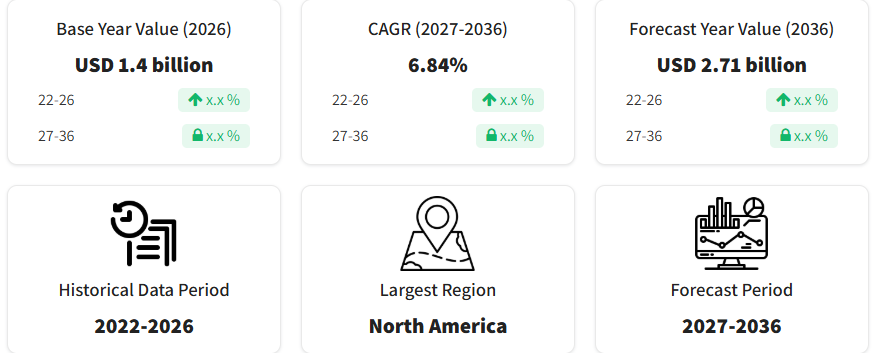
Grand View Research projects the global STEM toys market to reach approximately $1.4 billion in 2026, growing to about $1.8 billion by 2030, with a Compound Annual Growth Rate (CAGR) of approximately 7.2% from 2025 to 2030. Engineering-focused products hold a significant share, and the 8-12 age group represents a core user demographic.
This market already features established products. An Arduino 4 currently costs around $94.99, a Sphero BOLT is $199, and Piper reaches $399. The MAKERphone's $129 crowdfunding price positions it strategically between traditional electronics kits and larger programming devices.
Its primary differentiation lies in its end product: while an Arduino ultimately serves as a development board and Piper as a learning computer, the MAKERphone culminates in a functional device capable of accepting a SIM card and making calls.
The official specifications currently only mention LTE Cat-1 and Nano-SIM support, without a comprehensive global frequency band or VoLTE compatibility chart. Carrier network access rules vary significantly across countries. Furthermore, with delivery scheduled for August 2027, the specific network compatibility will require verification with the production version.
It's not a budget-friendly phone, but an educational electronics project that culminates in a functional mobile device.