Meta Admits TikTok Victory: A Crowdfunding Analysis
Crowdfunding Analysis · · PledgeRadar Editorial
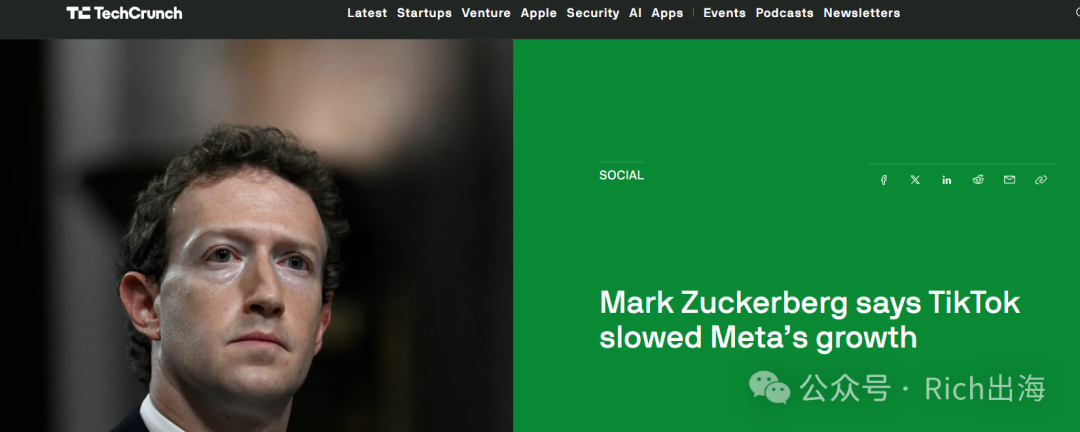
Meta, the parent company of Facebook and Instagram, has publicly acknowledged being outmaneuvered by TikTok, a candid admission from a social media titan that signals a significant shift in the digital landscape. This internal revelation, shared by Instagram head Adam Mosseri, highlights TikTok's rapid ascent and raises critical questions about platform strategy and user engagement. As Meta grapples with its changing market position, understanding the dynamics of this platform war offers valuable insights for creators and businesses operating in the global crowdfunding space.
Zuckerberg's Sleepless Nights: The TikTok Effect
Internal Meta documents reveal Mark Zuckerberg's concern over the company's growth slowdown since TikTok's emergence in 2018. A key factor identified is TikTok's innovative 'shared context' feature, which allows users to effortlessly engage with trending content and memes, fostering a powerful sense of community and rapid virality. This 'big square' effect, where users globally experience similar content simultaneously, is considered by Meta executives to be a primary driver of TikTok's success. Consequently, Facebook has been compelled to re-evaluate its strategy and revive its original model, with Meta leadership conceding that the platform is now outmatched by TikTok in algorithmic efficiency and social discovery features.
The Numbers Game: A Snapshot of Platform Competition
As of April 2024, TikTok boasts over 1.582 billion global monthly active users (MAU), positioning it as the fifth-largest social application worldwide. While Meta's family of apps, including Facebook (3.05 billion MAU), Instagram, and WhatsApp (each exceeding 2 billion MAU), collectively reach an impressive 3.43 billion daily active users (DAU), TikTok's rapid growth is undeniable. In less than seven years, TikTok has achieved a user scale comparable to established social platforms. Its penetration in key markets, such as the US with over 170 million MAU (over half the population), and its second-place ranking in social app usage in Africa, demonstrate its significant market disruption. The advertising landscape also reflects this shift, with TikTok's share of the US social ad market soaring to approximately 12%, projected to reach $32.4 billion in revenue by 2025, capturing 11% of global social ad spending. Despite Meta's substantial Q1 2025 revenue of $42.3 billion, TikTok's aggressive expansion and innovative advertising strategies are increasingly pressuring its growth, with Google and Meta still leading, but TikTok rapidly gaining ground, particularly among younger demographics.
Meta's Three Achilles' Heels
Meta's current challenges can be attributed to three critical weaknesses. Firstly, its user base is aging; TikTok captures nearly half of its US users from Gen Z (49.2% aged 18-26), while Facebook and Instagram see a steady rise in average user age. This demographic shift poses a long-term vitality risk. Secondly, Meta's algorithm changes, particularly the push for Reels and non-followed content, have alienated users who feel their feeds have become generic content feeds akin to Weibo or Douyin, leading to widespread complaints and a perceived loss of platform identity. Thirdly, Apple's IDFA privacy changes since 2018 have significantly hampered Meta's precise ad targeting capabilities. Following the 2021 IDFA rollout, Meta experienced a noticeable decline in ad campaign effectiveness. This, combined with a weak ad market and increased competition, led to three consecutive quarters of year-over-year revenue decline in 2022 and near-stagnant user growth.
TikTok's Winning Formula: Capturing Attention
TikTok's success stems from a unique product mechanism centered on a 'content-first' recommendation logic. Its algorithm prioritizes content quality, using watch time as a key distribution metric, which allows high-quality videos to reach vast audiences irrespective of social connections. Industry reports highlight the synergy of full-screen HD video, catchy music, special effects, and personalized recommendations as key differentiators, making content creation and discovery exceptionally simple, efficient, and addictive. Furthermore, TikTok has meticulously built an interactive ecosystem from its inception, employing strategies like acquiring competitors (e.g., Musical.ly), viral marketing, celebrity endorsements, and hashtag challenges to rapidly attract users. A robust library of content and trending music simplifies creation for users. This 'decentralized' content distribution, coupled with an 'interaction-driven' community atmosphere, fuels user creativity and engagement, transforming users from passive consumers into active participants. Its precise global strategy, including localized operations, significant investment in Western markets, and the integration of e-commerce live streaming, has enabled rapid establishment in over 150 countries. By combining a full-screen short-video experience, accessible creation tools, and a highly engaging community mechanism, TikTok has successfully created a 'de-friended' discovery platform that surpasses the traditional Facebook model.
Meta's Transformation Pains
Meta is actively responding to these challenges. Its strategy includes promoting Reels across Instagram and Facebook, which has become a significant driver of traffic and engagement, with increasing monetization through in-feed ads. However, this has met with mixed user feedback, as many long-time Instagram users feel Reels disrupts their original social experience, highlighting Meta's difficult balancing act between imitation and maintaining its unique identity. Meta also launched Threads in 2023, which rapidly surpassed 100 million users within five days and now boasts over 300 million MAU. Despite this impressive growth, industry observers note that Threads' average usage time and interaction levels lag significantly behind TikTok, failing to establish the same 'must-check' social habit as Twitter. The challenge of converting downloads into sustained active usage remains. AI is seen as a potential lifeline for Meta. Through AI algorithms like Advantage+ and Lattice, the company successfully mitigated some impacts of iOS privacy policies in 2023, leading to an increase in ad prices (CPM). Meta plans to further integrate AI into its advertising and recommendation systems to revitalize its ad business. While these countermeasures are showing some success, with Reels viewership increasing and ad revenue returning to over 20% growth in late 2023, Meta still has a considerable distance to cover to challenge TikTok's dominance in the short-video and youth market.
Opportunities for Cross-Border Sellers: Double the Red Envelopes?
The platform war presents significant opportunities for Chinese cross-border e-commerce sellers. TikTok has emerged as a primary global marketing battlefield, offering new channels to reach consumers in Europe, Southeast Asia, and Latin America. ByteDance is actively expanding TikTok's e-commerce capabilities, launching TikTok Shop in countries like Germany, Italy, Spain, France, and Mexico, with a GMV target of $50 billion for 2024. Chinese brands like Sanzhiyang Network have already achieved success, establishing TikTok divisions and setting sales records through collaborations with local influencers in Singapore and Malaysia. This demonstrates TikTok's potential for efficient consumer reach and conversion through its social commerce model. While TikTok's momentum is strong, Facebook remains a formidable platform, with over 3 billion global MAU and dominant positions in regions like Africa. A multi-platform strategy is therefore advisable: prioritize TikTok for younger demographics and social selling through ads, live streaming, and challenges, while maintaining operations on Facebook and Instagram to reach broader audiences with traditional ad formats and community management. As TikTok's e-commerce features become more localized, sellers are encouraged to establish TikTok Shop operations early and integrate with local logistics and payment systems.
They're doing a good job with the things that we are doing, and that's obviously no fun. If you're trying to build something and someone else's doing it better, you kind of have to listen.