MetMo Pocket Grip: How a Century-Old Patent Became a Million-Dollar EDC Hit
Campaign Teardown · · PledgeRadar Editorial
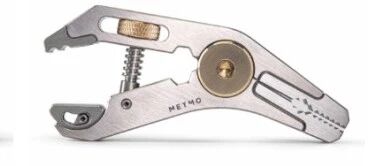
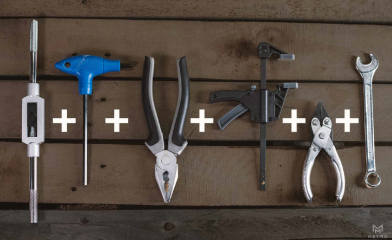
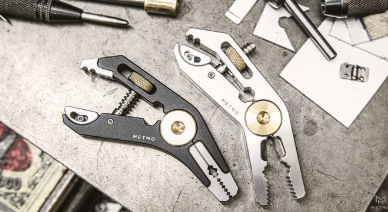
The MetMo Pocket Grip, from UK tool brand MetMo, is a pocket-sized gripping tool. The lightest aluminum alloy version weighs approximately 83.6g and offers five functions: parallel wrench, pliers, clamp, 1/4-inch hex bit driver, and 3-6mm square tap holder. The stainless steel Snip Grip version adds a cutting function, expanding it to a 6-in-1 tool. With a maximum jaw opening of 20mm, official tests show a clamping force exceeding 21kg and a maximum torque of 15.6Nm. Positioned not as a replacement for a full toolbox, but as a "third hand" for makers, model builders, cyclists, and EDC enthusiasts, it provides genuine mechanical gripping power.
Reviving a Century-Old Design
The Pocket Grip's design isn't entirely new. MetMo discovered an old "Triplet Grip" tool from around 1913 at a flea market, with its patent originally filed in 1912 by Mr. Anderson and briefly sold by Stanley Tools. The primary issue with the original structure was that the jaws couldn't maintain parallel movement consistently, often pushing hexagonal nuts outwards when clamped. MetMo retained the dual-head mechanical structure, integrating modern CNC machining and their proprietary adaptive jaw design to reimagine this century-old, never-truly-popularized tool into an EDC product.
The Pocket Grip launched on Kickstarter on February 26, 2026, concluding on April 2 with over a million dollars raised and earning a "Kickstarter Project We Love" badge. The U.S. was the largest market, with over 1,800 backers.
Notably, Kickstarter community data shows approximately 3,330 backers were returning platform supporters, accounting for over 93% of the total. This project significantly benefited from MetMo's accumulated crowdfunding user base over the years.
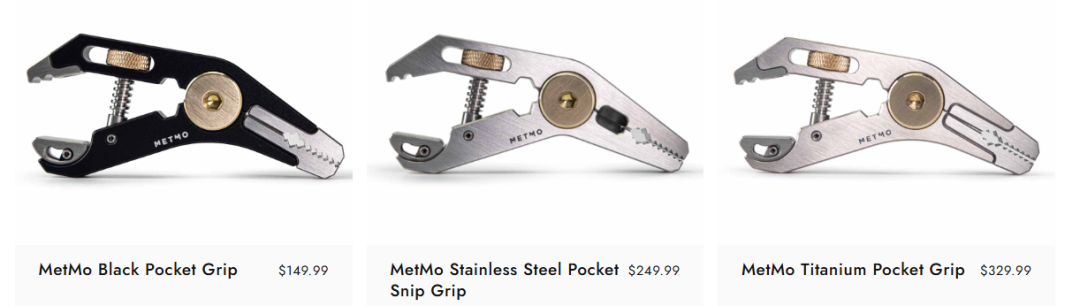
Currently, the brand's official website lists pre-sale prices at $149, $249, and $329. For a small hand tool that started under £100, achieving an average order value exceeding $200 indicates that many users didn't just purchase the basic model but upgraded to titanium or stainless steel versions, along with additional jaws and accessories. This upsell potential is a particularly appealing aspect of the EDC category.
Key Product Features
**20mm Parallel Jaws + 21kg Clamping Force: A Pocket Pliers Transformed into a Mini Vise**
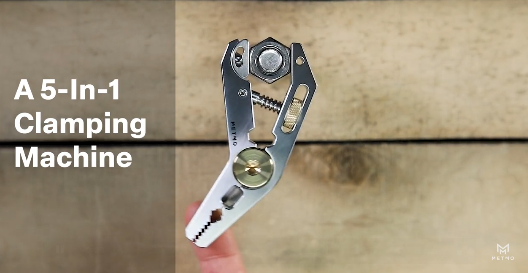
The core of the Pocket Grip isn't just a pair of pliers, but rather two sets of gripping ends designed for different purposes. The adaptive jaws open up to 20mm and, once locked with the lead screw and knob, maintain an almost perfectly parallel grip, suitable for hexagonal nuts, 3D-printed parts, model bases, and irregular workpieces. The serrated jaws on the other end open up to 17mm, ideal for pulling nails, gripping cylindrical objects, and handling damaged fasteners.
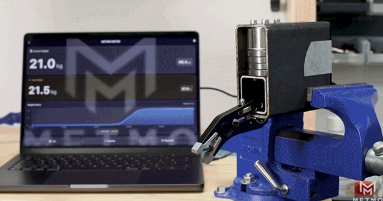
Official tests confirm a maximum clamping force exceeding 21kg and a maximum torque of 15.6Nm. Its true value isn't in using a 95mm tool to challenge large wrenches, but in securely holding small workpieces that are otherwise difficult to fix by hand during tasks like model painting, part bonding, sanding, or drilling.
This is also its key differentiator from ordinary EDC pliers: while standard pliers require continuous squeezing by the user, the Pocket Grip maintains pressure once locked, functioning more like a miniature, pocketable vise.
**5-in-1 Design Focused on Gripping, Not Just Feature Count**
The central part of the Pocket Grip can hold standard 1/4-inch hex bits, forming a T-handle driver. The V-groove on the jaws can also secure 3-6mm square-shank taps or drill bits. Combined with its parallel wrench, pliers, and clamping functions, this forms the basic 5-in-1 tool.
The stainless steel Snip Grip further incorporates hardened cutting jaws, capable of handling wires up to approximately 6mm, zip ties, and 3D printing filaments, which is why the project page sometimes refers to it as a 6-in-1. The basic aluminum alloy and titanium alloy versions remain 5-in-1.
Unlike Swiss Army knife-style multi-tools, it doesn't feature numerous independent components like blades, saws, or bottle openers. Instead, all its functions revolve around gripping, tightening, and securing. This restraint is crucial to the Pocket Grip maintaining its slim 10mm thickness.
**7075 Aluminum + 17-4PH Steel + Grade 5 Titanium: Elevating a Tool to an EDC Collectible Through Material Choice**
The lightest version features a 7075-T651 hard-anodized aluminum body, weighing approximately 83.6g. The titanium alloy version uses Grade 5 Titanium, weighing about 103.6g, while the stainless steel version reaches 141g. All three versions utilize 17-4 PH H900 hardened stainless steel for their high-load jaws, achieving a hardness of approximately 45HRC.
From a purely functional perspective, the basic version already performs the main tasks. However, the EDC market isn't just about whether a tool can tighten screws; the material properties of titanium alloy, CNC textures, mechanical feedback, and collectible appeal can significantly boost the average order value.
This was a significant factor in the project achieving an average order value of £215. MetMo didn't rely on electronic features to increase the price but instead used materials, surface finishes, and precision machining to transform a traditional hardware tool into a consumer-grade design product.
**Interchangeable Jaws + 200-Year Guarantee: Building a Long-Term Expandable Tool Platform**
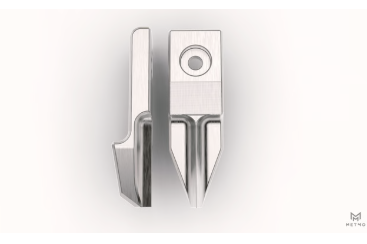
The Pocket Grip's jaws are removable and interchangeable. MetMo has already released various modules, including Needle Jaws, Reverse Jaws, Snip Jaws, and Jigsaw Jaws, with a complete jaw set pre-selling for £99. This means that if jaws wear out or new functional needs arise in the future, users don't need to replace the entire tool.
The brand also offers a "200 Year Guarantee." The business logic behind this isn't that consumers genuinely need to keep it for two centuries, but rather to emphasize its repairability, all-metal construction, and long-term usability. This product language clearly differentiates it from numerous low-cost, stamped multi-pliers and aligns with MetMo's consistent brand strategy of reviving old mechanical structures with modern precision manufacturing.
Leveraging a Loyal Crowdfunding Base
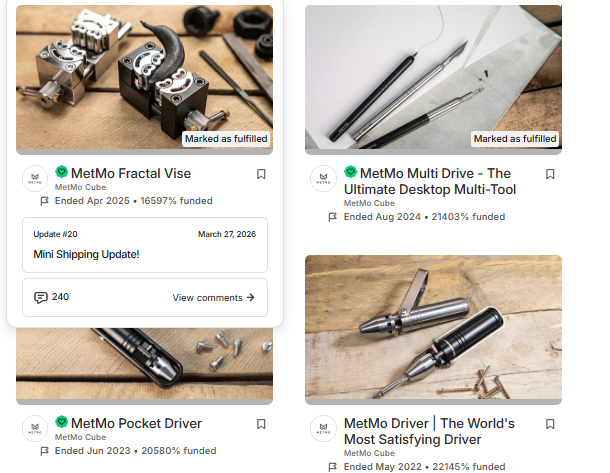
What truly propelled this product to "hit" status was MetMo's established crowdfunding base. The Pocket Grip wasn't MetMo's first crowdfunding campaign. In 2020, the MetMo Grip garnered 3,030 backers and raised £380,000. The MetMo Driver attracted 6,777 backers and raised over a million pounds. In 2023, the Pocket Driver secured 5,401 backers and £1.02 million, with the subsequent Multi Drive also raising over £530,000.
Therefore, the Pocket Grip's £770,000 achievement cannot be attributed solely to the product itself. With over 90% of its backers being returning Kickstarter users, MetMo has effectively transformed crowdfunding into a direct sales channel.
Market Context and Competitive Landscape
The global hand tools market is projected to be approximately $27.6 billion in 2025, reaching $38.1 billion by 2034, with a CAGR of about 3.53% from 2026-2034. More specifically, the pliers market is estimated at $3.7 billion in 2025, expected to reach $5.6 billion by 2035, with a CAGR of about 4.2%. While not a high-growth emerging market, DIY repair, maker culture, and EDC consumption are increasingly driving the premiumization and design-focus of traditional tools.
The Pocket Grip competes with established products like the KNIPEX Pliers Wrench XS. The latter measures only 100×31×10mm, weighs 70g, and also features parallel jaws opening up to 21mm, making it a highly mature portable wrench. While the Pocket Grip may not hold an advantage in pure wrenching efficiency, weight, or professional validation, it adds locking grip, serrated jaws, bit driving, tap holding, and interchangeable jaws, transforming the product from a small wrench into a compact mechanical platform.
Reflecting on the Pocket Grip, the most valuable aspect to study isn't merely its "5-in-1" designation, but how MetMo successfully combined a century-old patent story, genuine mechanical differentiation, the aesthetic appeal of titanium EDC, and a well-established crowdfunding user base. A tool without batteries, AI, or even a core structure newer than 113 years old, still managed to raise nearly £770,000 in just 35 days.
Moving forward, what will truly determine its long-term success isn't the crowdfunding amount, but whether the 21kg clamping force and 15.6Nm torque can be consistently reproduced in mass production, if the interchangeable jaws maintain parallel alignment after frequent use, and whether its premium price can be sustained by a genuine, lasting user experience.
Its true value isn't in using a 95mm tool to challenge large wrenches, but in securely holding small workpieces that are otherwise difficult to fix by hand during tasks like model painting, part bonding, sanding, or drilling.