NanoKVM-Go: AI-Native KVM Device Hits $170K on Kickstarter
Launch Watch · · PledgeRadar Editorial
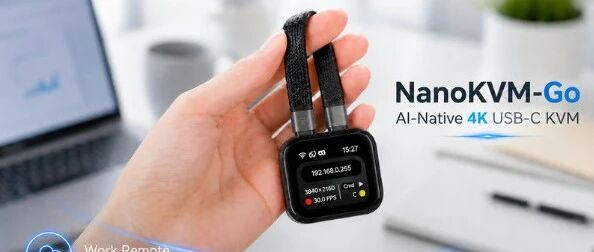
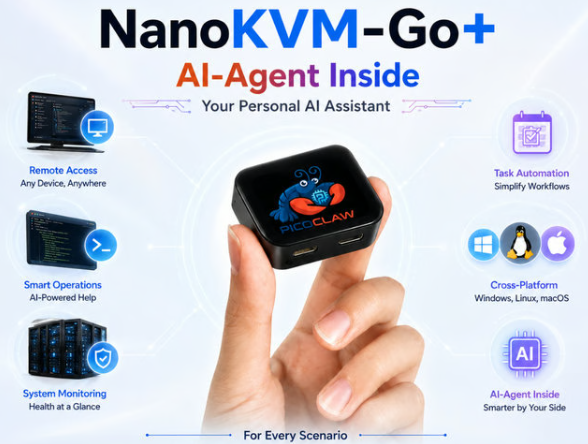
The NanoKVM-Go, an AI-native 4K USB-C KVM device from Shenzhen Sipeed Technology, allows users to remotely access and control any USB-C DP output-enabled device—including MacBooks, Mac minis, iPhone 15+, Steam Decks, or Android phones—from any browser. It achieves this by transmitting video, keyboard/mouse control, virtual disk, and network data over a single USB-C cable, complemented by built-in WiFi 6 and Tailscale. The Go+ version further integrates a 3.2 TOPS AI processor, enabling continuous screenshot memory, offline OCR, and an AIAgent MCP interface, positioning it as a hardware-level visual and control solution for AI automation workflows.
Kickstarter Launch and Early Reception
Launched on Kickstarter on July 1, 2026, the NanoKVM-Go quickly secured $170,000 within its first week. The brand engaged with major hardware media, releasing detailed reviews on launch day. Feedback from the technical community among backers has been particularly strong, showing greater interest in the AIAgent MCP integration and Ambient Screen Intelligence features compared to general consumers. However, some reviewers have raised privacy concerns regarding the Go+'s screen memory function, noting that a remotely accessible device storing six months of screen content—including emails, passwords, and sensitive files—presents a significant security consideration. Sipeed responded by stating that all data is processed locally and not uploaded to the cloud, which mitigates but does not entirely eliminate these concerns.
Product Core Features
**Single USB-C Cable: Video + KBM + Virtual Disk + Network (Four-in-One, Driverless)**
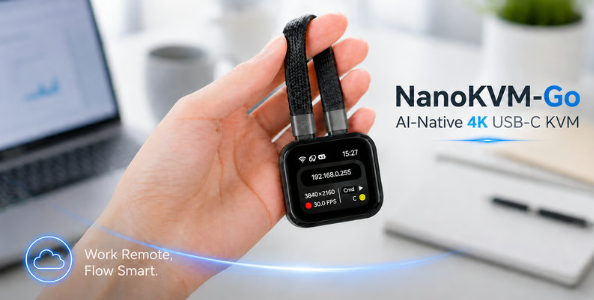
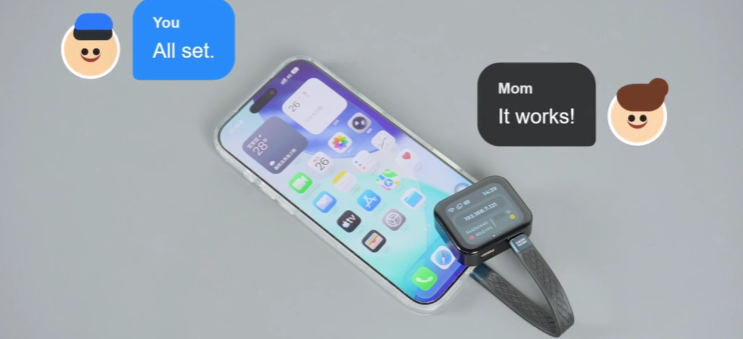
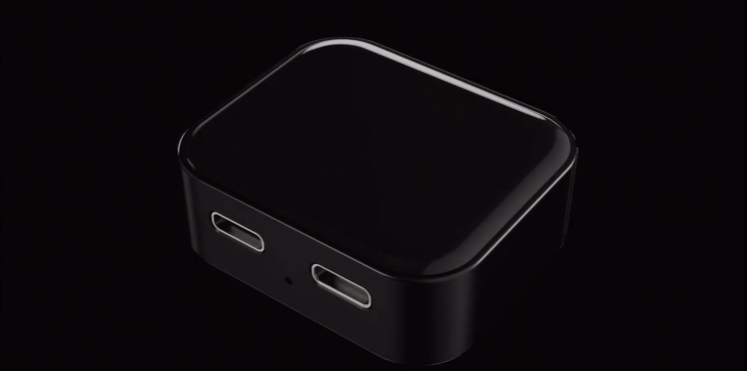
The NanoKVM-Go consolidates video/audio capture, HID keyboard/mouse emulation, virtual disk mounting (for OS installation ISOs), and a virtual network interface through its main USB-C port. An auxiliary USB-C port provides PD charging passthrough and a FingerBot expansion interface. The device requires zero installation on the target machine, eliminating the need for any software or drivers.
This approach fundamentally differs from the cumbersome cabling of traditional KVMs, which require separate HDMI, USB, Ethernet, and power lines. It also overcomes the inherent limitations of software solutions like TeamViewer or AnyDesk, which are unusable during system crashes or at the BIOS level. The NanoKVM-Go intervenes at the hardware layer, maintaining control in any state. Its compatibility extends to all devices supporting USB-C DP Alt Mode, including MacBooks, Mac minis, any Windows laptop or mini PC with USB-C DP output, iPhone 15 and later, DP Alt Mode-enabled Android phones, and the Steam Deck.
**4K@45Hz/2K@90Hz Capture, ~60ms Latency at 1080p**
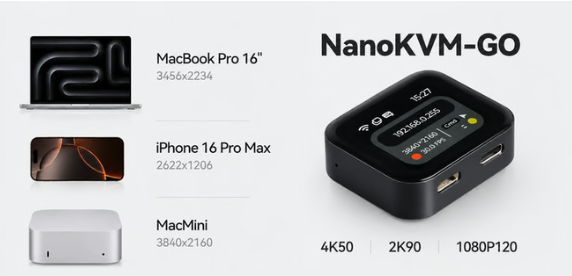
The device supports up to 4K resolution at 45fps capture and 2K at 90fps. Latency is approximately 60ms at 1080p, 80ms at 2K, and 100ms at 4K, all transmitted via WiFi 6 without the need for a wired Ethernet connection.
For professional users requiring remote access to macOS or high-resolution workstations, the 4K capture capability is a premium specification among USB-C KVMs in its price range. The 60ms latency at 1080p is sufficiently fluid for non-gaming remote management and work scenarios, though it is not recommended for real-time interactive tasks demanding latency below 30ms.
**AIAgent MCP Server Interface: KVM Functions Exposed as AI-Callable APIs**
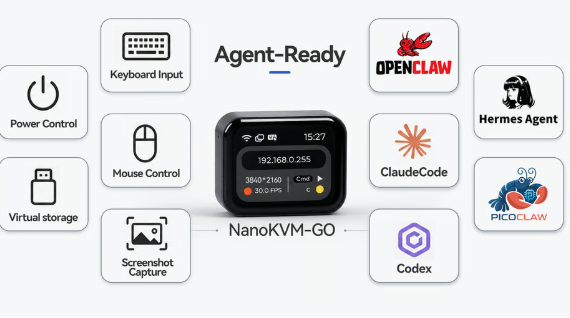
The NanoKVM-Go exposes all KVM functionalities, including keyboard/mouse control, screen capture, and disk operations, to AIAgents via an MCP server. Once enabled, users can utilize it as a hardware-level computer proxy peripheral, compatible with Sipeed's proprietary PicoClaw lightweight agent, or mainstream AI frameworks such as OpenClaw, ClaudeCode, Codex, and HermesAgent.
This enables AIAgents to genuinely 'see' the screen and perform physical keyboard and mouse actions, rather than merely calling operating system APIs. This offers unique value for automation tasks requiring control over BIOS interfaces, recovery modes, or legacy software without agent support. The stability of the MCP interface and its actual compatibility with various AI frameworks are still in early testing phases. The GitHub repository was empty at the time of the crowdfunding launch, a detail noted by the technical community.
**Ambient Screen Intelligence (Go+ Exclusive): Local 180-Day Screen Memory, Offline OCR Searchable**
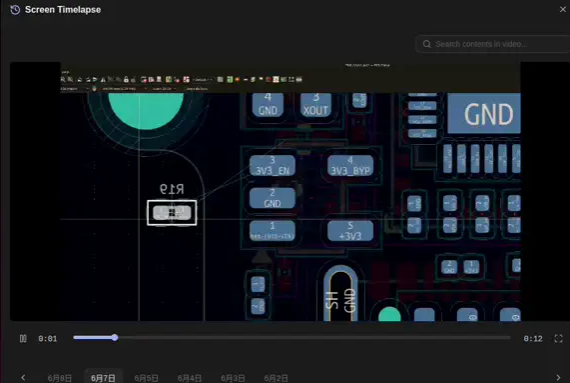
The Go+ version features a built-in 3.2 TOPS AI processor and 64GB eMMC, continuously capturing screenshots and storing up to 180 days of screen history locally. It supports offline OCR text recognition and natural language text search, similar to Microsoft Recall, but with all data processed locally, not uploaded to the cloud, and requiring no subscription.
This provides AIAgents with rich historical screen context, allowing them to query details like numbers displayed in a report three days ago or topics discussed in a meeting last week.
Multiple media outlets have highlighted privacy risks: six months of screen history can contain sensitive information (password inputs, private communications, confidential files). Even with local storage, these data remain potentially accessible when a remote KVM connection is active. Users should clearly assess their actual security boundaries before use.
**FingerBot Extension: Physical Power Button Press for Hard Reboots**
The auxiliary USB-C interface supports an optional FingerBot accessory, a small robotic arm capable of physically pressing the target device's power button. When a device is completely frozen and unresponsive to software commands, the FingerBot offers the only possible remote hard restart method. This provides genuine engineering value—not a gimmick—for users managing unattended home servers, remote workstations, or edge devices that frequently require hard reboots. The installation stability of the FingerBot and its compatibility with various device form factors are physical adaptation variables that need confirmation before deployment.
**45×40×15mm CNC Aluminum Body, Built-in Magnets, 1.6W Fanless Operation**
The entire unit measures approximately 45×40×15mm, is extremely lightweight, and features a CNC aluminum alloy casing. Built-in magnets on the bottom allow it to attach directly to metal chassis or the back of a phone. Its fanless design consumes about 1.6W, making it suitable for long-term, continuous operation while attached to a target device.
The ultra-compact size and magnetic design allow the NanoKVM-Go to be mounted discreetly on the back of a Mac mini or the side of a mini PC, essentially achieving a 'set it and forget it' permanent installation. The thermal management capabilities of the aluminum alloy casing under prolonged 4K capture at full load are a key design margin for fanless solutions that require validation.
About Sipeed Technology
Shenzhen Sipeed Technology, established in 2015, positions itself as an open-source AI hardware brand catering to developers and the maker community. Its product lines include RISC-V development boards, AI modules, and KVM devices. The NanoKVM series already has mature predecessors, with the NanoKVM Lite and NanoKVM Full officially sold, establishing a track record of product delivery.
Market Landscape and Competitive Edge
KVM-over-IP represents a moderately sized but rapidly evolving professional market, driven by the demands of remote work and AI automation. The global KVM-over-IP market is estimated to be worth between $138 million and $1.52 billion in 2024 (with variations primarily due to the inclusion of enterprise-grade switches), with various agencies projecting a CAGR between 6.2% and 10.1%, reaching $260 million to $3.2 billion by 2033.
Growth is fueled by increasing demand for distributed IT management, the proliferation of AI automation tools (requiring hardware-level visual and control access), and consumer-level demand for enterprise-grade remote management capabilities among homelab and small business users. The NanoKVM-Go's most direct competitor is the GL.iNet CometQ, also crowdfunding on Kickstarter concurrently, which has already raised over a million dollars. Both devices share highly similar functional positioning, offering USB-C KVM, WiFi connectivity, and driverless browser control.
A comparative analysis by CNXSoftware highlights NanoKVM-Go's advantages in five areas: smaller size, 4K resolution, larger local storage, FingerBot physical reboot, and the AI MCP interface. CometQ's strengths lie in GL.iNet's more mature after-sales and firmware maintenance system as a router brand, as well as concerns over technical transparency due to Sipeed's empty GitHub repository at the time of crowdfunding.
In the broader competitive landscape, PiKVM and TinyPilot are mainstream open-source alternatives, but both rely on traditional HDMI+USB interface solutions with limited mobile device support. The 'AI-native' positioning currently has no direct counterpart among existing KVM products, making it NanoKVM-Go's clearest differentiator in this market window.
The USB-C KVM segment is rapidly gaining traction with the maturation of AIAgent tools. The NanoKVM-Go aims to elevate KVM from a remote management tool to a hardware perception layer for AI automation via its MCP interface and Ambient Screen Intelligence. The key to realizing this potential lies in the stability of the MCP interface, its compatibility with AI frameworks under real-world developer workflows, and whether the GitHub repository can provide sufficient technical transparency before shipping.
The NanoKVM-Go aims to elevate KVM from a remote management tool to a hardware perception layer for AI automation.