Neko Pocket Wireless Guitar Studio: $370K in 10 Days. Why Musicians Are Backing It.
Campaign Teardown · · PledgeRadar Editorial
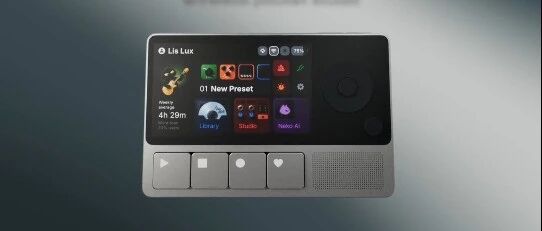
The Neko Pocket Wireless Guitar Studio is a portable wireless music device designed for electric guitar and bass players. It integrates wireless connectivity, amp and effects modeling, multi-track recording, backing track creation, and AI audio processing, aiming to let users pick up their instrument and immediately start playing, practicing, and capturing ideas. For many guitarists, inspiration often strikes suddenly—perhaps in a hotel room during a business trip or while relaxing at home, a melody unexpectedly comes to mind. However, recording it typically involves connecting a guitar, effects pedals, an audio interface, and a computer, then opening software to adjust tones.
Product Overview and Initial Success
The product's appeal isn't merely its compact size, but its ability to consolidate functions typically spread across hardware, computer software, and mobile apps into a single pocket-sized device. Neko launched on October 13, 2026, securing over $370,000 in its first week. While its pricing is notably higher than typical entry-level headphone guitar amps, Neko is more than just a practice amp; its value proposition is built on the combination of wireless connectivity, tone processing, recording, and AI features.
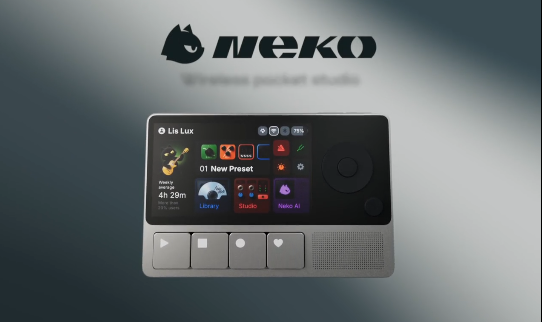
Core Product Features
**Dual Wireless Connectivity**
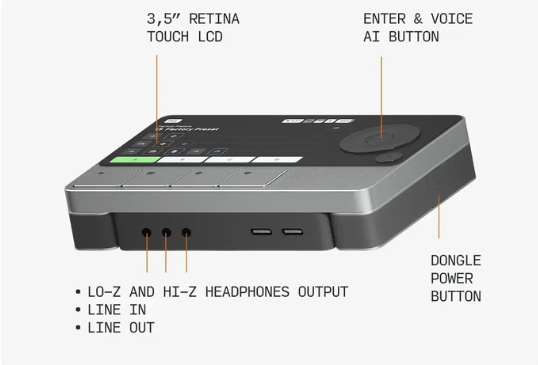
Neko features two built-in wireless interfaces: one for connecting to a guitar or bass, and another for connecting to an amplifier or mixer. The device handles tone processing internally, though users can also opt for traditional wired connections.
This design primarily addresses the hassle of complex equipment setups. For home practice, impromptu rehearsals, or jamming while traveling, fewer cables reduce the barrier to getting started. However, wireless connections can still be susceptible to signal interference, range limitations, and device compatibility issues, so their stability for live performances would require real-world testing.
**NAM Tone Model Compatibility**
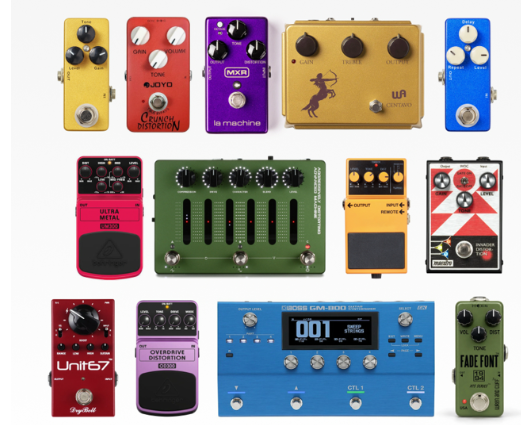
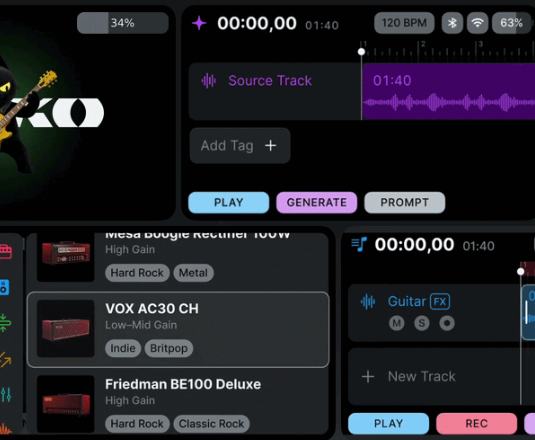
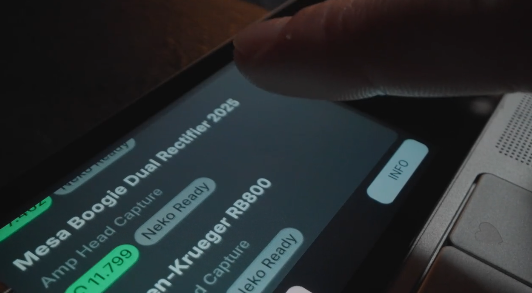
Neko supports NAM (Neural Amp Modeler) tone models and connects to the Tone3000 sound library. Users can access various amp, cabinet, and device capture models to experiment with different tonal styles.
For users who prefer not to purchase multiple physical amplifiers and effects pedals, this approach can reduce the cost of exploring diverse tones. However, a large number of models doesn't guarantee consistent sound quality across all of them; the final tone will also be influenced by pickups, monitoring equipment, the output chain, and the quality of the models themselves.
**Multi-Track Recording**
Neko integrates multi-track recording into its portable form factor, allowing users to capture performance snippets and develop ideas further.
This is particularly useful for guitarists who frequently improvise, as it eliminates the need to open a computer, set up an audio interface, and launch recording software every time. It's important to note that while the device offers recording capabilities, it doesn't fully replace a professional Digital Audio Workstation (DAW). Complex arrangements, detailed mixing, and multi-device collaboration may still require computer software.
**AI Audio Separation and Tablature Conversion**
Neko supports AI audio separation, which can split different parts of a song, helping users reduce the presence of the original guitar track for easier play-along and practice. It also advertises a feature to convert audio into guitar tablature. These tools address two common scenarios: wanting to clearly hear backing tracks during practice, and quickly finding melody and fingering cues while learning.
However, the accuracy of track separation can be affected by mixing complexity, audio source quality, and instrument overlap. Similarly, audio-to-tablature conversion may produce errors in note, rhythm, or fingering recognition. These features are better suited as practice aids rather than professional notation solutions that require no proofreading.
**AI Backing Track Generation and Time Machine**
Neko also offers backing track and arrangement generation tools, alongside a 'Time Machine' feature, which allows users to review previously played segments that weren't actively recorded at the time.
The former helps users practice composition without a full band, while the latter aims to mitigate the loss of fleeting creative ideas. However, the stylistic accuracy and responsiveness of backing track generation, as well as the specific mechanics of the historical performance cache, will require real-world user experience to fully assess.
Neko Engineering was founded by Vadim Smirnov. The product received a Red Dot Design Concept Award in 2026 and was showcased at the IBC exhibition the same year. However, design awards and technical partnerships do not substitute for mass production validation. Key considerations moving forward include whether initial products can ship on time, if firmware updates will be consistently provided, and how issues with wireless interfaces, batteries, and audio processing systems will be serviced.
Market Analysis
The market Neko operates in is not empty. Portable guitar amplifiers, headphone practice devices, digital effects processors, and mobile recording tools have already established several mature niche categories.
For instance, the Positive Grid Spark GO focuses on portable practice, amp simulation, and smartphone app integration, officially positioned more as a small practice amp. The IK Multimedia TONEX ONE, priced around $149, specializes in headphone practice, amp tone simulation, and portable use. Compared to these products, Neko's price point is significantly higher. It attempts to integrate multiple use cases through wireless transmission/reception, NAM tones, recording, AI track separation, tablature conversion, and backing track generation.
Therefore, Neko's competitiveness hinges on whether users genuinely need this specific combination of features. Someone who only wants to practice at home might not utilize the full recording and AI tools, and musicians already equipped with professional effects and recording gear may not be willing to change their existing workflow for portability alone. Neko is more likely to appeal to guitarists who travel frequently, want to capture ideas on the go, enjoy experimenting with different tones, and wish to reduce equipment setup steps.
From a commercial perspective, the $449 early bird price positions the product in a relatively premium segment, but the hardware, audio algorithms, software maintenance, and wireless connectivity systems also increase development and after-sales costs. If some AI features rely on continuous software updates, Neko's most interesting aspect is its attempt to solve several minor inconveniences in a guitarist's daily creative process: no need to set up a full rig to practice, ability to separate song parts for listening, quick idea capture when a melody strikes, and further development using backing track and tablature tools.
Individually, these features are not all new technologies. The true product value lies in whether they can seamlessly collaborate within a portable device. For musicians who frequently switch between hotels, rehearsal spaces, and home, Neko could indeed become a go-to portable creative tool if it delivers on wireless connectivity, tone, and recording experience. Whether it can justify its $449 price tag will ultimately depend on the mass-produced unit's sound quality, latency, battery life, and the practical utility of its AI features in real-world playing scenarios.
The true product value lies in whether they can seamlessly collaborate within a portable device.