Nopia MK1: The Chord Synthesizer That Raised Over $1.4M on Launch Day
Campaign Teardown · · PledgeRadar Editorial

The Nopia MK1, a semi-modular chord synthesizer from Argentina, aims to simplify complex musical expression. Designed for music producers, independent artists, and synth enthusiasts, its chord-centric keyboard layout, tonality selection system, and four-voice sound engine allow users to play intricate chord progressions in real-time without needing to input individual notes.
Campaign Overview & Performance
Launched on September 15, 2026, the Nopia MK1 crowdfunding campaign has raised over $1.4 million, with an average pledge of approximately $650. This is a remarkable achievement for a professional instrument from an independent team, especially with a price point exceeding $600.
Notably, the majority of its funding was secured within the first day. Within 24 hours of launch, the project surpassed $1.4 million with over 2,000 backers. Pricing started at $630 for email subscribers, followed by public Super Early Bird tiers at $650, Early Bird at $675, and a standard crowdfunding price of $699. The planned retail price is $899. The initial tiers sold out in approximately 32 hours.
This crowdfunding surge was the culmination of three years of groundwork. In 2023, founders Martin Grieco and Rocío Gal released a demo video of the Nopia prototype, which garnered approximately 2.6 million views in eight days. The team then consistently built interest through product demonstrations, development updates, and engagement within music communities, channeling these long-awaiting users into the official crowdfunding launch. The team noted in their launch announcement that they achieved early dissemination through videos, email, and music enthusiast communities, rather than relying on large advertising agencies.
MusicRadar has hosted a live demonstration with the team, confirming that the chord control, built-in sound engine, and multi-voice performance all function as intended. However, public feedback isn't uniformly positive: while some musicians appreciate its unique harmonic layout and MIDI expansion capabilities, others find the $650 price point steep, suggesting that existing synthesizers or software can accomplish similar tasks.
Core Product Features
**Chord-First Keyboard: One Press, Full Chord**
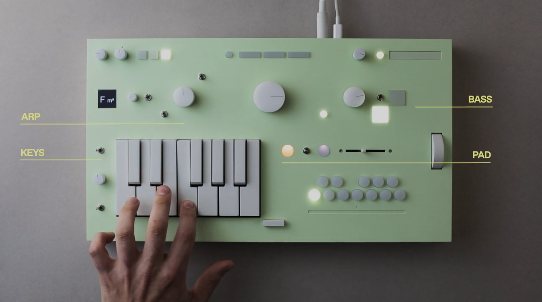
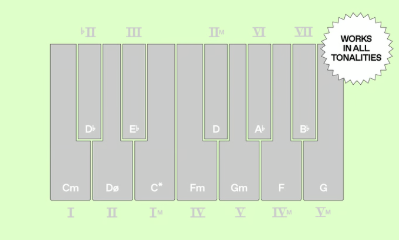
Unlike traditional keyboards based on individual notes, the Nopia treats chords as its fundamental playing unit. The left-side Chord Builder features a single-octave keyboard, while the right-side 12-key Tonal Selector allows users to choose a key. Chord relationships are then established through two modes: Real and Static.
Static mode emphasizes fixed fingerings corresponding to the same harmonic degree, eliminating the need to relearn entire key layouts when changing keys. Real mode, conversely, preserves richer actual pitches and harmonic relationships, including secondary dominant chords. This structure is particularly suited for rapid songwriting, improvised accompaniment, and live performances. However, it doesn't negate the need for music theory entirely; while users can quickly play pleasing chords, truly mastering complex harmonic progressions still requires an understanding of tonality and musical expression.
**Chord Extensions: A Single Knob for Harmonic Variation**
The Nopia offers an 'Extensions' knob, a Shift button, and controls for voicing and inversions, allowing users to add variations like 7ths, 9ths, 11ths, and suspensions to basic chords.
Where traditional keyboards require re-arranging fingers to alter chord structures, the Nopia transforms these operations into simple knob turns and button presses.
This feature is particularly appealing for genres that value harmonic complexity, such as jazz, neo-soul, and ambient music. However, it operates within preset harmonic logic and cannot fully replace a professional keyboardist's ability to freely select every individual note.
**Four-Voice Independent Sound Engine: Integrated Performance**
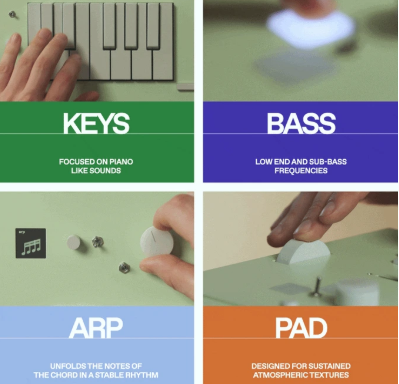
The Nopia features four built-in sound modules—Keys, Bass, Arp, and Pad—which combine sampled sounds with virtual analog synthesis. This allows it to simultaneously generate keyboard chords, basslines, arpeggios, and atmospheric pads.
This integration means users can directly build multi-layered performances without needing to first open a computer and arrange individual tracks. The value of these four modules lies in streamlining the performance workflow, not in providing four entirely independent synthesizers. Complex sound editing, voice arrangement, and mixing still involve a learning curve.
**Multi-Touch Performance: Expressive Chord Generation**
The Nopia is equipped with capacitive multi-touch areas, including a Strum Plate and Pitch Bend control.
Users can sequentially trigger notes within a chord, much like strumming a string instrument, or achieve pitch variations through sliding. This avoids the mechanical feel often associated with chord generators, ensuring that not all chords sound with identical velocity and rhythm. While this feature aims for more natural performances, long-term feedback from production users is still needed to assess the precision and stability of the touch areas.
**Three-Track Looper & Built-in Effects: Solo Arrangement**
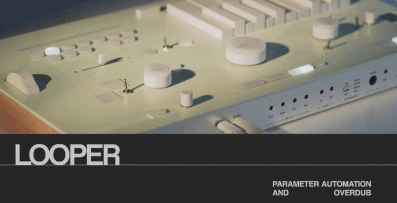
The Nopia includes a three-track looper with support for overdubbing and parameter automation. It also offers a range of built-in effects, including filtering, reverb, delay, saturation, tape emulation, and beat repeat.
Users can record a harmonic phrase, then progressively layer other sounds to create evolving, looping musical segments.
This is highly practical for solo improvised performances. However, it is not a full-fledged DAW and does not prioritize drum machines or multi-track audio editing. For musicians requiring complex rhythmic arrangements, external equipment remains indispensable.
**Four-Way MIDI Output: A Harmonic Hub for Your Studio**
The Nopia provides four independent TRS MIDI outputs, alongside MIDI input, USB MIDI, and sync connectivity. Its four sound modules can individually control external synthesizers or connect to software instrument plugins on a computer.
This allows the Nopia to function both as a standalone instrument and as a harmonic hub, organizing multiple studio devices under a unified harmonic logic. This could be Nopia's most valuable feature for professional users, as it can drive several external devices simultaneously, unlike a standalone chord keyboard. However, its semi-modular nature does not imply the free patching analog modular architecture found in traditional Eurorack systems; its primary expansion capabilities are built upon MIDI and its internal sound modules.
Team & Development
Nopia is based in Buenos Aires, Argentina, founded by musician Martin Grieco and designer Rocío Gal. Martin, with a background in jazz guitar, composition, and music production, initially sought to solve the problem of hands being fully occupied by chord playing during live performances, preventing simultaneous control of other sounds. Rocío, with expertise in graphic and industrial design, led the transformation of the initial software performance concept into a physical instrument.
Starting with a competition prototype in 2023, the team spent approximately three years developing the keyboard, knobs, casing, circuitry, and firmware. The product's use of solid wood, anodized aluminum, and custom mechanical keys clearly emphasizes tactile feel and industrial design.
Market Analysis & Competitive Landscape
According to Grand View Research, the global keyboard instruments market is projected to reach $3.4 billion by 2026 and approximately $4.6 billion by 2033, with a compound annual growth rate (CAGR) of about 4.6% from 2023-2033. The synthesizer sub-segment is expected to grow at an annual rate of approximately 5.4%. This growth is primarily driven by electronic music production, an increase in independent musicians, and demand from home studios and digital content creation.
Nopia is not entering an entirely new product category. The Roland J-6, priced at around $270 retail, offers rapid arrangement via 100 chord presets. The Conductive Labs NDLR V2, at approximately $379, can generate chords, arpeggios, and sustained basslines using four MIDI voices. Telepathic Instruments' Orchid positions its chord generator in the $549-$599 price range.
Compared to these competitors, Nopia's crowdfunding price of $650-$699 doesn't offer a significant cost advantage. Its true differentiation lies in its performance philosophy: while the J-6 leans towards chord presets and step sequencing, the NDLR emphasizes automation and multi-device control, and the Orchid focuses on chord exploration, Nopia aims to integrate tonal relationships, chord variations, and real-time touch control into a directly playable instrument.
This differentiation could attract musicians willing to invest in their creative workflow. However, a market risk is that chord generation itself isn't a technical barrier, as numerous DAWs, MIDI plugins, and hardware synthesizers already support related functionalities. For users already proficient with keyboards and music production software, Nopia must prove that its physical interface genuinely offers a faster, more creative playing experience. Additionally, the product lacks a built-in battery and speakers, requiring USB-C power and headphones or external audio output. While it can operate independently of a computer, it is not a portable instrument that can be picked up and played instantly.
MusicRadar has hosted a live demonstration with the team, confirming that the chord control, built-in sound engine, and multi-voice performance all function as intended.