Oasis Kinetic Sand Art Tables: $800K in 30 Days, Turning Sand Art into Smart Furniture
Campaign Teardown · · PledgeRadar Editorial
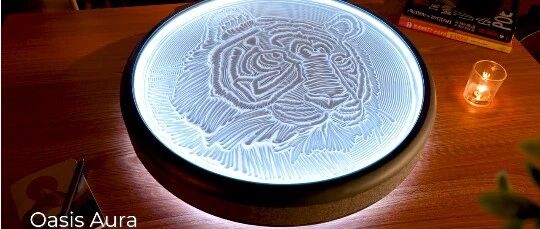
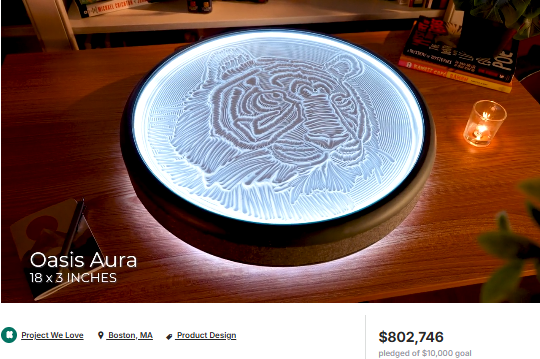
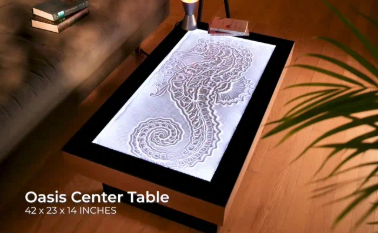
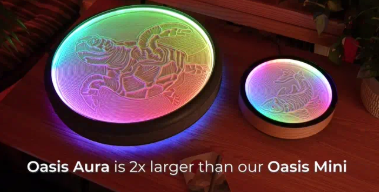
OasisDesign introduced two new products in its kinetic sand art line: the Oasis CenterTable and Oasis Aura. Both utilize a hidden mechanical system beneath a sand tray to move a metal sphere across fine sand, continuously drawing patterns like animals, figures, and geometric shapes. The Oasis CenterTable, designed for larger spaces like living rooms, integrates dynamic sand art directly into a coffee table, measuring approximately 42×24×18 inches. The Oasis Aura is an 18-inch diameter, 3-inch tall large-format desktop model, significantly expanding the display area compared to the 9-inch Oasis Mini and adding ambient lighting. Both products feature Wi-Fi connectivity and iOS/Android app support, allowing users to select patterns, adjust speed and lighting, and even create their own designs.
Campaign Performance and Product Appeal
The project launched on Kickstarter on May 19, 2026, and concluded on June 18, raising a total of $800,000. On average, each backer contributed approximately $627, with daily funding averaging around $26,800. The campaign's first day was particularly strong, with public tracking data showing $440,000 raised and nearly 800 backers within the initial 24 hours. This meant over half of the total funding was secured on launch day, with subsequent growth slowing.
A key characteristic of these products is their relatively simple functionality combined with a visual appeal highly suited for video sharing. As the metal sphere slowly traverses the fine sand, a new pattern gradually emerges, only to be gracefully overwritten as the next design begins. Recurring keywords in user reviews for the brand's previous products include 'mesmerizing,' 'calming,' and 'conversation starter.' It's important to note these are not entirely self-sufficient mechanical art pieces; they require continuous power and rely on an app and Wi-Fi for primary control. Larger versions also involve furniture-grade shipping, and the brand's previous Coffee Table experienced extended pre-sale waiting periods. These factors represent practical considerations for potential buyers.
Product Core Selling Points
**Magnetic Sand Art System: A Constantly Evolving Canvas**
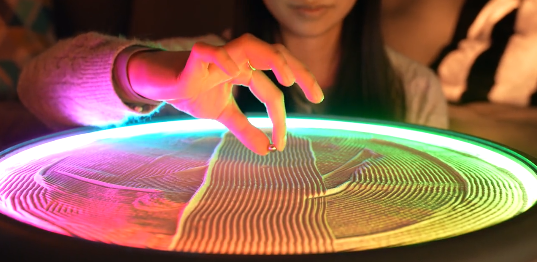
The core Oasis experience stems from a hidden movement mechanism beneath the sand tray. An internal mechanical system drives magnetic components, which in turn guide a metal sphere across the sand surface along pre-programmed paths. The sphere leaves clear trails in its wake, gradually forming complete patterns.
The main distinction from traditional sand art is that the creations are not one-time events. After one pattern is complete, the system can continue with a new trajectory, gradually covering the previous design and forming another. This transforms the surface from a static decorative piece into a continuously evolving, dynamic canvas.
For short-form video content, the process of a pattern slowly emerging from nothing is inherently a powerful visual hook.
**42-inch Furniture-Grade Canvas: Art for the Living Room Centerpiece**
The most significant evolution of the CenterTable isn't the addition of smart features, but rather the transformation of sand art from a decorative object into a piece of furniture. The current rectangular model measures approximately 42×24 inches with an 18-inch height, making it a full-sized living room coffee table. Compared to the Oasis Mini and Aura, it can display more intricate lines and larger patterns, with the brand designing specific works like 'Giraffe' and 'Koi Pond' for its rectangular canvas.
This step fundamentally shifts the product's competitive landscape. While the Oasis Mini remains a tech-enabled decorative item, the CenterTable now competes with designer coffee tables, art furniture, and home decor. Consumers aren't just buying a machine that draws; they're investing in a furniture piece designed to be the visual focal point of a living room. This strategic move was key to pushing the average order value from just over a hundred dollars to nearly a thousand.
**18-inch Aura: Doubling Desktop Sand Art Display**
The Aura takes a different approach. Instead of becoming furniture, it scales up the already successful Oasis Mini, making it larger and more visually impactful.
With an 18-inch diameter, the Aura is twice the size of the 9-inch Oasis Mini, a fact highlighted by the brand. It also incorporates an outer ring of ambient lighting and a fabric-wrapped exterior, elevating it from a desktop gadget to a more complete indoor art installation.
This strategy allows the brand to cover a clear price gradient: the Mini targets low-entry desktop scenarios, the Aura offers a stronger visual experience, and the SideTable and CoffeeTable extend further into the furniture category.
From a single core mechanical system, the brand can continuously derive products of varying sizes and price points.
**Thousands of Free Patterns: Hardware with Evolving Content**
A common challenge with dynamic sand art is maintaining novelty after viewing dozens of patterns. Oasis addresses this not by constantly selling new hardware, but by building an extensive pattern library.
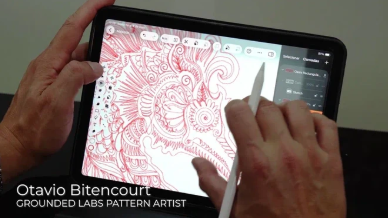
Currently, the official count states the system boasts over 1,000 patterns. The brand's in-house artist, Otavio, first hand-draws designs, which are then converted into machine-executable path files.
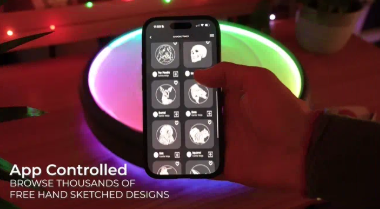
Users can also browse patterns or create their own designs via the app. Settings for lighting, movement speed, and sleep timers are also managed within the app, adding a layer of digital content to what is primarily a hardware product.
A sand art table purchased today can theoretically have a different pattern library six months later, which is crucial for extending the product's appeal and freshness.
**Nearly Silent, Slow Drawing: Sand Art as Ambient Content**
Oasis doesn't prioritize speed; instead, the product intentionally moves the metal sphere slowly, making the pattern formation process an integral part of the experience. Both the CenterTable and Aura are marketed as 'Nearly Silent.' Users can place them in living rooms, offices, or bedrooms, allowing them to continuously draw without the high-brightness video playback of a screen.
This represents a clever positioning strategy by Oasis. It doesn't market itself as a new display device but rather combines mechanical movement, sand, light, and a slow pace to emphasize calm, relaxation, and recentering. Consumers are not just buying the final image that appears, but the experience of watching it slowly form over minutes, or even longer.
Campaign History and Production Challenges
This marks OasisDesign's third Kickstarter project. The team first launched the Oasis Mini in 2023, raising $1.3 million from nearly 20,000 backers. In 2024, they introduced Oasis Kinetic Sand Tables, expanding the product line to include SideTable and CoffeeTable models, which garnered $2.32 million from over 6,500 backers. Including the latest campaign, OasisDesign's three Kickstarter projects have cumulatively raised over $4.45 million.
Based on delivery records, the team has successfully completed large-scale production, though with some delays. The first-generation Oasis Mini saw phased deliveries expand in 2024, with the team disclosing over 10,000 units produced by May of that year. Production and logistics cycles for the second-generation furniture products were notably longer, with mass shipments beginning in late 2025. By March 2026, official reports indicated that 4,723 Oasis SideTables and 1,731 Oasis CoffeeTables had been shipped.
However, this also highlights the biggest risk for this product category. The CenterTable, with its near-furniture dimensions, integrates mechanical movement systems, glass, wooden casings, and electronic components. The previous generation's team once revealed that a single table comprised nearly 200 individual parts. Manufacturing yield, large-item ocean freight, warehousing, and last-mile delivery are all significantly more complex than for standard consumer electronics.
Global Market Analysis and Product Strategy
The Oasis CenterTable defies easy categorization into a traditional product segment. It functions as furniture, home decor, smart hardware, and digital art simultaneously.
Looking at the broader market, global home decor is already a mature sector approaching a trillion dollars. GrandViewResearch data indicates the global home decor market was approximately $960.1 billion in 2024, projected to reach about $1.62 trillion by 2030. Within this, personalized home furnishings, innovative design, and the integration of smart technology with traditional decor are emerging as new growth drivers.
What's truly remarkable about Oasis is its approach: it doesn't attempt to educate consumers with complex technology. The concept is immediately understandable:
A ball moves in sand, slowly drawing a picture. However, the team then leveraged size upgrades to extend this singular experience from the $129 Mini to the $299 Aura, then to the several-hundred-dollar SideTable, and finally to the nearly $900 CenterTable.
This represents a classic product development path: first validating a core visual experience, then continuously expanding usage scenarios and average order value.
While the first two crowdfunding campaigns proved consumers were willing to pay for dynamic sand art, this $800,000 campaign validated something else: that consumers are not only willing to place it on a desk but also to integrate it as a genuine piece of furniture in their homes.
From a 9-inch mini sand tray to a 42-inch living room coffee table, Oasis consistently sells the same core concept: a moving steel ball. What changes is the product's size; what remains constant is that memorable visual moment for consumers.
Consumers are not just buying the final image that appears, but the experience of watching it slowly form over minutes, or even longer.