Orbitkey Grid Desk Organizer: A Modular System's $720K Kickstarter Campaign
Campaign Teardown · · PledgeRadar Editorial
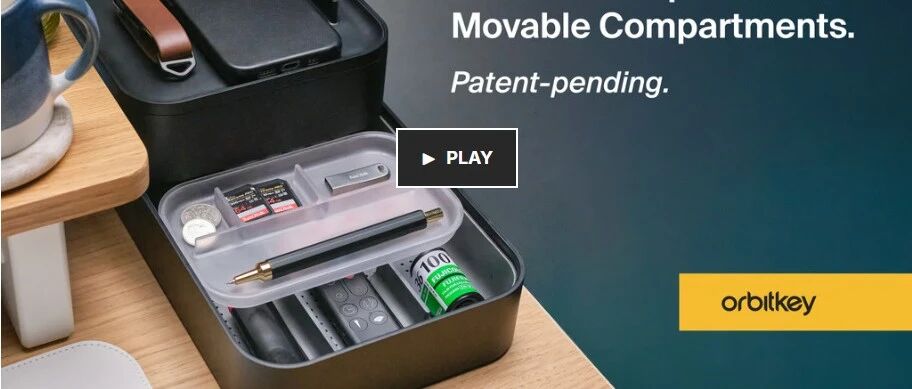
The Orbitkey Grid Desk Organizer is a modular desktop organization system from Melbourne-based brand Orbitkey. At its core is a patent-pending snap-in divider system, allowing users to freely insert or remove dividers anywhere on the honeycomb grid base tray. This enables customizable compartments to fit items of any size, with support for stacking and sliding access. It's designed for users looking to permanently declutter their desks, nightstands, or any cluttered space.
Campaign Launch and Performance
The Grid Desk Organizer launched on Kickstarter on May 14, 2026, raising over $85,000 in its first hour—Orbitkey's fastest-reacting crowdfunding campaign to date. The campaign concluded after one month with $720,000 raised. This marks Orbitkey's 13th Kickstarter campaign, with all 12 previous projects successfully delivered, a rare track record in the Kickstarter design category. Shipping for this project is estimated between July and September 2026. As an experienced crowdfunding creator, Orbitkey partnered with long-standing PR agencies, leading to features in publications like GearPatrol, which called it an "everyday essential that exceeds its price point," YankoDesign, which described it as a "horizontal desktop Pegboard," and 9to5Mac, which noted its ability to address a genuine pain point for tech users.
Key Product Features
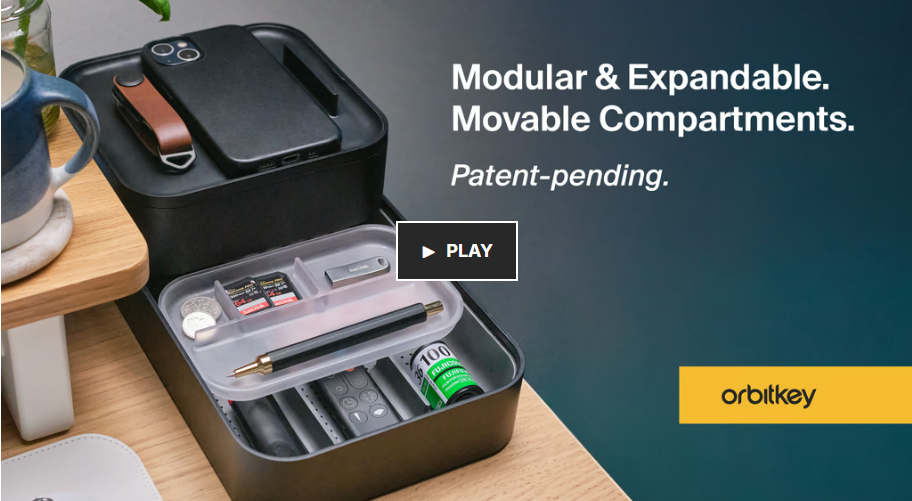
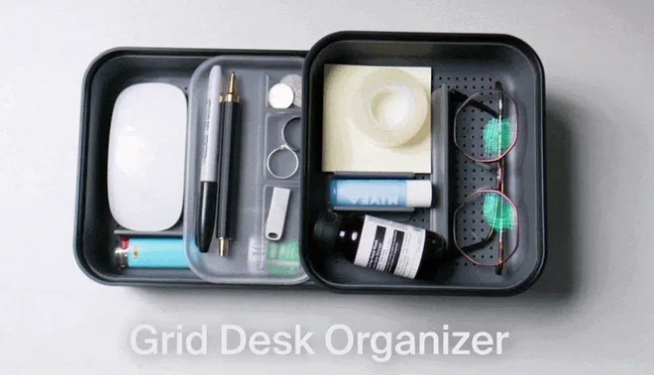
The core mechanism of the Grid is its patent-pending snap-in grid dividers. The perforated tray base acts like a horizontal pegboard. Two lengths of dividers can be snapped into any grid position on the tray, allowing users to freely define compartment boundaries based on the actual size of their items (pens, cables, AirPods cases, SD cards, SSDs, etc.), eliminating the need to force items into pre-set slots.
If equipment changes or desktop needs evolve, dividers can be popped out and reinserted without tools. Most desktop organizers on the market feature either fixed compartments or empty trays, neither of which truly adapts to every individual's unique item combinations. The Grid solves this long-standing product design dilemma with its reconfigurable dividers. The long-term durability of the snap-in mechanism's friction after frequent use is a variable to monitor for consistent mass production quality.
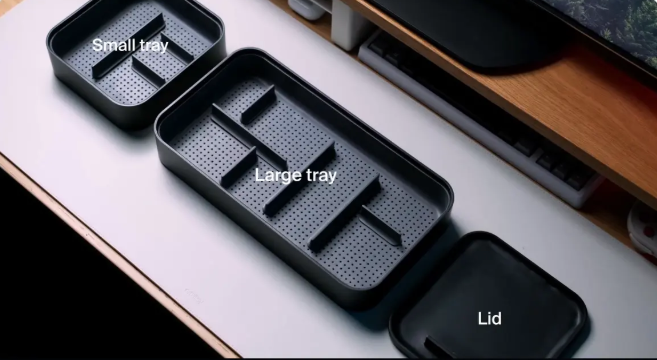
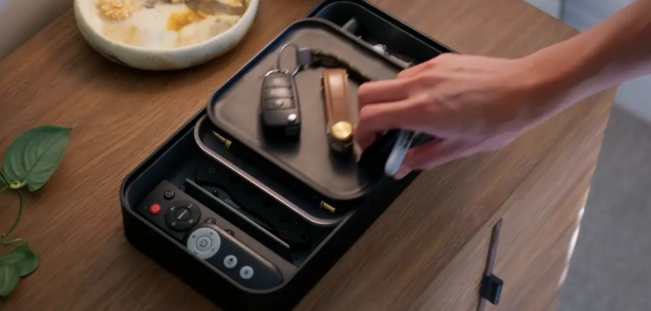
The standard Grid features a three-layer stacking structure. It consists of three components: a bottom main tray for everyday items with the integrated divider system; a top accessory tray providing a second layer for smaller, denser accessories (SIM cards, screws, earbuds); and a removable lid that can be used flat as an open quick-access area for keys, wallets, or phones, or closed to protect internal items from dust.
This three-layer design maximizes vertical space within a limited desktop footprint, while functional stratification naturally separates frequently accessed items from those stored for archiving. The overall height and stability of the stacked system, along with whether the accessory tray shifts during desktop vibrations, are user experience metrics likely to be reported early post-delivery.
The sliding access design allows the top tray to be slid open directly to access contents in the lower layers, eliminating the need to disassemble and reassemble the entire system. This design detail is crucial for frequent daily use; users would quickly abandon the layering if they had to completely remove the top section every time they needed an item from below.
The smoothness of the sliding mechanism and its anti-slip stability on various desktop surfaces (glass, wood, leather mats) are detailed dimensions for evaluating the quality of the actual user experience.
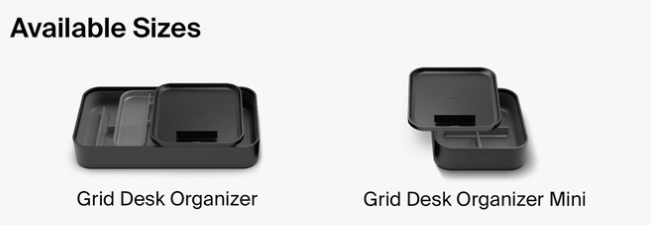
The product is available in two sizes, Standard and Mini. Both share the same design language and structure, supporting stacking or side-by-side placement. Users can start with a Standard unit and gradually add Mini units as expansion modules to grow with their needs.
This dual-size, combinable strategy elevates the product from a single purchase to an evolvable system. The Mini's low entry price of $26 also provides Orbitkey with a natural path for continuous repeat purchases. The brand states plans to release future-compatible accessories and inserts, ensuring that purchasing the current version will not be rendered obsolete by product iterations.
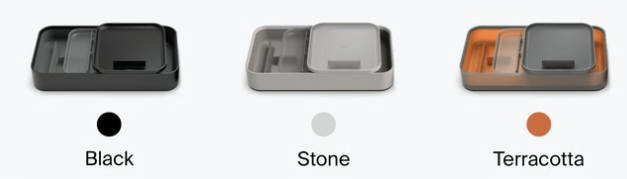
The product is available in three color options: Black, Stone, and Terracotta. Media outlets like GearPatrol specifically highlighted the Terracotta color for its optimal visual presentation of the divider system. Color selection will be confirmed via backer surveys after the crowdfunding campaign concludes, so it does not impact current pledging decisions.
Orbitkey is a BCorp certified brand and also holds Climate Neutral certification. This dual environmental endorsement is uncommon among design-focused desktop products, serving as an additional trust signal for consumers concerned with supply chain responsibility.
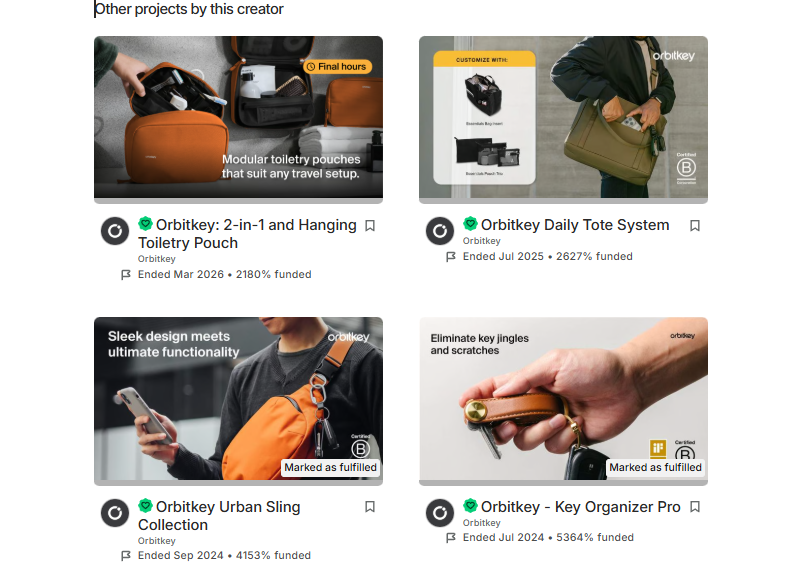
Orbitkey was founded in Melbourne, Australia, in 2013 by Rex Kuo and Charles Ng. The company began with a key organizer designed to solve the problem of jingling keys and has since spent over 10 years consistently developing solutions in the niche of everyday item organization and carry.
The brand's team is distributed across Melbourne, Sydney, Wellington, Jakarta, Cebu, Shenzhen, and Madrid. They have successfully completed 13 Kickstarter campaigns, raising over $4.4 million in total.
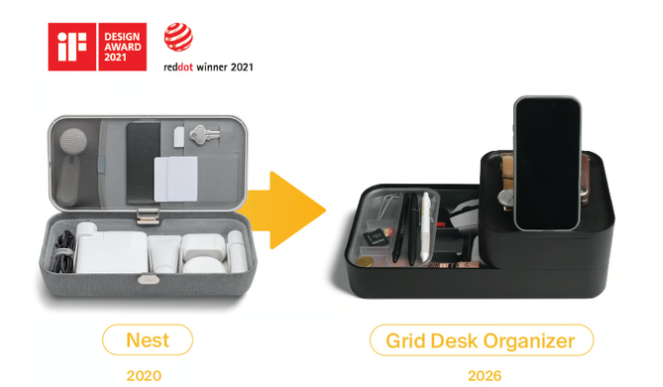
Orbitkey is recognized as one of the brands with the most complete delivery records in the Kickstarter design category. Their Nest product (which raised over $600,000 in 2020) received both an iF Design Award and a Red Dot Award.
Global Market Analysis
The global desktop organizer market was valued at approximately $4.27 billion to $4.28 billion in 2024, with a projected CAGR of about 5.1% to 5.3%, reaching approximately $6.67 billion to $6.78 billion by 2033. The core driver of this growth is the continued entrenchment of global hybrid and remote work models. As more individuals establish dedicated home workspaces rather than temporarily using dining tables as desks, there's a systemic upgrade in demand for aesthetically pleasing and practical desktop organization solutions. The overall office storage market is steadily expanding at a 5.8% CAGR, with design-oriented products that balance aesthetics and functionality being the fastest-growing sub-segment.
In terms of the competitive landscape, the desktop organization market is highly fragmented. It ranges from basic IKEA storage boxes ($5–$15) and a vast array of bamboo or metal fixed-compartment trays on Amazon ($15–$40), to design-focused North American brands like Ugmonk's Analog system ($90+, specializing in task card management) and Proper, as well as competitors with established brands in everyday carry accessories like Dango Products and Peak Design. A common limitation of mainstream products is their fixed compartments; no matter how well-made, pre-set divider counts and sizes cannot adapt to every user's specific item combinations. The Grid's snap-in dividers represent an innovation without mature competitors in this dimension. Its introductory price of $42 is also highly competitive compared to other design-oriented products. These two factors combined are key to the product quickly gaining backer trust. The primary market risks lie in the long-term durability of the divider system under frequent daily use and the product's ability to maintain a stronger perceived value than mass-market Amazon products in broader retail channels.
Desktop organizers are a mature category with universal demand and highly commoditized supply. The Orbitkey Grid, with its reconfigurable snap-in dividers, flips the product logic from adapting to compartments to compartments adapting to you. The $42 introductory price, combined with Orbitkey's proven delivery record, made this crowdfunding campaign almost frictionless for backers. The real test will be whether the durability of the dividers and the system's expansion compatibility can consistently fulfill the brand's design promises after physical delivery.
The Grid, with its reconfigurable snap-in dividers, flips the product logic from adapting to compartments to compartments adapting to you.