PetyPot: The Litter-Free Cat Toilet That Raised $650K on Kickstarter, and Its Consumables Model
Campaign Teardown · · PledgeRadar Editorial
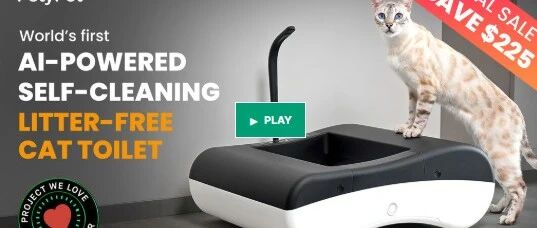
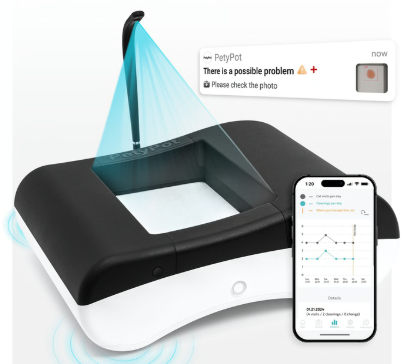
PetyPot is an automatic cat toilet that replaces traditional cat litter with a disposable absorbent pad roll. After a cat uses it, the machine automatically rolls away the soiled section, encapsulating urine and solid waste in a sealed compartment, then deploys a fresh, clean pad. Integrated with weight sensors, an app, and an optional AI camera, it tracks a cat's weight, litter box frequency, and duration, alerting owners to potential health issues based on changes in waste color and form. This approach fundamentally differs from automatic litter boxes like Litter-Robot, which sift clumping litter. PetyPot eliminates litter entirely, using a roll-based consumable and automatic retraction to address scooping, tracking, and dust concerns.
Campaign Overview and Core Innovation
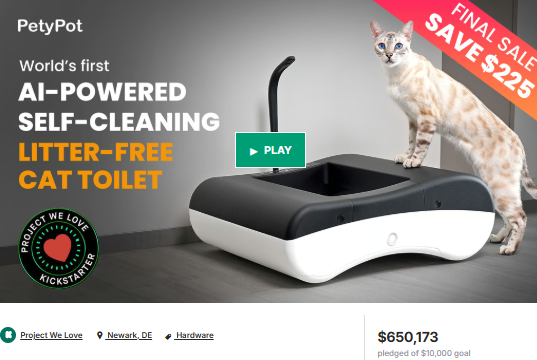
Launched on Kickstarter on April 16, 2025, PetyPot quickly became a 'Project We Love,' raising over $650,000 from 1,509 backers in 30 days. Its rapid success stemmed not just from its 'AI cat toilet' branding, but from clearly addressing three common pain points for cat owners: no litter, no scooping, and a fresh surface after every use.
Product Features and Consumables Model
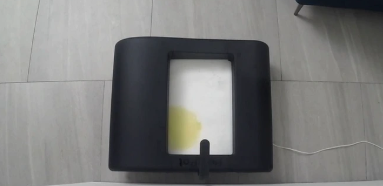
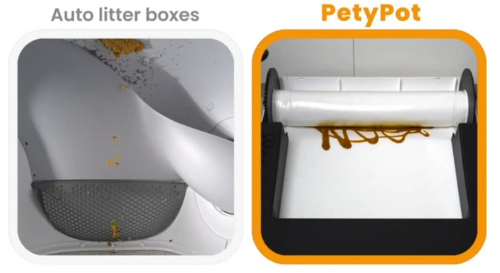
PetyPot uses specially designed scratch-resistant absorbent pad rolls. After the cat leaves, the machine automatically retracts the soiled section, sealing solid waste within a dedicated compartment, and then deploys a new clean area. The company states that one roll can last up to 15 days for a single cat, with an optional activated carbon filter for odor control.
This system is more thorough than traditional automatic litter boxes, which sift waste and reuse the same litter. Urine doesn't clump and remain in the tray, and cat paws don't track granular litter onto floors, making it appealing for small living spaces and households sensitive to dust.
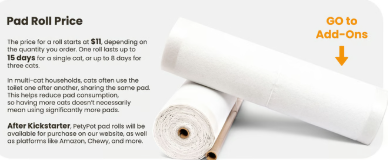
While eliminating the need for cat litter, PetyPot introduces its own consumable ecosystem. Subsequent business materials from the project team indicate that Pad Rolls are planned to retail for approximately $12 each. A single cat would theoretically require about two rolls per month, translating to a recurring expense of roughly $24.
Combined with carbon filter replacements, PetyPot effectively converts traditional cat litter expenses into proprietary brand-specific consumable purchases.
Traditional cat litter absorbs urine and covers feces, making it difficult to consistently observe changes in color, blood, mucus, or urination volume. PetyPot intentionally uses a white pad surface, keeping urine and feces visible. An optional AI camera then analyzes changes in color, form, and quantity.
Simultaneously, weight sensors record weight, number of uses, and duration per visit. The accompanying app trends this data, alerting users to anomalies such as blood, diarrhea, constipation, reduced urination, or frequent urination. This health monitoring capability allows PetyPot to command a higher price point than typical automatic litter boxes, shifting the value proposition from mere scooping convenience to proactive pet health data.
However, the AI camera functions as an anomaly detection tool, not a veterinary diagnostic device. Factors like lighting, waste position, a cat's diet, and multi-cat households can influence recognition accuracy. Identification in multi-cat homes primarily relies on weight, meaning stability for cats with very similar weights would require real-world production data validation.
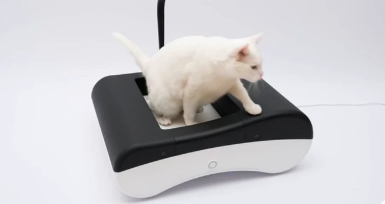
PetyPot eschews the enclosed rotating drum common in devices like Litter-Robot, opting instead for an open-top, low-entry design with a flat surface similar to traditional litter boxes. This structure is more accommodating for kittens, senior cats, and those that dislike enclosed spaces, also lowering the barrier for owners to train their pets on a new device.
However, the absence of litter itself is a significant behavioral variable. Cats naturally instinct to dig and bury their waste, and not all cats may adapt to a smooth pad surface. Furthermore, the open, low edge posed a clear risk for cats that spray while standing. After the campaign reached approximately $400,000, the project specifically added a "Pee Guard" high splash guard as a stretch goal, indicating this issue was frequently raised by backers during the crowdfunding phase.
Business Model and Post-Campaign Challenges
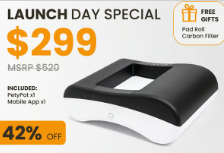
PetyPot's initial $299 Super Early Bird price was notably lower than high-end automatic litter boxes; for instance, Litter-Robot 4 officially starts at $699, and PetSnowy SNOW+ is similarly priced around $699.
However, PetyPot's business model extends beyond just selling the device. Subsequent fundraising documents from the team revealed a planned retail price of $399 for the hardware, an optional AI camera for $59, Pad Rolls at approximately $12, carbon filters at $6, and a planned $8/month subscription fee for AI health analysis.
This represents a classic hardware-as-a-service model: selling the cat toilet is merely about user acquisition, with long-term revenue derived from pad rolls, filters, and AI services. From a business perspective, this recurring revenue model made PetyPot particularly noteworthy compared to typical smart pet hardware at the time.
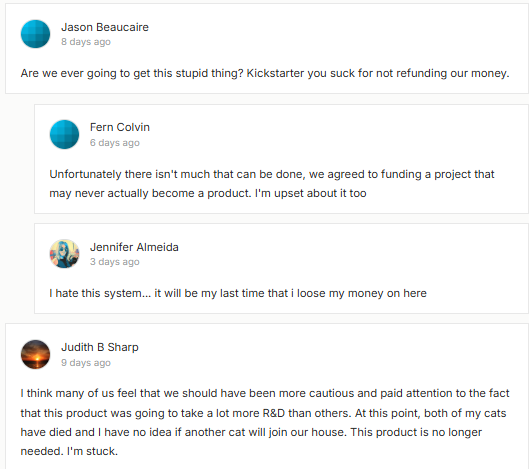
The true challenges for projects of this nature often emerge after the crowdfunding campaign concludes. PetyPot's original Kickstarter delivery target was September 2025, but shipments did not commence as planned. The backer community subsequently saw ongoing discussions about delays and insufficient communication. On April 17, 2026, a backer relayed an update from the project team stating that the hardware design for mass production had only just been finalized, with the next phase involving mold design and production preparation, pushing the delivery target back to late 2026.
As of August 2026, the PetyPot official website still displayed its "JUST LAUNCHED ON KICKSTARTER" legacy page, and there was no public evidence of widespread delivery to the over 1,500 Kickstarter backers. This makes PetyPot a classic case of a project that found relative success in crowdfunding validation—proving consumer demand for $650,000—but has yet to complete manufacturing and delivery validation. The complex mechanism of the pad roll, sensors, camera, sealed waste compartment, and consumable system has not demonstrated stable mass production capability.
Global Market and Innovation
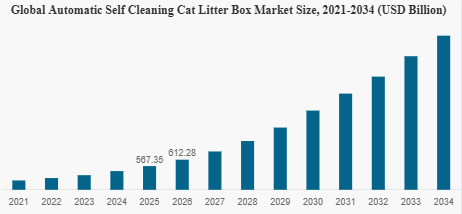
The global automatic self-cleaning litter box market was valued at approximately $559 million in 2024, projected to reach $870 million by 2030, with a Compound Annual Growth Rate (CAGR) of about 7.8% from 2025-2030. North America accounts for roughly 37% of this market revenue, and multi-cat households represent one of the fastest-growing segments.
This market already features established players like Whisker, PETKIT, and PetSnowy, whose competitive focus generally centers on automatic sifting, odor control, weight tracking, and app-based health records. PetyPot's clever move was to avoid competing on who could sift litter more cleanly, instead directly altering the entire consumable system by replacing litter with pad rolls.
This innovation provided strong marketing differentiation but also introduced greater commercial risks. Questions such as whether cats would adapt to a litter-free surface, if the pad rolls could withstand scratching long-term, potential urine leakage, ease of cleaning if the conveyor mechanism became soiled with waste, and the sustained supply of proprietary consumables are all issues a standard rotating litter box doesn't face.
PetyPot's $649,798 crowdfunding success demonstrated that the "no litter, no scooping, plus health monitoring" narrative resonated strongly with consumers. However, looking back at this viral product, the most valuable lesson isn't how much AI it incorporated, but that a significant demand innovation ultimately hinges on fundamental mass production capabilities. If the pad roll mechanism and consumable system can eventually achieve stable delivery, this could represent a very promising business model for pet hardware.
PetyPot's $649,798 crowdfunding success demonstrated that the 'no litter, no scooping, plus health monitoring' narrative resonated strongly with consumers.