PlantSenso: Smart Plant Sensor Turns Green Thumbs into Pixel Pets, Raises Over $50K on Kickstarter
Campaign Teardown · · PledgeRadar Editorial
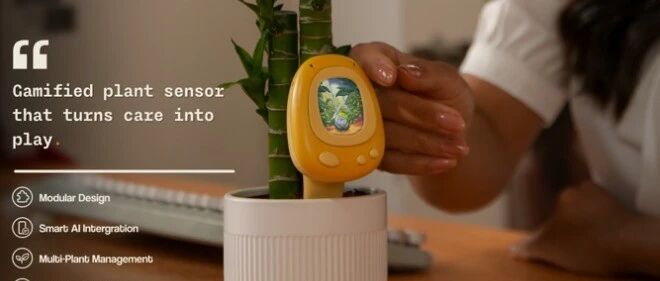
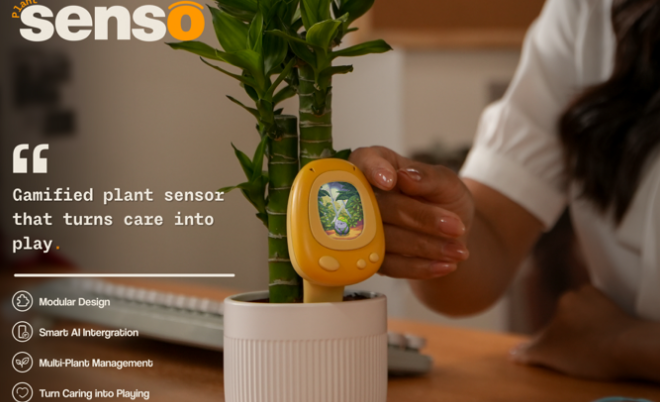
PlantSenso, a smart plant sensor from Soildtech, aims to simplify indoor plant care through gamification. Comprising a soil probe, a pixel-display host, and a mobile app, the device continuously monitors environmental data. It translates plant needs, such as thirst or abnormal light conditions, into expressions and tasks for a pixelated pet character.
Gamified Plant Care and Campaign Progress
Unlike automated watering systems, PlantSenso does not actively adjust temperature or light. Instead, it addresses two common challenges for indoor plant owners: not knowing what their plants need, and a lack of motivation to act on reminders. It's designed for users who often forget to water, lack gardening experience, or dislike interpreting complex data charts.
The project launched on Kickstarter on June 16, 2026, with a planned end date of July 31. As of July 2, third-party tracking indicates the campaign has secured approximately 351 backers and raised over $50,000.
Interactive Pixel Pet Feedback
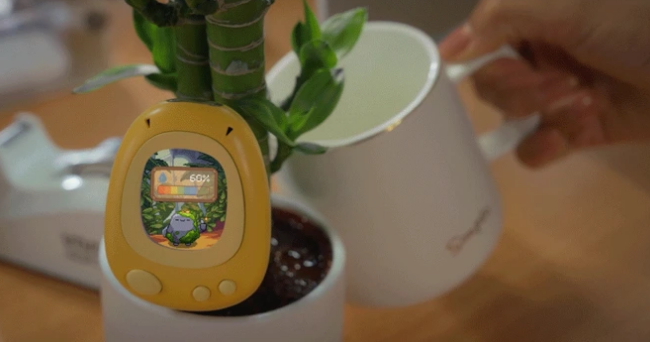
PlantSenso's most distinctive feature isn't the number of sensors, but its top-mounted pixel screen. The character's status changes in real-time with the plant's data: it shows thirst when dehydrated, or displays animations for excessive or insufficient light. Users also receive corresponding notifications on their mobile phones.
The system further generates daily or weekly 'Green Quests' based on sensor data. Completing tasks like watering or adjusting placement earns game rewards, advances a virtual planet storyline, and unlocks new pixel characters. This transforms the typical sensor data-to-notification process into an emotion-task-reward loop.
However, the gamification mechanism itself doesn't inherently improve plant health. Its long-term value depends on whether the tasks genuinely align with plant needs and if users remain engaged after the initial novelty wears off.
Four Environmental Data Points: Monitoring vs. Diagnosis
PlantSenso officially claims to monitor soil moisture, light intensity, ambient temperature, and nutrient levels, with soil moisture detection frequency stated at 900 times per second.
While a higher sampling rate theoretically allows for more timely display of status changes, sampling frequency does not equate to measurement accuracy. Different substrates like peat, coco coir, granular soil, and bark exhibit significant variations in conductivity, density, and water retention. The sensor's ability to accurately calibrate for these diverse media is more critical than mere sampling speed.
The official documentation currently lacks detailed explanations of the measurement principles, error ranges, or calibration methods for nutrient levels. Similar consumer-grade devices typically estimate soluble salts via soil electrical conductivity, which can reflect overall changes but cannot directly identify specific deficiencies in nitrogen, phosphorus, or potassium.
AI-Powered Plant Identification and Care Profiles
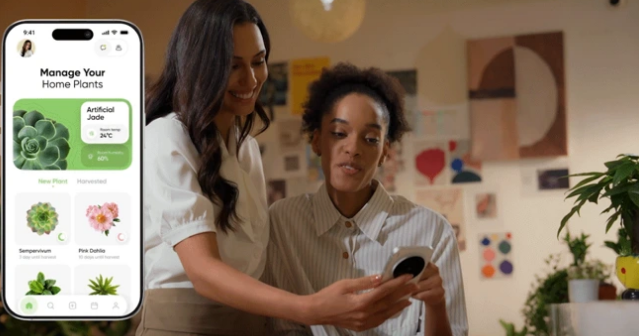
Users can photograph their plants with a smartphone, allowing the app to identify the species and create a personalized care profile. The official database reportedly covers over 12,000 plant species. The app can also identify potential diseases from photos and combine this with sensor data to provide watering, light, and general care information.
This feature lowers the barrier for users to find plant varieties and care information. However, photo recognition remains susceptible to factors like leaf angle, lighting, species similarity, and disease stage. Yellowing leaves, for instance, could stem from dehydration, overwatering, light issues, temperature, root problems, or pests. Therefore, AI results should be considered preliminary assessments rather than laboratory-grade plant diagnoses.
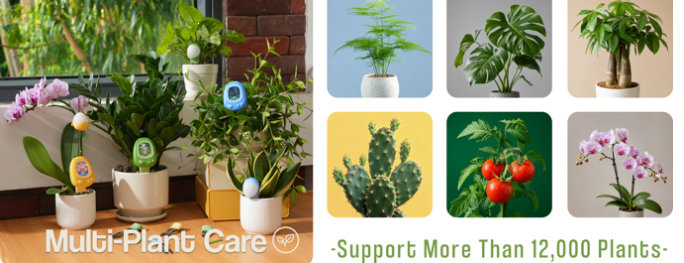
Modular Probe for Diverse Plant Sizes
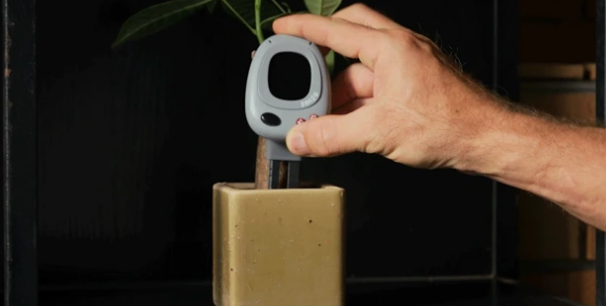
The pixel pet host connects to the soil probe magnetically, allowing it to be detached for charging or moved to other pots. The company offers three different probe lengths to accommodate small succulents, standard potted plants, and deeper, larger planters. They also plan additional sensors, such as the 'Senso Mini,' for expanded multi-plant management.
This design simplifies host cleaning and probe replacement. However, continuous monitoring of multiple plants still requires additional sensor modules. A single display host's ability to switch between pots does not mean one purchase can continuously record data for all plants in a home simultaneously.
Battery Life and Planned Smart Home Connectivity
The device features a built-in 1000mAh battery, with an officially stated typical usage battery life of up to 21 days. A full charge takes approximately 2 hours, supporting both magnetic charging bases and USB-C.
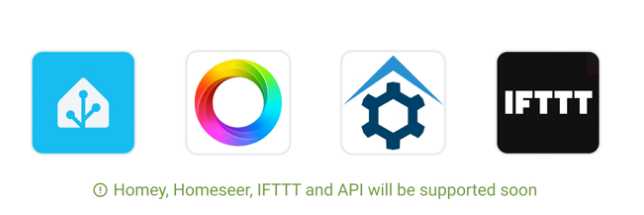
The company also states future support for Home Assistant, Homey, and IFTTT, enabling plant status to trigger smart lighting or other home devices.
However, the use of 'will support' on the campaign page indicates that these connectivity features are still planned functionalities, not fully delivered and long-term validated systems at this stage.
Market Context and Long-Term Outlook
Smart plant sensors are not a new product category. Competitors like Willow already monitor soil moisture, light, temperature, and air humidity, while FYTA provides soil moisture, salinity, light, and temperature data, translating results into personalized care tips.
PlantSenso's differentiation lies not in being the first to measure plant data, but in integrating a screen character, emotional feedback, a task system, and real sensor data into a single product. It positions itself more as an interactive consumer electronics device with plant monitoring capabilities rather than a professional gardening instrument.
The primary risks currently revolve around whether the gamification can sustain user engagement long-term, if sensor readings remain stable across various soil types and pots, and whether cloud-dependent AI analysis, voice interaction, and smart home features will incur ongoing subscription fees. While the official page indicates cloud processing, the full scope of long-term AI service charges has not been clearly outlined.
PlantSenso transforms otherwise abstract plant data into a pixelated pet that can express thirst, happiness, and assign tasks to its user. This concept is intuitive and fosters a stronger emotional connection than standard app notifications. However, its ultimate success in evolving from an engaging desk toy into a reliable long-term care tool will depend on the sustained accuracy of its sensors, app stability, and the enduring appeal of its game mechanics.
PlantSenso transforms otherwise abstract plant data into a pixelated pet that can express thirst, happiness, and assign tasks to its user.