PongBot Aura: AI Training Robot for Tennis, Pickleball, Padel Raises $2M in 3 Days
Campaign Teardown · · PledgeRadar Editorial
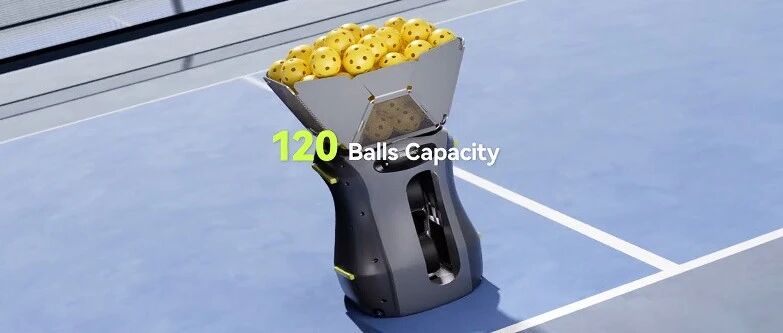
Aura is PongBot's latest offering, billed as the world's first ultra-lightweight (7kg) AI multi-sport training robot. It physically switches ball diameters via an adaptive roller track, making one device compatible with tennis, pickleball, and Padel. Combined with an LLM voice coach, a dual-camera Spotter auto-referee module, and over 10,000 customizable training plans, Aura aims to provide professional-level home court training without the need for a human partner.
Campaign Overview & Brand History
This isn't PongBot's first significant crowdfunding venture on Kickstarter. Its predecessor, the PaceS series, raised approximately $2.7 million in 2024, earning it the top spot globally in Kickstarter's technology and sports categories that year. This success built a strong foundation of user trust for the brand.
The new Aura product launched on Kickstarter in May 2026, with early bird pricing starting at $499, compared to a suggested retail price of $999. This positions it at roughly half the cost of the cheapest single-sport competitors on the market. Backers can initially unlock support for a single sport, with full multi-sport access available later via a $99 software upgrade package, a tiered pricing strategy designed to lower the entry barrier. Discussions in the comments section frequently revolve around the practical experience of switching between different ball types and the precision of the AI coach's recommendations for various NTRP-level players.
Founded in 2019, PongBot is a brand under Shanghai Chuangyi Technology Co., Ltd. It began by developing AI training systems for table tennis, establishing core AI algorithm capabilities. The technology platform later migrated to tennis, leading to the market-validated PaceS series, which debuted at CES in January 2026, marking its formal entry into mainstream sports technology.
Core Product Innovations
**Adaptive Roller Track: Physical Switching for Three Ball Sizes**
Aura's core mechanical innovation lies in its electric adaptive roller track, which can steplessly adjust its spacing from 40mm to 80mm. This physically accommodates the different diameters of tennis (67mm), pickleball (74mm), and Padel (67mm) balls. Users can switch sport types with a single tap in the app, without needing to change any physical parts on the device.
Existing multi-sport training robots on the market almost exclusively rely on software parameter adjustments, failing to truly achieve precise physical delivery for three distinctly sized balls. The adaptive adjustment of the roller track is Aura's most fundamental hardware differentiation from competitors. The long-term durability of the roller drive mechanism under frequent switching is a key engineering validation point that high-frequency multi-sport users will encounter post-delivery.
**AI Coach & LLM Voice Interaction: 10,000+ Custom Training Plans**
The system's AI coach model is built on over 100,000 training data points, covering comprehensive analysis from grip posture to tactical strategies. It leverages a large language model (LLM) for natural language voice control, allowing users to describe training goals verbally. The system then automatically generates personalized training plans and adjusts ball placement, speed, and spin in real-time.
Users can also browse and download training plans created by other players or coaches within the community app, fostering a continuously updated content ecosystem. The practical value of the AI coach heavily depends on the quality of its training data and the model's ability to adapt to players of different skill levels. The response latency of LLM voice commands and recognition accuracy in noisy outdoor court environments are critical aspects of the product experience that require real-world testing.
**Spotter: Detachable AI Camera Module for Training & Auto-Referee**
Spotter is arguably Aura's most discussed innovation. This module typically attaches to the top of the machine, functioning as a training camera system. Equipped with a 120fps high-speed sensor and a 180° wide-angle lens, it tracks each ball's speed, trajectory, and landing spot in real-time, generating per-session technical analysis reports.
When playing with friends, Spotter can be detached and placed courtside, instantly transforming into a fully automatic online referee covering the entire court, eliminating disputes over line calls. Integrating ball data for training and human referee functions into a single camera module reduces the cost for users to purchase additional equipment. The accuracy of Spotter's referee judgments for high-speed, low-trajectory balls (like pickleball dinks) and its image recognition robustness in strong side-light or shadowed court conditions are core engineering challenges for the feature's real-world viability in actual match scenarios.
**Smart Ball Detection Trigger**
The machine uses onboard sensors to detect in real-time whether the player has returned to the ready position, only then launching the next ball, rather than serving at fixed time intervals. This feature directly addresses a common criticism of traditional ball machines: players often have to chase the machine's rhythm instead of training at their natural pace. For beginner to intermediate players establishing footwork habits, and advanced players engaged in high-intensity physical training, this adaptive rhythm effectively replicates real match rally pacing. The stability of sensor position recognition during rapid movement and on non-standard court surfaces (such as grass or sand) will determine the practical reliability of this function.
**OTA Expandable Sport Support**
The brand promises continuous expansion of supported sports through OTA firmware updates, with squash, baseball, and softball already listed for future plans. This ensures that users' purchased hardware will not become obsolete due to sport expansion. This commitment elevates Aura from a three-sport device to an open platform, adding extra persuasion for players evaluating purchase decisions. Whether this OTA promise can be delivered depends on the brand's long-term software investment, if new sport support will require additional payment, and whether the adaptive roller track parameters for each sport can achieve optimal results through purely software-based tuning. These are details potential buyers should confirm in advance.
Market Analysis & Competitive Edge
The tennis ball machine market is a relatively niche but rapidly smartening vertical. Estimates for market size vary significantly: FutureMarketReport projects approximately $145 million in 2024, growing to about $280 million by 2032, with a CAGR of approximately 7.8%. Other institutions estimate the broader ball machine equipment market to be between $900 million and $5.3 billion, with differences stemming from whether consumer-grade portable devices and multi-sport scenarios are included. Regardless of the scope, the market trend is consistent: AI integration, programmability, and app connectivity are common R&D directions for major manufacturers. The explosive growth of the pickleball market (with annual participation growth exceeding 40% in the US in recent years) is also driving incremental demand for ball machine equipment, while existing products specifically optimized for pickleball training are extremely rare.
In terms of the competitive landscape, LobsterSports and SpinshotSports are leading brands in the traditional tennis ball machine market, primarily offering multi-level manual or app-controlled ball delivery. Mainstream products are priced between $800 and $2,500 and lack AI coaching and multi-sport switching capabilities. SlingerBag entered the consumer market with portability and a lower price point but offers relatively basic functions. Tennibot's ThePartner, released in 2024, is currently the closest AI training machine competitor to Aura, but it is also designed for a single tennis scenario.
Aura's combination of multi-sport physical switching, AI coaching, and an automatic referee module currently has no direct market equivalent. Its crowdfunding price of $499 is also about half that of the cheapest single-sport competitors, making its value proposition straightforward in the price-sensitive consumer market. The primary market risks lie in potential differences in equipment consumption habits between pickleball and Padel players and tennis players. How to effectively serve the diverse training needs of all three sports communities, and how to maintain the professional depth of AI coaching recommendations across multiple sports scenarios, are the product capabilities Aura will most need to prove after actual delivery. The AI multi-sport training robot integrates three rapidly growing racket sports markets into one device, with clear demand-side logic. Whether PongBot can truly fulfill its position as a category definer still hinges on the durability of the multi-sport physical switching and whether the quality of the AI coach's training recommendations can consistently meet standards in large-scale user testing.
Aura's combination of multi-sport physical switching, AI coaching, and an automatic referee module currently has no direct market equivalent.