ProClad Hybrid Non-Stick Pan Raises $440K on Kickstarter in 20 Days
Campaign Teardown · · PledgeRadar Editorial
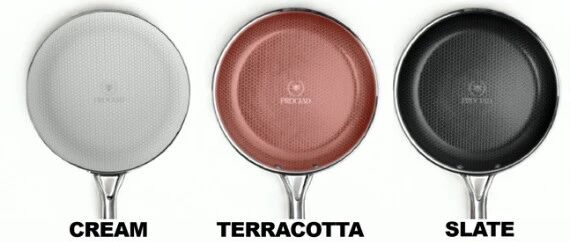
The ProClad hybrid non-stick pan, launched by LIITON, aims to redefine everyday cooking. This innovative pan integrates raised stainless steel ridges with a PFAS-free ceramic non-stick coating, allowing metal utensils to glide along the steel without directly contacting the coating. Simultaneously, it retains high-heat searing capabilities, offering a single pan solution for tasks traditionally requiring both stainless steel for searing steaks and non-stick for eggs, making it ideal for home cooks.
Campaign Performance & Brand Entry
ProClad debuted on Kickstarter on May 19, 2026, quickly raising $440,000 within 20 days. The campaign is set to conclude on June 24, with projections indicating a final funding total potentially reaching $500,000. An average order value of approximately $70 positions it as a mid-to-high-tier offering in the cookware crowdfunding space, suggesting early adopters recognize the value of its hybrid concept. The product is available in three colorways: Slate, Cream, and Terracotta, with Super Early Bird bundles (three-piece sets) offering discounts up to 46%.
This marks LIITON's inaugural venture into cookware crowdfunding, following its established presence as a premium whiskey glassware brand. The absence of a prior track record in delivering cooking products is a significant factor for potential backers to consider, and it may have influenced the campaign's initial funding velocity.
Innovative Hybrid Design
ProClad's core innovation is its integrated cooking surface, featuring raised stainless steel ridges alongside a recessed PFAS-free ceramic non-stick coating. The stainless steel ridges are elevated above the coating, designed to absorb the daily friction from metal spatulas and utensils. The ceramic non-stick coating sits slightly below these ridges, ensuring that cooking tools glide along the steel rather than directly scraping the non-stick surface.
This structural design addresses the primary cause of traditional non-stick coating degradation: direct contact with utensils. By physically isolating the coating, ProClad transfers abrasive wear to the more durable stainless steel ridges. The actual long-term durability will depend on the precise height difference between the ridges and the coating, as well as user habits. While wooden and silicone utensils pose less risk than metal, users' choice of tools remains a critical variable for coating longevity.
Enhanced Performance & Durability Claims
The raised stainless steel ridges directly contact food, providing a high-heat conductive surface essential for achieving the Maillard reaction on steaks, chicken breasts, or vegetables. This results in the desirable browning and flavor often unattainable with standard non-stick pans, which typically require lower temperatures to protect their coatings. While the ceramic non-stick coating is recessed and somewhat shielded from direct high heat, the overall heat distribution uniformity across the pan's base would benefit from real-world testing data.
The brand states the pan is oven-safe up to 900°F, a temperature far exceeding typical home oven use (usually not above 550°F). This provides a substantial safety margin for domestic cooking. Additionally, the pan features a sealed rim designed to prevent corrosion from seeping in, a common long-term issue for stainless steel and aluminum cookware where oxidation often begins at exposed edges.
ProClad claims compatibility with metal utensils due to the protective stainless steel ridges and is also dishwasher safe. These features directly address two common limitations of ceramic non-stick cookware. However, it's worth noting that even with protective ridges, high pressure or sharp angles from metal utensils could still potentially damage the ceramic coating. The long-term durability of metal utensil compatibility will be a key factor in user reviews post-launch. Dishwasher safety offers genuine convenience, though the long-term effects of high-temperature steam and detergents on various coatings can vary significantly across brands.
Pricing Strategy & Brand Transition
ProClad is offered in three sizes and three color options (Slate, Cream, Terracotta), with individual pieces starting around $69. A three-piece set offers up to a 46% discount. This pricing directly challenges competitors like HexClad, whose comparable single pieces typically retail between $100 and $180.
ProClad's market narrative is straightforward: offer a similar hybrid technology concept at roughly half the price of HexClad. The viability of this aggressive pricing strategy hinges entirely on the actual product quality and the longevity of its PFAS-free ceramic coating. If ProClad's coating performs similarly to a $20 generic ceramic pan after a year of use, its value proposition would be undermined.
LIITON is primarily known as a high-end lifestyle brand specializing in premium whiskey glassware, with products like the GrandCanyon series heavy-duty crystal whiskey glasses. They have an established brand presence on Amazon and in specialty liquor channels. ProClad represents LIITON's first foray into the cookware sector and its debut Kickstarter campaign. This transition from crystal glassware to hybrid non-stick pans is a significant category leap, and the company lacks a public history of engineering capabilities or mass production experience in cooking products.
Global Non-Stick Cookware Market Trends
The global non-stick cookware market is substantial and continues to expand. Grand View Research estimates the market size at approximately $19.6 billion in 2024, projected to grow at a 5.9% CAGR to about $27.4 billion by 2030. Frying and sauté pans alone are expected to account for roughly 47% of the total market revenue in 2024. Key growth drivers include sustained consumer preference for healthy, low-oil cooking, a resurgence in home cooking culture, and increasing concerns over PFAS safety. The latter is accelerating the penetration of PFAS-free coated products; ceramic-coated products are estimated to represent about 35% of the 45.7 billion units sold globally in 2024, with their growth rate consistently surpassing Teflon-type products.
Competitive Landscape & Potential Risks
In the competitive landscape, HexClad stands as the pioneer and market leader in the hybrid non-stick pan category. Backed by Gordon Ramsay and having secured $100 million in investment in July 2024 at an estimated $1 billion valuation, HexClad's core technology involves hexagonal laser-etched stainless steel ridges combined with a PTFE coating, with single pieces retailing from $100 to $180. This makes HexClad ProClad's most direct competitor. Other notable players include Caraway, which offers an all-ceramic, PTFE/PFOA-free solution targeting health-conscious consumers, and GreenPan, currently the largest brand in PFAS-free ceramic cookware. Neither Caraway nor GreenPan features the hybrid stainless steel ridge structure. Scanpan holds a leading position in the hard-anodized ceramic segment within the European market.
ProClad's unique selling proposition combines a hybrid structure, PFAS-free coating, and a price point approximately half that of HexClad, demonstrating significant price aggression. However, its technical approach is similar to HexClad, and it faces comparable core risks. In 2023, HexClad's parent company settled a class-action lawsuit for $2.5 million due to misleading marketing claims, particularly regarding scratch resistance and metal utensil compatibility, which users found to be inconsistent with real-world performance. ProClad's long-term credibility for similar claims will undergo genuine scrutiny through user feedback after product delivery.
ProClad's differentiation lies in its hybrid structure, PFAS-free coating, and a price point approximately half that of HexClad, demonstrating significant price aggression.