Shanghai Brand Lavenne Launches Dynamic Ergonomic Chair, Targets $2M on Kickstarter
Campaign Teardown · · PledgeRadar Editorial
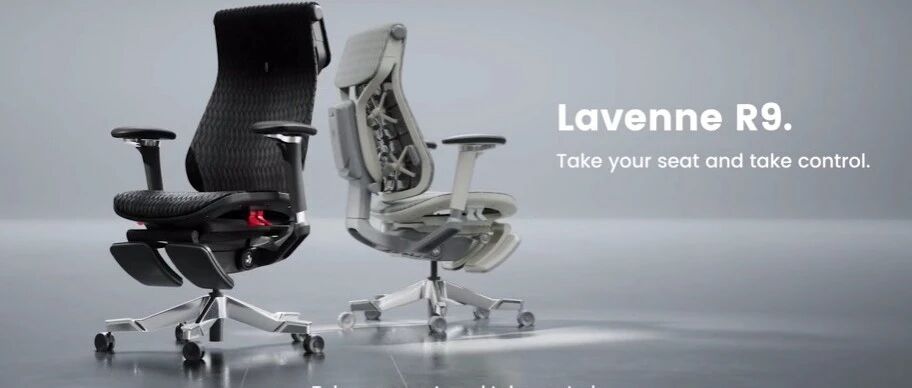
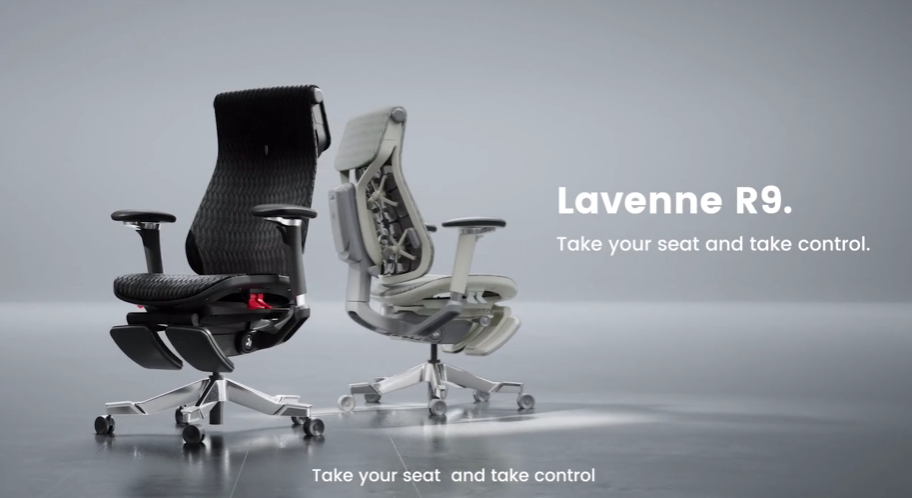
The Lavenne R9 is a dynamic ergonomic chair designed for knowledge workers, hybrid professionals, and anyone actively managing their back health during prolonged sitting. It features a triple mechanical system: the patented VTS Dynamic Spine System, an aerospace-grade carbon fiber chassis, and a six-zone airbag pressure system. This combination allows the backrest to continuously track the user's spinal curve, rather than forcing them into a fixed standard posture.
Campaign Launch and Early Success
The R9 launched on Kickstarter on July 9, 2026, securing $100,000 on its first day and surpassing $900,000 within 10 days. Projections estimate a final funding total slightly over $2 million. Prior to its crowdfunding debut, Lavenne publicly showcased the full R9 product line at CIFF, Asia's largest furniture exhibition, with real-time user reaction videos from the event also available online. The R9 series has garnered international recognition, including a 2026 MUSE Design Award (Gold), London Design Award (Silver), New York Product Design Award (Silver), and International Design Excellence Awards (Bronze). Extensive PR coverage across home and tech media suggests a high likelihood of successful project delivery.
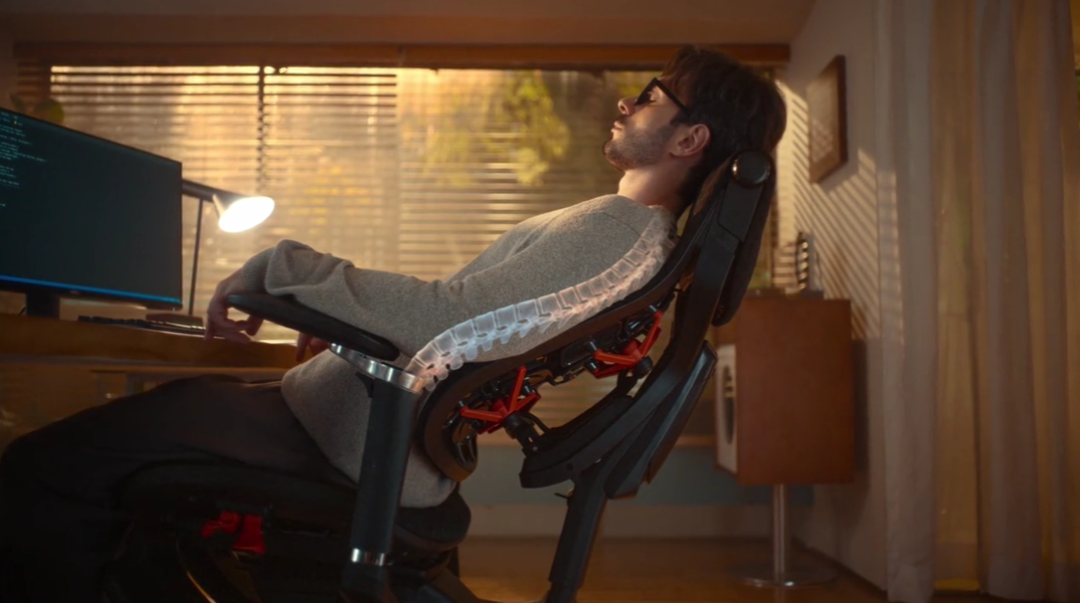
Core Product Features
**VTS Dynamic Spine System: X-Linkage Tracks Spine Automatically**
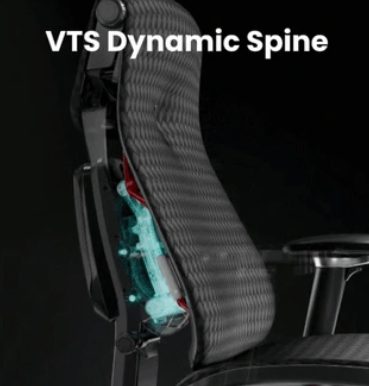
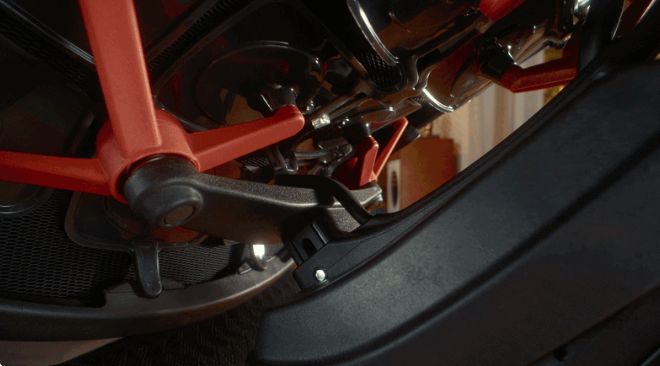
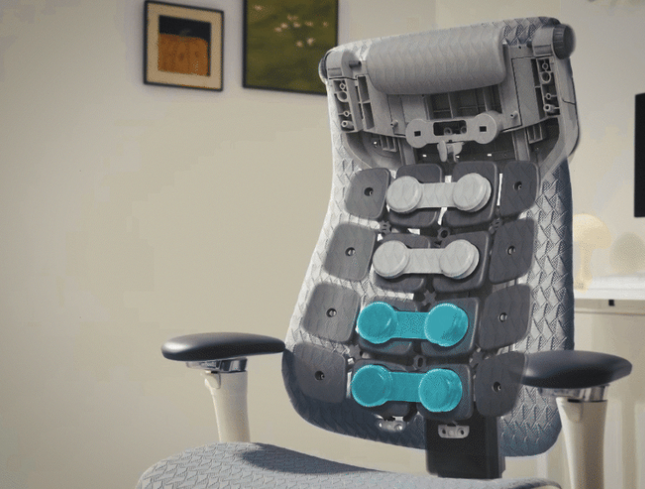
The R9's core mechanism is its patented VTS X-shaped mechanical linkage. Two sets of double X-shaped hinges within the backrest use a rail-guided sliding mechanism to continuously track the natural curvature changes of the user's spine as they lean forward, recline, or twist. This system operates without sensors, motors, or the need for manual adjustment.
Traditional ergonomic chairs often have a fixed lumbar support point, meaning the support doesn't move when the user changes posture, quickly diminishing its protective effect outside of a few standard positions. The VTS system's mechanical linkage, however, consistently follows the spine's position, theoretically providing continuous support across a wider range of postures.
The long-term durability of the mechanical linkage's hinges and its actual tracking precision across different body types are key engineering variables that will require independent evaluation post-delivery.
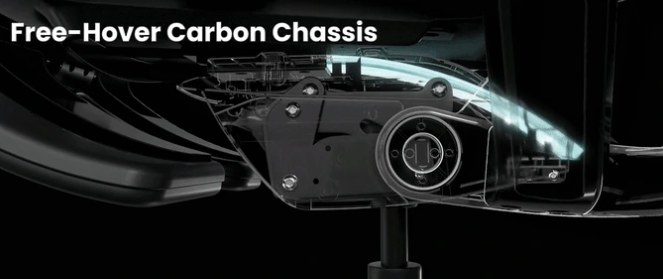
**Free-Hover Carbon Fiber Chassis: Stepless Recline at Any Angle**
Central to the R9's structure is its aerospace-grade carbon fiber chassis, which is 50% lighter and three times stronger than traditional steel frames. This flexible frame architecture allows the chair back to balance and hover at virtually any recline angle, from a 5° forward-leaning focus position to a relaxed 110° recline, and even greater angles for short breaks, all without needing to manually lock specific positions.
Traditional ergonomic chairs typically offer a limited number of preset recline positions, forcing users to compromise between them. The physical principle behind the stepless hover comes from the elastic energy storage of the carbon fiber material. Its adaptability to different user weights (e.g., whether it's too soft for lighter users or too stiff for heavier users) is a detail worth confirming with the brand before purchase.
**R9 Pro's 6-Zone Independent Airbag System: Auto-Inflation for Back Contours**
The R9 Pro version introduces a new six-zone independent electric airbag system. Six airbags, distributed along the spine, automatically inflate to conform to the user's back profile, providing independent support pressure for the neck, upper back, mid-back, lumbar, sacrum, and side wings. It also includes six massage modes and four smart work modes (Focus, Relax, Meeting, Rest), switchable via a wired handheld controller.
The airbag system offers more personalized support potential for users whose spinal curvature deviates from the standard range (e.g., scoliosis, pronounced lordosis). The long-term durability of the airbag inflation/deflation system and the stability of its air pressure at different room temperatures are common long-term usage concerns for ergonomic chairs with integrated pneumatic functions.
**Ergo-Curve Backrest & Infinite Height Adjustment**
The backrest features an Ergo-Curve contour design, conforming to the natural S-curve of the human spine. Both the backrest height and headrest height support infinite (non-fixed gear) sliding adjustment, allowing users to precisely match their sitting height and cervical spine position without compromising between limited presets. This is particularly useful for users at the extremes of the height distribution (below 160cm or above 185cm), as fixed-position ergonomic chairs have historically struggled with adaptability for these user groups.
Advanced Features: 5D Armrests, Adaptive Forward Tilt, and Modular Platform
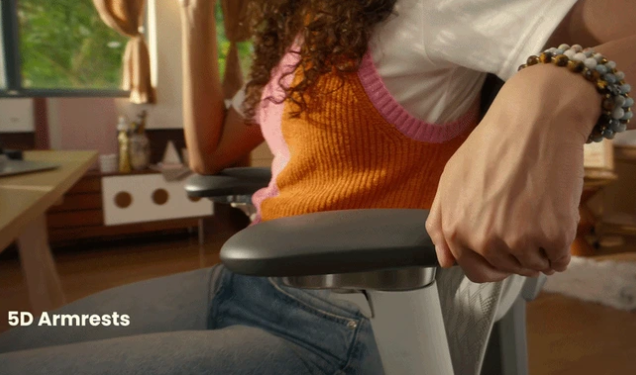
The armrests support five dimensions of adjustment—height, width, depth, angle, and rotation—covering a wide range of arm support needs, from hovering while typing to resting flush with the chair.
An adaptive forward tilt function ensures the spine remains balanced when users lean forward to concentrate, preventing the complete loss of lumbar support common in traditional chairs.
Lavenne positions the R9 as a modular platform, with plans to gradually introduce wireless control and AI-assisted adjustment features through module upgrades. This would allow users to gain functional enhancements without replacing the entire chair. However, these are currently roadmap plans and have not been officially released.
Public information indicates Lavenne is a brand under Shanghai Mojia Smart Home Co., Ltd., which has also exhibited at furniture fairs and focuses on addressing long-term health issues stemming from modern sedentary work. The brand operates its own manufacturing factory, with each R9 undergoing assembly precision checks at independent quality control stations. The backrest system has completed over 120,000 cycles of fatigue testing, and the 5D armrest mechanism has undergone extreme horizontal pull force validation.
Global Market Analysis
The global ergonomic chair market was valued at approximately $10.1 billion in 2024 and is projected to grow at a 6.7% CAGR to reach about $19.3 billion by 2034. The normalization of hybrid work, mainstreaming of employee health awareness, and the penetration of smart home concepts into office furniture are the three main drivers of this market's continued expansion. Herman Miller leads the market with approximately 18% share, closely followed by Steelcase at around 16%, together accounting for roughly one-third of the global market.
In terms of competition, the Herman Miller Aeron and Steelcase Gesture are dual benchmarks in the high-end ergonomic chair market. They build barriers through decades of brand accumulation, established corporate procurement channels, and high-quality manufacturing in the $1,000–$2,000 price range. In the domestic crowdfunding market, the LiberNovo Omni set a record for the highest-funded ergonomic chair crowdfunding campaign on Kickstarter in 2025, also emphasizing dynamic support, making it the most direct competitive reference for the Lavenne R9.
The R9 differentiates itself through the integration of its triple mechanical system: X-shaped mechanical linkage + carbon fiber stepless float + six-zone airbags. Among crowdfunding chairs at a comparable price point, this purely mechanical closed-loop solution (no sensors, no software dependency, no subscriptions) offers a reliability proposition that is relatively easier for consumers to understand and trust.
Dynamic spine tracking represents a truly promising technological direction for the ergonomic chair category. The Lavenne R9, with its comprehensive mechanical system and design award endorsements, presents one of the most compelling crowdfunding products to date. Its ultimate success hinges on whether the mass production consistency of its triple mechanical system can meet the quality expectations conveyed during its demonstration at the CIFF exhibition.
Dynamic spine tracking represents a truly promising technological direction for the ergonomic chair category.