Sierro: Compact Home Backup Power System Raises Over $800K on Crowdfunding
Campaign Teardown · · PledgeRadar Editorial
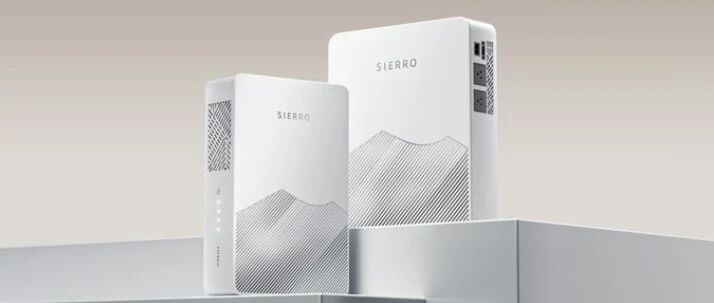
Sierro, developed by a San Francisco team, is a compact home backup power system designed for plug-and-play use without any installation. It's intended to remain plugged in next to a refrigerator, under a desk, or by a bed, automatically switching to battery power within 15 milliseconds of a grid outage. The system aims to provide continuous online protection for essential household devices that cannot tolerate power interruptions, such as refrigerators, Wi-Fi routers, and CPAP machines. It targets households in areas with frequent power outages, those relying on medical equipment requiring continuous nighttime power, or users dissatisfied with the runtime of traditional UPS systems.
Campaign Performance
Sierro launched on May 14, 2026, with its crowdfunding campaign concluding on June 28, securing just over $800,000. The project experienced rapid early growth, surpassing $400,000 in less than two weeks. With an average pledge of approximately $687, it positioned itself in the mid-to-high range for home power category crowdfunding. Tech media outlets like NewAtlas and Gizmocrowd published product introductions during the campaign, highlighting its LFP battery cell solution and no-installation design. UL certification is currently underway, and the timely delivery of the final product remains to be seen.
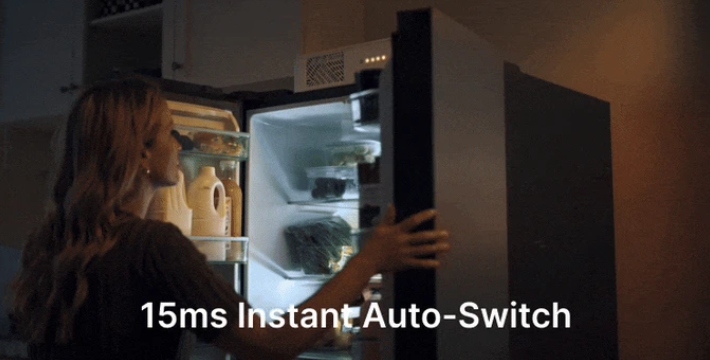
Instant Power Transfer: Seamless 15ms UPS
Sierro features a built-in automatic UPS function, switching to battery power in under 15 milliseconds when an outage occurs. This response time is faster than what most electronic devices can detect, eliminating the need for any manual intervention during a power cut.
This fundamentally differentiates Sierro from traditional portable power stations, which require users to manually turn them on and connect loads. Sierro is designed to remain plugged in between a wall outlet and the device, continuously monitoring for grid anomalies and instantly taking over power supply. The stability of the switch response and long-term standby power consumption in real-world use are critical factors in evaluating whether this feature truly delivers a seamless experience.
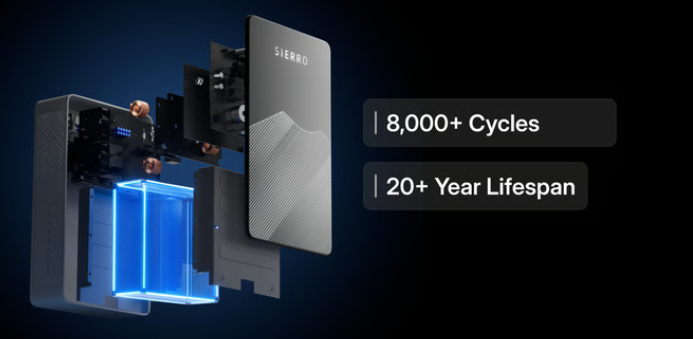
Industrial-Grade LiFePO4 Cells for Longevity
Sierro utilizes industrial-grade Lithium Iron Phosphate (LiFePO4) battery cells, the same chemistry found in large-scale stationary energy storage systems. These cells boast a nominal cycle life exceeding 8,000 cycles (when charged to 80% capacity), translating to a theoretical lifespan of approximately 20 years.
LiFePO4 batteries offer structural advantages over traditional ternary lithium batteries in terms of thermal stability and long-term cycle life, forming the safety foundation for Sierro's design to be continuously plugged in at home, including in bedrooms. Compared to portable power stations starting around $600, the Sierro 1000 offers a longer cycle life and a 5-year warranty for under $300. This comparison is a core argument differentiating Sierro from general-purpose outdoor power stations, emphasizing its design for permanent home use. Whether the 8,000-cycle laboratory data aligns with degradation rates in real-world household environments over many years still requires long-term user feedback for validation.
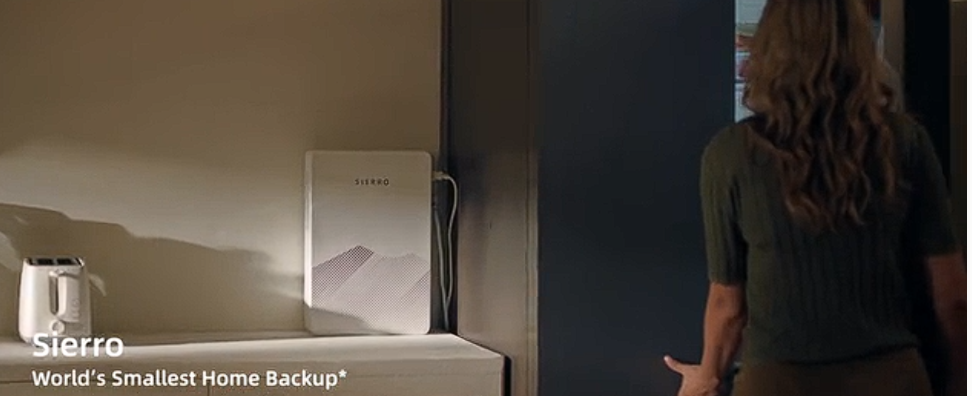
Slim Profile for Seamless Integration
Most home backup power systems are bulky units that force users to dedicate significant space for placement.
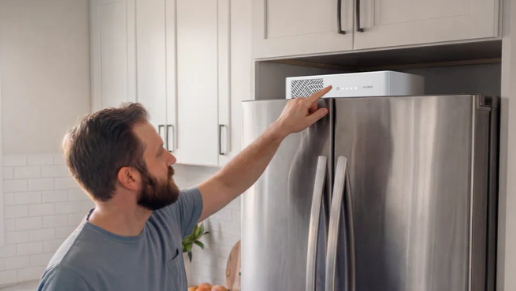
Sierro addresses this by reducing its overall volume (not just thickness) to fit into existing home spaces. It can be placed next to or behind a refrigerator, tucked under a desk to power Wi-Fi, or hidden under a bed for CPAP machines.
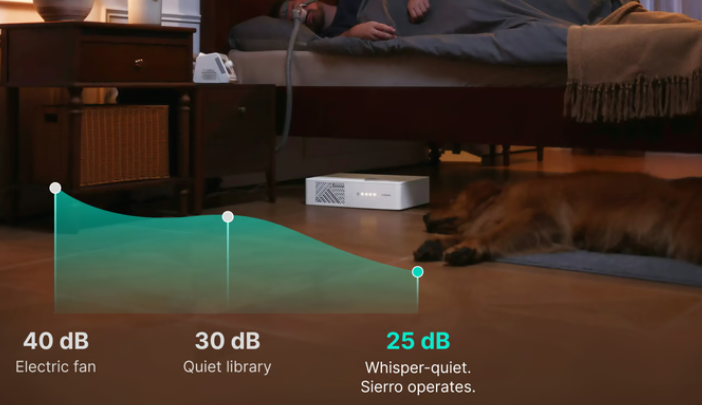
This design philosophy directly tackles the pain point of traditional emergency power supplies that are stored away and only brought out when needed. Sierro's product positioning is for continuous, permanent placement next to devices, rather than being a temporary emergency tool. With an operating volume below 25dB (under 150W load), its quiet design is a crucial prerequisite for placement in bedrooms or next to beds without disturbing sleep.
Dual Capacity Options for Varied Needs
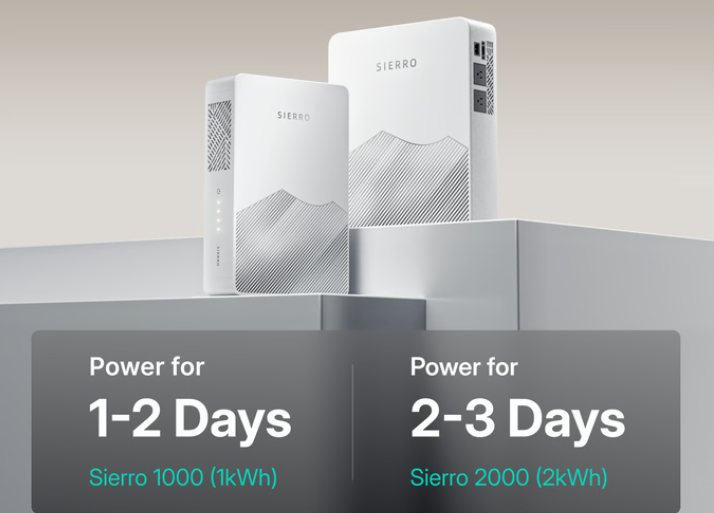
The Sierro 1000 (1kWh, 500W output, priced at $293) can power a standard refrigerator (under 22 cubic feet, 80-150W) for 10-20 hours, covering 1-2 days of use for essential household devices like CPAP machines and Wi-Fi. The Sierro 2000 (2kWh, 1000W output, priced at $559) extends runtime to 20-40 hours, supporting larger refrigerators or higher-power devices and providing 2-3 days of outage coverage.
This dual-capacity product line allows users to select the appropriate capacity based on their region's power outage frequency and duration, as well as their specific load requirements, avoiding unnecessary costs for redundant capacity. Sierro estimates that a single prolonged power outage can result in an average food loss of approximately $380, implying that the Sierro 1000 could effectively pay for itself during its first real use—a core value proposition repeatedly emphasized in the project's marketing narrative.
Extended Coverage with Solar and Car Charging
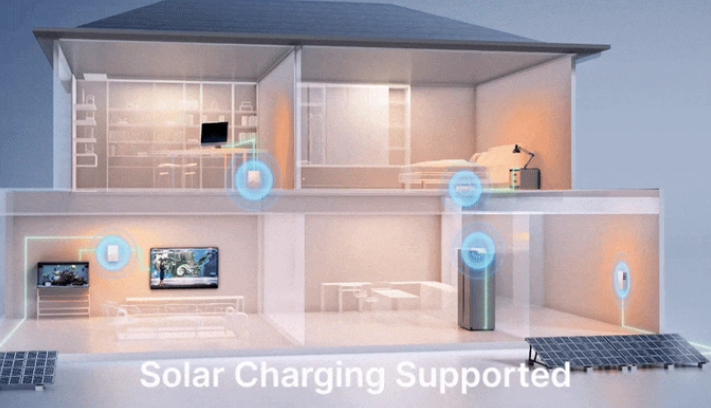
Sierro supports MPPT solar input, with a maximum of 300W for the Sierro 1000 and 550W for the Sierro 2000. It also supports car charging, with input speeds varying by model.
For multi-day power outages caused by extreme weather, relying solely on battery reserves is limited. Solar input allows users to recharge the device during the day, extending the overall number of days of available outage coverage. Additionally, the device offers PowerSense real-time monitoring, providing instant notifications at the moment of an outage, remote viewing of battery levels and real-time runtime estimates, and alerts when the battery drops below 20%, enabling users to monitor the device's status even when away from home.
Sierro is a San Francisco, California-based energy startup. The team states it has over ten years of experience in energy hardware and consumer electronics development across four continents, having previously participated in the R&D of widely adopted household energy products. The product underwent more than two years of development before its official launch.
Global Market Analysis and Sierro's Position
The home backup power market can be understood from two perspectives. The broader backup power market is valued at approximately $20.3 billion in 2024, projected to grow at a 6.3% CAGR to about $37.4 billion by 2034, still predominantly led by diesel generators (accounting for roughly 69.2% share). However, Sierro's specific niche—battery-based home backup systems—is growing much faster than the overall market. The global market for home battery backup systems is estimated at $5.89 billion in 2024, with a projected high-speed growth of 26.1% CAGR to approximately $24.29 billion by 2034. The North American market alone is valued at about $2.36 billion in 2024, also growing at a 26.1% CAGR.
Key growth drivers include increasing grid instability, frequent extreme weather events—with over 70 million people in the US experiencing significant power outages in 2024 alone, lasting an average of 8 hours—and the continuous decline in lithium battery costs, making these systems more accessible to households.
In terms of competition, leading players in home battery backup systems include Tesla Powerwall, LG Energy Solution, Sunrun Brightbox, Enphase Encharge, and Generac PWRcell. These brands primarily offer whole-home backup solutions deeply integrated with solar systems, typically with capacities above 8kWh, requiring professional installation, and generally priced in the thousands to tens of thousands of dollars.
In the lighter segment of portable power stations, EcoFlow, Anker, Jackery, and Bluetti are dominant brands. The global portable power station market is estimated between $451 million and $808 million in 2024. These products are positioned for outdoor, camping, and temporary emergency scenarios, requiring users to manually retrieve and operate them, lacking Sierro's emphasized features of permanent standby and automatic switching.
Sierro's differentiation lies precisely in the middle ground between these two product categories. Its capacity is significantly smaller than whole-home energy storage systems requiring professional installation, yet it is more focused than portable power stations on the scenario of essential household items that remain plugged in long-term and automatically take over power. This specific positioning—an uninstalled, permanently-on backup for essential devices—currently lacks a mature direct competitor in the market. Primary market risks include the pending UL certification, a critical compliance hurdle for such electrical devices to enter the US retail market. Additionally, as a new brand with no prior delivery record, its ability to achieve mass production quality and on-time delivery still needs to be validated by actual shipping results in July 2026.
Home backup power is evolving from bulky devices remembered only in emergencies to essential household items that remain plugged in and automatically take over. Sierro has seized this genuine product positioning gap, aiming to carve out its niche.