Smart Tennis Pressurizer NIXUS Raises $140K in a Week: Can it Match Tennis Machine Success?
Campaign Teardown · · PledgeRadar Editorial

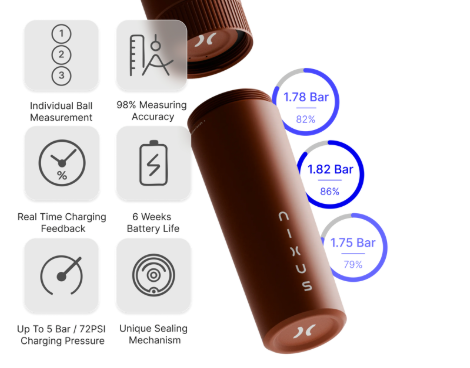
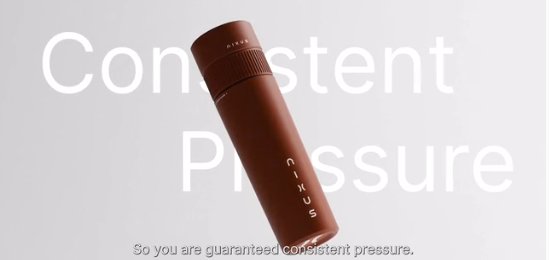
NIXUS is a smart tennis and padel ball pressurizer developed by a team from Delft University of Technology in the Netherlands. It utilizes patented internal pressure measurement technology to directly gauge the actual air pressure of each ball within the can, precisely restoring them individually to factory settings within ±0.05bar (±0.7psi). The product aims to reduce the frequent discarding of depressurized balls, targeting amateur to professional tennis and padel players, clubs, and coaches.
Campaign Overview
NIXUS launched on Kickstarter on August 17, 2026, raising $140,000 in its first week. While this product may not achieve the same crowdfunding heights as some tennis machines, reaching over $250,000 in this niche market would be considered a relative success. The campaign is currently in a continuous growth phase. Prior to the official crowdfunding launch, the team showcased prototypes to club operators and industry professionals at the WorldPadel Summit and partnered with Xometry to produce 25 validation units, laying the groundwork for mass production.
Key Product Features
**Precise Individual Ball Pressurization**
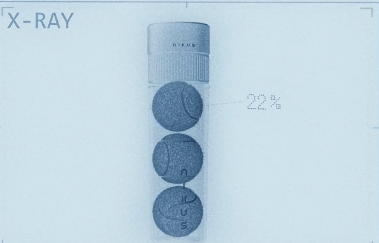
NIXUS's core differentiator is its status as the only system currently capable of directly measuring the actual internal pressure of each ball within the can. Unlike most automatic pressurizers on the market, which uniformly inflate to a fixed pressure regardless of a ball's existing pressure, NIXUS tailors its approach.
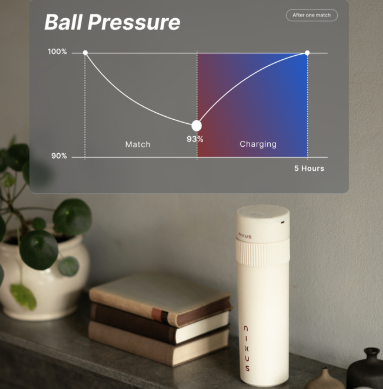
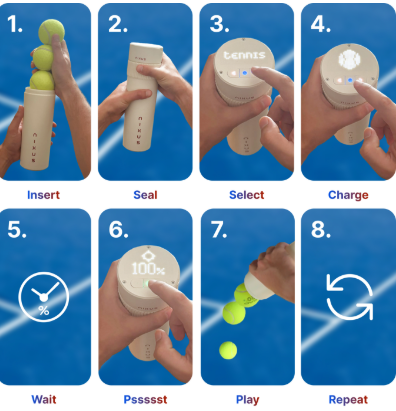
This capability allows NIXUS to restore each ball individually to its optimal pressure within a ±0.05bar range, achieving this at the fastest physically feasible speed. Users can also monitor the inflation progress in real-time via the device. Traditional can-based solutions often suffer from uneven pressure; balls that aren't significantly deflated can be over-pressurized,
while severely leaking balls may not be adequately inflated. The challenge in achieving precise individual measurement and adjustment lies in the long-term stability and consistency of the measurement components. The batch consistency of these precision sensing mechanisms after mass production is crucial for ensuring a stable and repeatable user experience.
**Customizable Target Pressure**
The device allows users to set their own target pressure, rather than being locked into a factory default. Different players have varying preferences for ball bounce—some prefer a softer feel, while others favor a firmer rebound. Adjustable target pressure enables NIXUS to adapt to diverse play styles and court conditions.
This functionality is built upon the aforementioned precise pressure measurement capability; without accurate real-time readings, adjusting the target value itself would be meaningless.
**Mass Production-Ready Design**
NIXUS officially emphasizes that the product's architecture was designed from its inception with injection molding in mind. This indicates that the team has planned an engineering pathway for transitioning from small-batch validation to large-scale manufacturing. The mass production phase is also expected to unlock a wider range of casing materials and color customization options.
Such details are noteworthy for hardware crowdfunding projects. Many initial hardware ventures use CNC or 3D-printed small-batch prototypes during their validation phase, and the shift to injection molding for mass production often introduces rework due to process differences. By integrating the mass production path into the product design early on, NIXUS theoretically reduces these risks.
Founded by a team from Delft University of Technology, co-founder Joep Raithel shared that their initial goal was simply to create a device for themselves. Two and a half years later, it has grown into a six-person company, completed 25 validation units in partnership with Xometry, and officially entered the commercialization phase through global Kickstarter crowdfunding. The team maintains its Delft Tech engineering foundation, with early core members focused on R&D and later additions bolstering market growth and industrial design capabilities, gradually forming the multidisciplinary team structure required for hardware products to move from technical validation to commercialization.
Market Landscape and Sustainability
Both tennis and padel ball categories face structural waste issues. According to industry data, approximately 120 to 130 million tennis balls are discarded annually in Europe alone. A single tennis ball takes about 400 years to fully decompose, and over 99% of tennis balls are produced in Southeast Asia, traveling approximately 80,000 kilometers to reach Europe. The situation for padel balls is even more extreme; they significantly lose pressure within hours or one to two matches after being removed from their original sealed cans, leading many professional players to demand new balls for every match. The global tennis market was valued at approximately $1.2 billion in 2025, with a projected CAGR of 4.65% through 2035. While the padel ball market is smaller, it benefits from the rapid expansion of the sport itself. Global registered padel players grew from around 10 million in 2017 to over 25 million in 2024, and the number of European courts increased by approximately 63% between 2020 and 2024. The overall padel market is expected to continue growing at an 8% to 13% CAGR, with a noticeable rise in European consumer preference for sustainable and eco-friendly products.
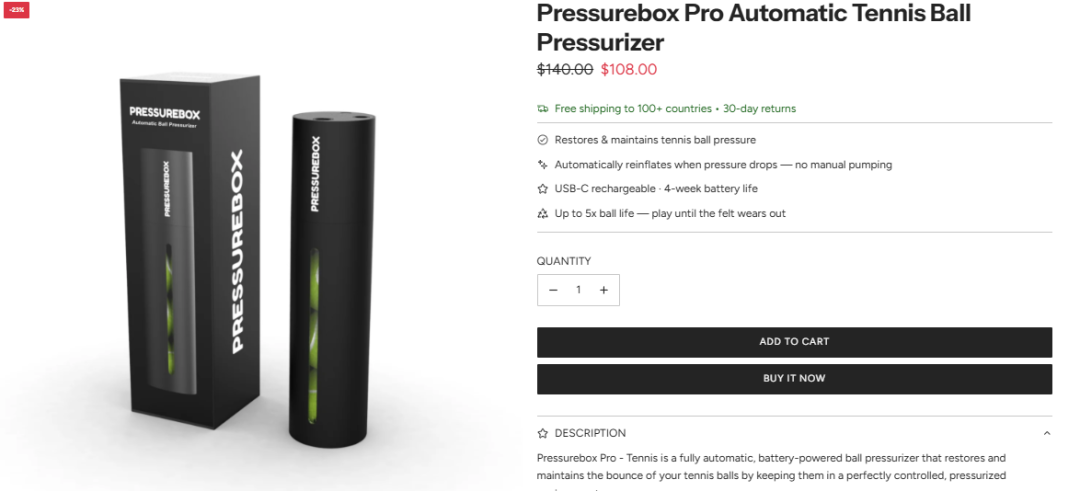
In the competitive landscape, several electric pressurizer products already exist. For instance, Pressurebox offers automatic inflation and deflation via a button for convenience, but typically employs a uniform pressure inflation method that doesn't account for the actual state of each individual ball.
PressureBall takes an entirely different approach, relying on multi-layer composite materials for long-term airtight storage. This is a purely physical sealing solution, devoid of electronic measurement components, making it more durable in dusty environments. However, users must manually pump air to achieve precise pressure, as it lacks automated individual precise measurement.
NIXUS differentiates itself by solidifying the measurement aspect. While existing electric solutions largely inflate "blindly," NIXUS aims to address this blind spot with its patented pressure measurement technology. Whether this differentiation translates into a perceptible improvement in actual user experience largely depends on whether average users can discern the difference between individual precise adjustment and uniform inflation during play—a core question that will require real user feedback post-delivery.
The waste problem in tennis and padel balls represents a genuine pain point with both environmental costs and user experience implications. NIXUS, with its patented pressure measurement technology, has identified a precision niche in this market that was previously unaddressed.
However, story is story, final delivery is the ultimate test!