TrantorVision's NeuroHUD: Can an AI-Powered HUD Solve the Tesla Dashboard Dilemma?
Crowdfunding Analysis · · PledgeRadar Editorial
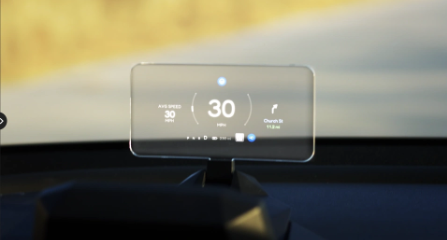
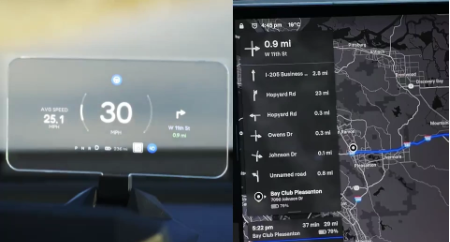
For Tesla Model 3 and Model Y owners, the lack of an instrument cluster directly behind the steering wheel remains a common pain point. While aftermarket head-up displays (HUDs) have attempted to fill this gap, they often rely on invasive OBD-II connections or suffer from laggy interfaces. TrantorVision aims to address this with NeuroHUD, an upcoming Kickstarter campaign featuring an AI-powered, low-latency HUD designed specifically for Tesla's ecosystem.
AI Vision and Tesla API Integration
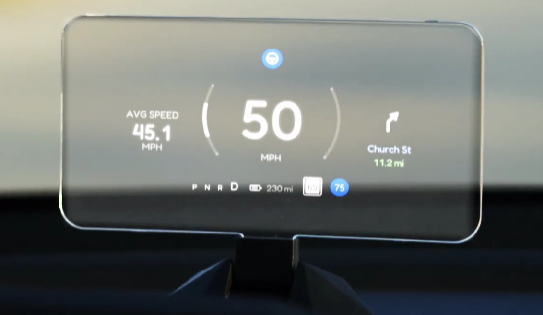
NeuroHUD claims to bypass traditional OBD-II limitations by combining Tesla's official API with an onboard AI vision processor. Operating at a 50Hz refresh rate, the system promises a latency of under 20 milliseconds, ensuring real-time synchronization with vehicle speed, turn signals, and Autopilot status.
According to TrantorVision, the AI processor analyzes the road and vehicle state locally, reducing reliance on continuous cloud data. This hybrid approach allows the HUD to display critical driver-assistance information, including Autopilot visualizations, directly in the driver's line of sight.
Dual Display Modes and Thermal Management
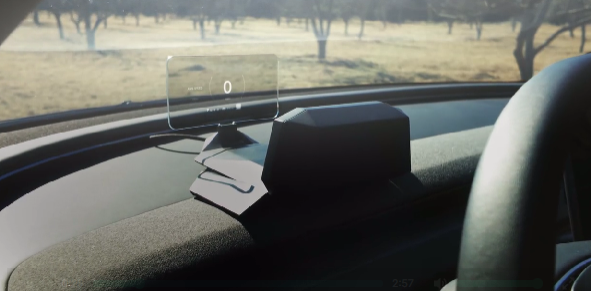
The device offers two display configurations: Windshield Mode and Combiner Mode. Windshield Mode projects directly onto the glass using a specialized reflective film, while Combiner Mode utilizes an integrated, high-transparency TFT LCD screen. The display features a rated brightness of 500 nits, which the manufacturer claims can achieve a perceived brightness of up to 1,500 nits under bright daylight.
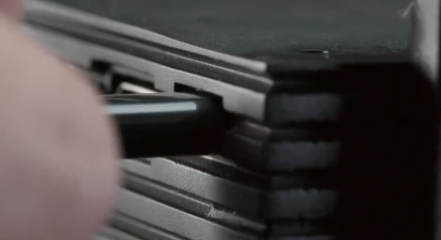
Operating on a vehicle dashboard exposes hardware to extreme thermal stress. TrantorVision states that NeuroHUD is engineered to withstand temperatures up to 55°C (131°F). Power is supplied via a standard USB-C connection, avoiding the need for complex wiring or modifications to the vehicle's internal electrical systems.
Software Ecosystem and Hardware Expansion
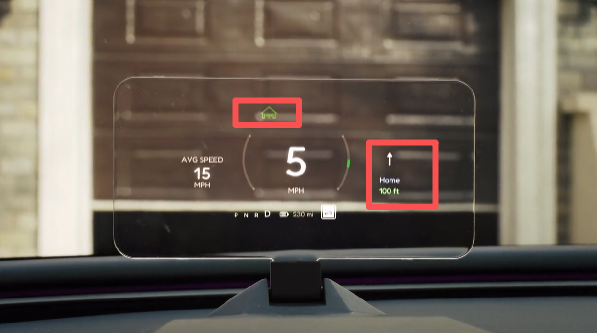
Beyond basic telemetry, the companion app integrates with Tesla's API to offer smart home controls. The 'Pro' version of the hardware reportedly includes RF and GPS modules, allowing users to trigger garage doors or smart home routines (similar to Tesla's HomeLink) automatically as the vehicle approaches a designated location.
TrantorVision, established in 2025, plans to launch the NeuroHUD campaign on Kickstarter in August 2026, with an estimated retail price of $440. The company aims to capture a share of the rapidly growing automotive HUD market, which analysts project will reach billions of dollars over the next decade.
By combining local AI processing with Tesla's API, NeuroHUD attempts to deliver a lag-free, non-invasive dashboard alternative for Model 3 and Model Y owners.