Vastnaut One: AI-Driven 4-Joint Exoskeleton Aims for $2M on Kickstarter
Campaign Teardown · · PledgeRadar Editorial
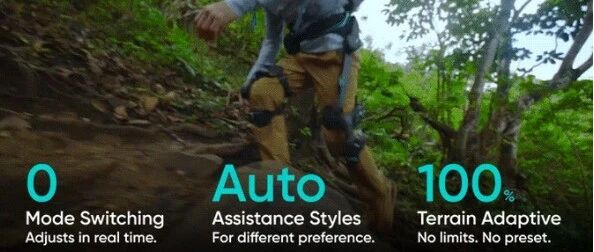
Vastnaut One, from Los Angeles-based wearable robotics company Vastnaut, is introduced as the world's first consumer-grade AI-driven 4x4 exoskeleton. Featuring four 400W motors across its dual hip and dual knee joints, and powered by the VastSynergyAI engine for real-time torque allocation, it's designed to reduce knee impact and uphill strain simultaneously on challenging terrains like steep slopes, scree, and descents. The device targets hikers, outdoor photographers, and professionals requiring long-distance treks with heavy loads.
Kickstarter Launch and Early Performance
Vastnaut One launched on Kickstarter on April 28, 2026, securing $500,000 in under five days. By mid-month, the project had raised over $800,000, making it highly likely to surpass $1 million with sustained marketing efforts. Both crowdfunding comments and media reports have highlighted a crucial caveat regarding the product's performance data: the brand's published biomechanical figures—a 35% reduction in knee impact and 30% less effort uphill—are derived from internal testing and currently lack independent validation. Media outlets like TheGadgeteer have specifically pointed out this limitation in their reviews.
During the campaign, field tests were conducted in the United States and Australia. Australian outdoor photographer Harrison Candlin, after a two-day trek carrying 15kg of camera gear, publicly stated that the device significantly reduced physical exertion, noting his heart rate dropped by approximately 30 beats per minute on uphill sections. However, this remains an individual testimonial; widespread user testing of mass-produced units will be the ultimate validation.
Key Product Features
**4-Joint x 4-Motor (4x4) Structure:** Vastnaut One is positioned as the world's first consumer exoskeleton to assist both hip and knee joints simultaneously. Most consumer hiking exoskeletons on the market only provide assistance at the hip, leaving the knee joints to absorb eccentric loads during descents entirely through human muscle. Vastnaut One deploys a 400W motor at each of the dual hips and dual knees, coordinating output in real-time via ATD (Adaptive Torque Distribution) technology. From a biomechanical perspective, knee braking during descents is a period of concentrated injury risk and a blind spot for traditional single-joint assist solutions, which Vastnaut directly addresses. The core risk of this selling point lies in the significantly higher complexity of a four-joint coordinated control system compared to single-joint solutions; any response delay in a sensor or actuator could affect overall force alignment, making mass production stability a critical test.
**VastSynergyAI Engine + ATD Adaptive Torque Distribution:** The system continuously collects user physiological parameters such as height, weight, gait rhythm, and heart rate. The VastSynergyAI engine analyzes this data in real-time, using ATD technology to dynamically adjust the output ratio of the four motors across different terrains and gait phases. During ascents, hip motors are primarily activated for propulsion; during descents, it switches to knee joint braking mode; and on flat ground, it maintains assistance with minimal power consumption. The actual effectiveness of this closed-loop design depends on the synergy of sensor sampling rate, algorithm prediction accuracy, and motor response delay. The algorithm's robustness in unstructured terrains like scree paths and side slopes represents the biggest difference in experience between controlled testing environments and real-world outdoor conditions.
**86% Carbon Fiber Body, 2.7kg Total Weight:** The main structure is constructed from carbon fiber, accounting for 86% of the material, resulting in a total device weight of 2.7kg. Achieving a weight of 2.7kg with a four-motor, full-drive system is a significant engineering accomplishment. Compared to medical-grade products like EksoBionics, which often weigh over 20kg, this consumer-grade lightweight approach makes prolonged outdoor wear feasible. Key concerns include the impact resistance and long-term fatigue life of carbon fiber in complex, rugged terrain, as well as the durability of joint connection components under repeated bending, which are potential engineering weak points that may emerge with long-term use.
**Hot-Swappable Battery, Approx. 4.5 Hours/20km Range:** A single battery is rated for approximately 4.5 hours or 20km of mixed terrain and supports hot-swapping, allowing battery replacement without removing the exoskeleton. The hot-swappable design significantly reduces range anxiety during long treks, which is particularly crucial for professional users requiring continuous multi-day use. The practical ease of battery replacement (especially in outdoor environments while wearing gloves) and the unit price and weight of additional batteries are detailed variables that will influence the actual user experience.
**Fits Heights 5'3–6'3, Waist Up to 51 Inches:** The size range is relatively broad, accommodating users with significant body type differences, and Vastnaut has indicated plans to further expand the size range. Contact point materials are breathable and skin-friendly, and the donning/doffing design has been optimized for outdoor environments. The brand initiated multi-location beta testing in the US in January 2026, involving outdoor photographers, tech enthusiasts, and existing exoskeleton users. Test reports indicated low interference with natural gait. Consistent fit in actual mass production (accuracy of force line alignment for different skeletal proportions and body types) is a critical manufacturing threshold for the product to maintain its reputation.
Public information indicates Vastnaut is a brand under Shenzhen Yifang Innovation Technology Co., Ltd. The team's background spans robotics engineering, biomechanics, and control systems, combined with experience in consumer electronics product development. The brand name, a combination of "vast" and "naut," reflects a philosophy of collaborative engineering. Vastnaut One is the brand's first product to be crowdfunded overseas. Its parent company, Hangzhou Yifang Intelligent Technology Co., Ltd., has completed two rounds of multi-million dollar financing. Companies of this nature typically have no issues with delivery, and there is anticipation for Vastnaut to successfully exceed $2 million and fulfill its commitments.
Global Market Landscape
The global exoskeleton market is in a rapid expansion phase, though estimates vary widely due to differing statistical methodologies. Market valuations range from approximately $580 million to $3.5 billion in 2024, with most institutions projecting a Compound Annual Growth Rate (CAGR) between 14% and 22% from 2030 to 2035. Currently, the market is primarily driven by medical rehabilitation (e.g., EksoBionics, ReWalk, Cyberdyne) and industrial assistance (e.g., Ottobock SuitX, German Bionic). These products typically range from tens of thousands to $150,000 per unit and are sold through hospitals, insurance providers, and corporate procurement channels, creating a clear separation in distribution and pricing from the consumer market.
The consumer-grade outdoor exoskeleton segment is an emerging niche transitioning from a specialized market to a more mainstream one. In the current competitive landscape, Hypershell is the most recognized brand in the consumer market, with its ProX series priced around $1,999, offering only dual-hip single-joint assistance and a range of approximately 17.5km. Arc'teryx and Skip jointly released the Powered Pants for hiking in 2024, emphasizing a natural wearing feel, priced around $5,000, and also featuring a hip-only single-joint solution. Samsung GEMS Hip has received over-the-counter sales approval in South Korea, priced between $3,750 and $7,500, focusing on daily assistance.
Vastnaut One's core differentiation lies in its four-joint simultaneous assistance combined with AI-coordinated control. In terms of active knee joint intervention, no other consumer product on the market directly competes with it, establishing a genuine technological barrier. The mass production yield and long-term reliability of the four-joint control system will directly determine whether the product evolves from a high-profile debut into a sustainable category. Consumer-grade smart exoskeletons represent a category with real demand, high technical barriers, and a reputation still in its formative stages, frequently appearing in the consumer market in recent years and often achieving multi-million dollar projects in overseas crowdfunding.
After a two-day trek carrying 15kg of camera gear, Australian outdoor photographer Harrison Candlin publicly stated: 'The device significantly reduced physical exertion, with my heart rate dropping by approximately 30 beats/minute on uphill sections.'