Violoop AI Agent Exceeds $2M on Kickstarter, Turns Old PCs into AI Workstations
Campaign Teardown · · PledgeRadar Editorial
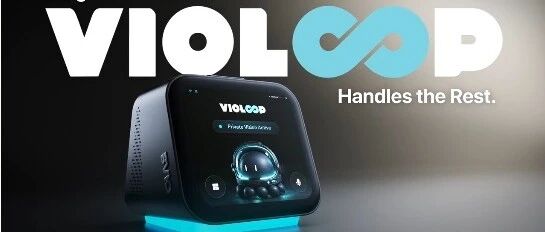
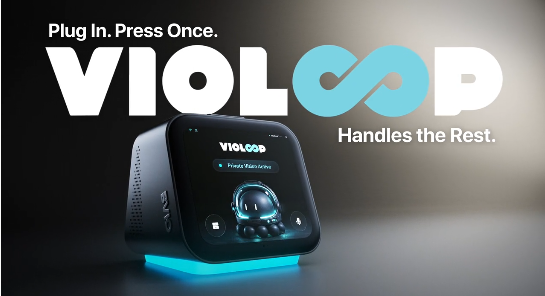
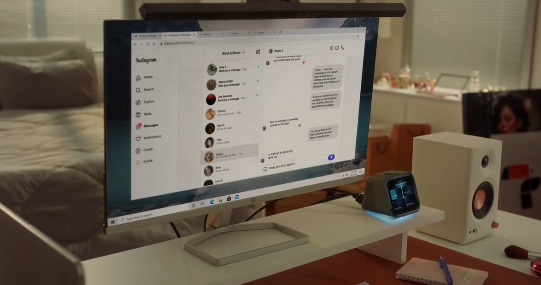
Violoop, an external AI agent from BVIO, aims to transform any Windows, Mac, or Linux computer into a continuously working "Computer Use" system. It achieves this by reading the computer screen via HDMI, locally interpreting current tasks, and then executing cross-application tasks using USB keyboard/mouse emulation and system interfaces.
Campaign Performance and Initial Impressions
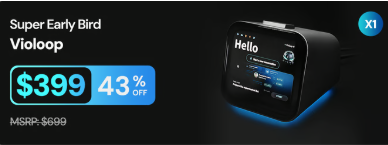
Violoop launched on September 15, 2026, quickly surpassing $1 million in funding within 20 hours and exceeding $2 million in approximately 20 days. The Kickstarter early bird price is $399, with a planned retail price of $699. Backers who paid a $10 deposit before the campaign will receive a full refund of their deposit plus an additional $30 cashback, bringing their effective minimum price down to around $369.
Violoop isn't a project solely relying on renders to attract orders; multiple media outlets experienced it firsthand during IFA 2026. However, the real unknown isn't whether the machine can interpret the screen, but rather its success rate during dozens of consecutive cross-application operations. Official data on action paths indicates a 99% success rate for direct scripts/APIs, 95% for keyboard shortcuts, and approximately 90% for Accessibility Handles. Yet, for tasks heavily reliant on GUI visual clicks, the success rate is only about 70%. This figure suggests that the most challenging aspect of "Computer Use" remains stable execution across complex interfaces.
Core Product Features and Technology
**HDMI and USB: Bypassing Individual API Integrations**
Violoop reads screens up to 4K@30Hz via HDMI 2.0 and simulates keyboard and mouse inputs via USB-HID. This design means that even legacy ERP systems, internal backends, or software without open APIs can theoretically be operated by Violoop, as long as a human can interact with them on screen. This external hardware approach is significant because traditional automation requires software to actively expose interfaces, whereas Violoop integrates at the human-computer interaction level. The official FAQ clarifies that users still need to install a desktop Companion App for file handling, script execution, and calling Accessibility interfaces, but without needing individual plugins for each application.
**26 TOPS Local AI for On-Device Processing**
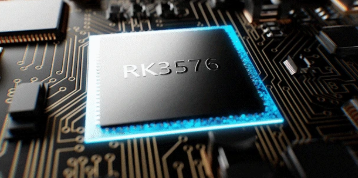
The device utilizes an RK3576 octa-core platform with a dedicated AI accelerator, boasting a total computing power of 26 TOPS. It includes 13GB of RAM and 128GB of storage, capable of running the Qwen8BQ4 model locally.
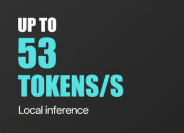
In official tests, Violoop achieved a generation speed of approximately 53 tokens/s with the same model and precision, compared to about 20 tokens/s on a 16GB Mac mini M4.
Its true advantage isn't running a larger model, but rather keeping screen recognition, memory, short tasks, and quick Q&A local, only offloading complex reasoning to larger cloud models. This positioning makes the $399 price point seem less like just an AI box and more like adding independent AI computing power to an existing computer.
**Hardware Confirmation for Critical Actions**
Violoop separates AI processing from execution authorization. A dedicated STM32H563 secure MCU controls the actual keyboard and mouse output. For critical actions such as sending emails, making payments, deleting files, or overwriting data, the AI can prepare the task, but the user must press a physical button or complete an encrypted confirmation via a paired mobile phone. This structure is more robust than a simple software "Yes/No" dialog, as the AI itself cannot physically simulate the button press. However, independent third-party security audits and SBOM (Software Bill of Materials) are not yet complete.
**Privacy and Security: Local Processing, Cloud for Complex Tasks**
Violoop emphasizes that raw screen feeds are not continuously uploaded. "Fully Local" mode and Local BYOK (Bring Your Own Key) solutions like Ollama and LMStudio can keep processing within the device or local network.
However, "local-first" does not mean entirely offline. When users invoke cloud-based models like Claude, OpenAI, or Gemini, Violoop will still send filtered, relevant text context to external models. Currently, Internet BYOK requests are also forwarded through Violoop servers. Violoop Cloud itself operates on AWS servers in the United States. For individuals handling client data, company backends, or financial systems, this distinction is more critical than the "local AI" label alone.
**Cross-Application Workflows: Beyond Q&A to Task Execution**
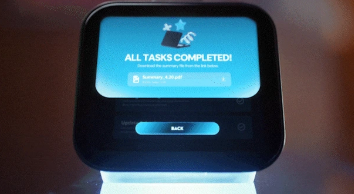
Violoop can operate continuously across applications such as email, browsers, Excel, CRM, and file systems. For example, it can read order emails, extract customer information, update CRM, and then draft a reply. The company currently describes its training scope as over 200 applications, with more than 10,000 real software interfaces tested daily. It also locally records user task paths, tone, and operational habits on the device, gradually shortening repetitive processes. This makes it more compelling than traditional chatbots; users gain not just another Q&A window, but a tool that attempts to reduce the manual clicking they would otherwise have to do.
BVIO, the entity behind Violoop, is based in Hong Kong, with its R&D team primarily in Shenzhen. Founder and CEO He Jialin, a computer science graduate from UC San Diego, is a Y Combinator W19 alumnus with serial entrepreneurship experience. Co-founder and CTO Zhu Xianzheng, an MIT EECS graduate, previously contributed to chip and consumer electronics R&D at Microsoft (Xbox, HoloLens, Surface) and Analog Devices (ADI). In September 2026, the company completed multi-million dollar angel and Pre-A rounds of financing, with investors including Lenovo Capital, CICC Porsche, BlueRun Ventures, Genesis Capital, QF Capital, and Tsing Capital. Lenovo has also partnered with BVIO on supply chain, manufacturing, channels, and the AI PC ecosystem. Before crowdfunding, Violoop had already accumulated approximately 12,000 deposit-based pre-orders.

Market Outlook and Future Challenges
Grand View Research projects the global edge AI market to grow from $30 billion in 2026 to $118.7 billion by 2033, at a CAGR of 21.7%. Hardware is expected to account for 51.8% of market revenue in 2025, with low latency, local privacy, and the decentralization of AI inference from cloud to endpoint being the primary growth drivers.
Violoop's true competition isn't traditional AI boxes, but increasingly powerful software agents. For instance, Perplexity has introduced "Portable Computer," which can run agents directly on Windows and Linux locally, but requires at least 24GB VRAM on an RTX GPU or a corresponding high-performance AI platform, along with a Pro or Max subscription. This is precisely the price gap Violoop, at $399, has identified: users don't need to replace their existing computers or purchase high-end GPUs; instead, they can add an independent AI vision and execution system alongside their current setup.
However, its greatest long-term risk is significant: if Windows and macOS integrate "Computer Use" capabilities, file permissions, and local agents directly into the operating system's core, the necessity of external hardware will become increasingly difficult to justify. Conversely, if users consistently remain unwilling to grant a software agent full control over their entire computer screen, files, and execution permissions, then Violoop's approach—where AI observes externally and critical operations require human confirmation—could become its most valuable product logic. Ultimately, whether Violoop can evolve from a $2 million-plus crowdfunding project into a genuinely new hardware category won't depend on how fast 26 TOPS is, but on whether its error rate, after continuously operating a computer for dozens of minutes on behalf of a user, is low enough for users to truly feel comfortable stepping away from their desks.
AI can prepare tasks, but it cannot press 'send' itself.