X1LITE Laser Welder: 14kg Portable System Raises Over $1.1M on Kickstarter
Campaign Teardown · · PledgeRadar Editorial
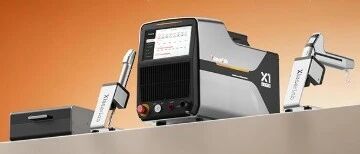
The Xlaserlab X1LITE is a portable fiber laser workstation designed for makers, small metalworking studios, and repair professionals. Weighing just 14kg, the main unit supports interchangeable Pen fine welding heads and a Torch multi-function welding gun, enabling thin-sheet welding, continuous welding, metal cutting, and laser rust removal.
Campaign Overview
Launched on Kickstarter on September 1, 2026, and concluding on October 16, the 45-day X1LITE campaign quickly surpassed $1.1 million USD in under 20 days. With an average pledge of nearly $2,900 per backer, the order structure suggests that most users opted for comprehensive packages including the Torch, Pen, and wire feeder system, rather than just the entry-level standalone unit priced at $1,799.
Early bird pricing for the PrecisionKit, focused on Pen fine processing, started at approximately $1,799. The complete CompleteKit was available for $2,699, while the UltimateKit, which included robotics and CNC extensions, reached $8,899. Prior to launch, the brand utilized a $30 VIP deposit to pre-qualify users. Backers received a $200 refund after the campaign, further reducing the effective purchase price and securing a significant number of high-intent customers in advance.
This marks XLaserlab's third successful laser hardware campaign on Kickstarter. In 2025, the first-generation X1 ultimately raised over $5 million, with the brand promptly shipping to global backers post-campaign. Both the X1 and X1Pro are now available for regular retail on their official website. Their second project, the E3 UV laser engraver, also secured over $1 million from 214 backers.
Regarding PR and reviews, Hackster has provided a technical teardown of the product's structure, and GizmoCrowd has analyzed its power, packages, and applicable scenarios based on crowdfunding materials. However, extensive independent long-term practical tests, similar to those for the previous X1Pro, are not yet widely available. The X1Pro did receive considerable real-world feedback, with HOWEES Machine Shop noting its strong performance in small-scale welding and low-deformation stainless steel applications, often outperforming TIG in certain scenarios. Reddit users with over six months of X1Pro experience also acknowledged its practical utility, while also raising points about learning curves and safety concerns related to lenses, cooling, shielding gas, and highly reflective metals.
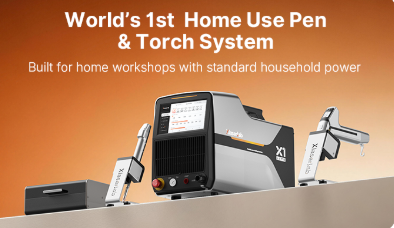
The marketing strategy for the X1LITE is significantly more refined than for the first generation. It leveraged the previous $5 million crowdfunding success to build trust, then repackaged industrial laser welding into a maker-friendly tool by emphasizing 'HomeUse,' 'Pen & Torch' functionality, compatibility with standard household power, and its 14kg portability. A 31% early bird discount and the $30 deposit further helped secure high-intent customers. The campaign effectively sold not just specifications, but the promise of bringing equipment previously confined to professional metalworking shops into a home garage.
Key Product Features
### Dual Pen + Torch Welding Heads
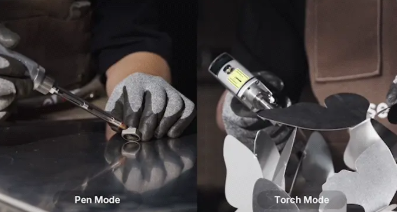
The X1LITE's most significant innovation is its dual-head system, moving away from a single welding gun for all tasks. The PenMode utilizes a lightweight, pen-style processing head weighing approximately 0.3kg, ideal for jewelry, thin sheets, precision parts, and localized repairs. The Torch, conversely, handles continuous welding, cutting, and wide-area cleaning. Both work heads share a single fiber laser host, allowing users to switch between them based on project scale, eliminating the need for two separate devices.
While traditional laser welding guns excel at long seams, they lack agility for very small parts. The Pen's altered handheld weight and grip make it feel more like a precision tool. However, the claim of learning to weld 'as easily as writing in 5 minutes' remains a marketing statement; achieving reliable welds still requires proper material matching, focal length, power, and welding speed control.
### Power Output and Thin Sheet Control
Public technical specifications list the X1LITE as a 1080nm fiber laser system with approximately 500W continuous output and 700W peak power. The official FAQ states a welding range of up to 2.5mm for common steel and stainless steel, down to 0.2mm for the thinnest applications, and up to 1.5mm for aluminum.
This approach differs from the competitive strategy of 1200W and 1500W industrial handheld welders.
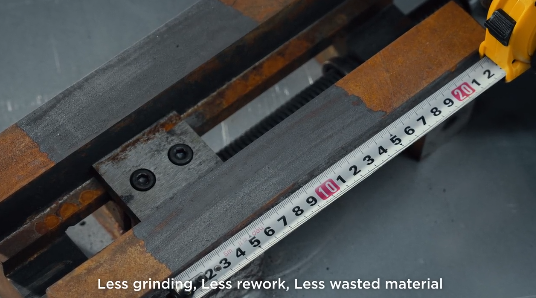
Instead of pursuing 5mm or thicker structural components, the X1LITE prioritizes low heat input and thin sheet control. For applications like stainless steel decorative pieces, furniture, signage, automotive thin sheets, and fine repairs, this capability may offer more value than simply increasing penetration depth.
### CW + 10kHz Modulation for Versatile Welding
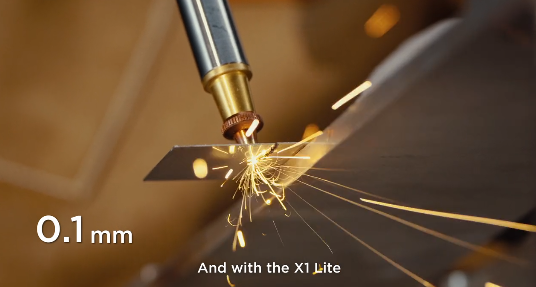
The X1LITE utilizes a continuous wave (CW) fiber laser source but can switch to a pulsed operating mode up to 10kHz via modulation. The Pen mode primarily leverages this pulsed/spot welding capability to control instantaneous heat input, while the Torch handles continuous welding. This architecture explains its ability to cover welding from 0.1mm thin sheets up to 2.5mm, not merely by reducing power, but by altering the energy release method.
However, the pulsed mode is still generated by modulating the same CW light source and should not be directly equated with dedicated MOPA pulsed cleaning lasers. For industrial scenarios requiring extremely fine surface control, the pulse characteristics of these two types of equipment are not identical.
### Torch: Multifunctional Core for Welding, Cutting, and Cleaning
Beyond welding, the Torch mode also performs cutting and laser cleaning. The brand claims it can cut metals such as stainless steel, aluminum, and brass up to approximately 3mm. The cleaning scan width is adjustable from 0-150mm, used for removing rust, paint, and oxidation layers, with the 150mm wide-area cleaning representing a significant expansion of application scenarios.
This means users can not only process a weld seam but also clean old metal surfaces before welding, and even perform some cutting operations with the same device.
However, the 3mm cutting capability is currently primarily based on brand demonstrations and project materials. Independent tests on the cut quality, speed, and continuous operation capabilities for different metals with production units are still limited, so it cannot be simply assumed that it can replace professional laser cutting machines of comparable power.
### Portability and Power Compatibility (14kg, 100-250V)
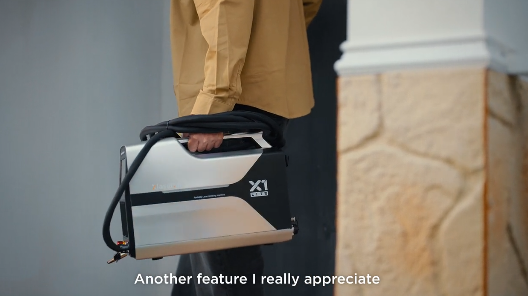
Weighing approximately 14kg, the main unit supports 100-250V, 50/60Hz input. This means it can be directly used in common household power environments like 120V in the US or 230V in Europe, unlike many traditional industrial laser welders that require three-phase power modifications. This is a crucial aspect of the X1LITE's commercial positioning.
Many 'handheld' laser welders on the market are actually dozens to hundreds of kilograms, comprising a water-cooled cabinet with only the welding gun held by hand. The X1LITE genuinely reduces the main unit itself to a weight that a single person can carry. However, household power compatibility does not equate to operating like a typical home appliance.
The operating environment, safety isolation, and ventilation requirements for a 500W continuous-wave near-infrared laser are still entirely different from those for a desktop laser engraver.
### SmartGrip and 100+ Presets for Ease of Use
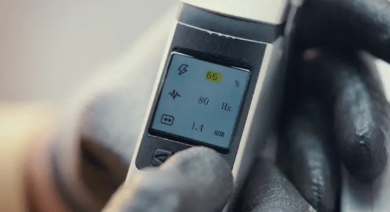
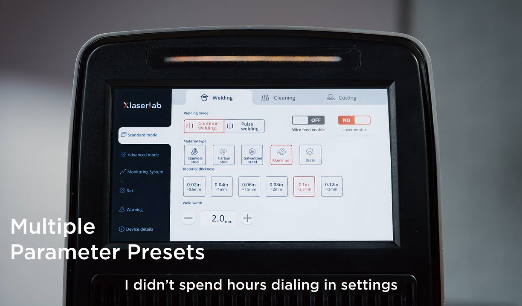
The system offers over 100 material and thickness presets. After a user selects a material, the machine automatically applies the corresponding power, frequency, and other parameters.
The SmartGrip Torch integrates power, frequency, and wire feed controls directly onto the welding gun handle, minimizing the need to switch between the main unit and the workpiece. The material parameter library can also be expanded via over-the-air (OTA) updates.
This logic mirrors the increasing automation seen in modern 3D printers, no longer requiring users to understand every parameter from scratch.
While it certainly lowers the barrier for first-time welding, it doesn't alter the fundamental fact that material grade, surface condition, joint gap, and reflectivity all impact laser welding. Presets can reduce trial and error, but they don't guarantee automatically achieving qualified structural welds.
Company Background
XLaserlab is the consumer and small studio brand of Shenzhen Xinghan Laser Technology Co., Ltd. Established in 2017, the company primarily focuses on high-power semiconductor lasers and industrial laser solutions. According to public information from the Shenzhen Laser Intelligent Manufacturing Industry Association, Xinghan Laser's founder, Zhou Shaofeng, has a background in optical communications and laser technology, with approximately 11 years of R&D experience at foreign enterprises before venturing into high-power semiconductor lasers. XPhotonics began mass delivery of its new generation of air-cooled handheld welding solutions in 2024, followed by the launch of the consumer brand XLaserlab overseas in 2025. In terms of crowdfunding fulfillment, the company appears significantly more mature than most Kickstarter hardware startups.
Global Market Analysis
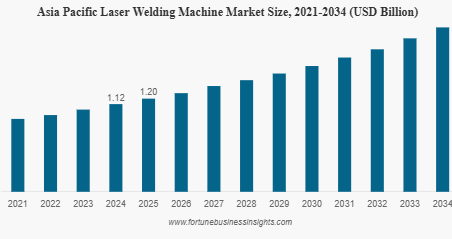
According to the latest data from Fortune Business Insights, the global laser welding equipment market is projected to grow from $2.72 billion in 2025 to $2.91 billion in 2026, reaching $4.82 billion by 2034, with a compound annual growth rate (CAGR) of approximately 6.5% from 2026–2034. This growth is primarily driven by the automotive, metal processing, electronics, and precision manufacturing sectors, as well as smaller factories seeking to reduce heat deformation and post-processing steps associated with TIG/MIG welding.
Concurrently, pricing is rapidly decreasing. Industrial-grade solutions like the IPG LightWELD 1000 still have public new machine prices around $17,900, with 1500W series dealer prices exceeding $22,500. In contrast, the consumer/small business segment has seen xTool MetalFab offer 800W/1200W laser welders starting at $4,699, with the 1200W version capable of processing steel up to approximately 5mm. The X1LITE's complete package at $2,699 clearly continues to push laser welding prices into a range traditionally occupied by high-end TIG equipment.
The X1LITE does not follow the exact same path as the xTool MetalFab. The MetalFab emphasizes higher power, 5mm-class structural welding, and subsequent CNC cutting, positioning it closer to small production equipment. The X1LITE, conversely, sacrifices some thick-plate capability for 14kg portability, Pen precision welding, and a lower entry price.
This positioning places it precisely between traditional welders and industrial lasers, and this is where its true market risk lies. 700W peak power is not uncommon, and low-cost Chinese fiber laser welders are already abundant. The X1LITE's long-term ability to maintain a premium price will depend not on its light source power, but on whether its safety system, parameter software, dual-head structure, consumable supply, and after-sales support are more comprehensive than those of generic brands.
The true product capability that the X1LITE project needs to validate going forward is not merely whether a laser welder can be made smaller. Rather, it's whether, once a Class 4 industrial laser device enters a typical workshop, the brand can simultaneously bring welding quality, operational accessibility, and safety management down to a level that ordinary makers can genuinely use long-term.
It's selling not just specifications, but the promise of bringing equipment previously confined to professional metalworking shops into a home garage.