XGIMI's Camera-Free AI Glasses Launch on Kickstarter: MemoMindOne Seeks New Records
Campaign Teardown · · PledgeRadar Editorial

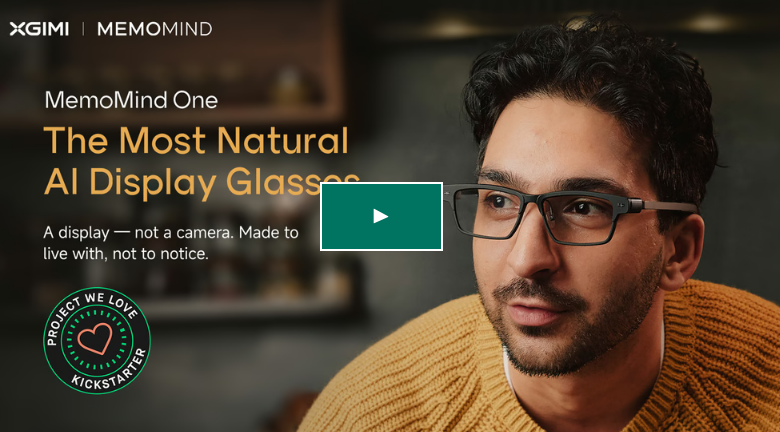
XGIMI, fresh off a multi-million dollar projector campaign that significantly boosted its international presence, has launched another ambitious project: the MemoMindOne AI smart glasses. Developed by MemoMind, XGIMI's AI hardware brand, MemoMindOne is designed for productivity, featuring a camera-free approach. It integrates dual green monochrome Micro-LED waveguide displays, Harman-tuned speakers, and a multi-LLM hybrid AI system to offer real-time translation, voice notes, navigation, teleprompter, and AI long-term memory functions. This device targets professionals and privacy-conscious consumers who seek AI assistance in daily work, business meetings, and travel, without the social concerns associated with camera-equipped eyewear.
Kickstarter Launch and Early Reviews
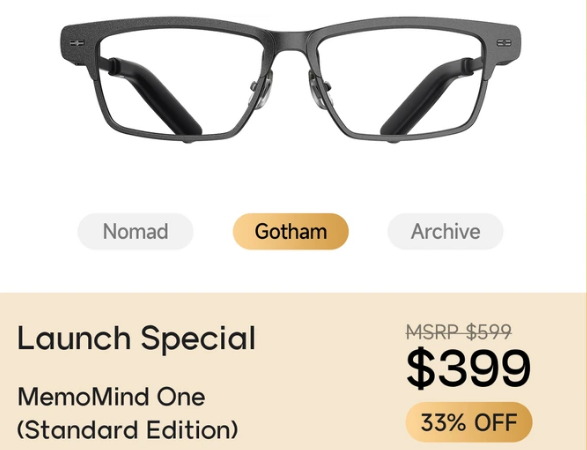
The MemoMindOne launched on Kickstarter on June 29, 2026, with crowdfunding prices starting at $399. A version with Zeiss prescription lenses is available for $499, and a custom color option for $449. The campaign quickly surpassed $500,000 and continues to climb. Prior to its crowdfunding launch, the product was publicly showcased at CES 2026 and MWC 2026. An Engadget reviewer, after a week of hands-on use, praised the hardware's solidity. However, TechRadar's 48-hour in-depth review presented a more nuanced picture, with the reviewer specifically noting slow AI response times, disappointing audio output, and functional limitations due to the absence of a camera.
TechTimes highlighted a significant privacy legal risk: the MemoMoments feature continuously captures ambient sound via its microphone. This implies that recording conversations of others without their consent could violate local laws in 12 U.S. states that require two-party consent for recording. Prospective buyers should verify local recording regulations before purchase.
Overall, XGIMI's marketing strategy appears to allow for diverse media commentary, which lends authenticity and could spark consumer interest through discussion. This approach, however, has a dual nature, as the product's funding trajectory has not matched the rapid success of XGIMI's previous projector campaign, potentially influenced by these varied market responses.
Key Product Features
Dual Micro-LED Waveguide Display
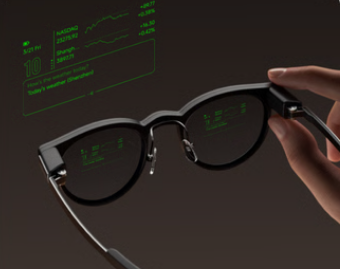
The MemoMindOne features independent dual Micro-LED waveguide displays, delivering a private viewing experience with 2000 nits peak brightness in a green monochrome scheme. Content displayed is visible only to the wearer, ensuring privacy from onlookers.
This dual-eye display offers a more natural visual experience compared to single-eye solutions found in competitors like the EvenRealities G2. The green monochrome approach maintains clear readability even under low power consumption. TheGadgeteer's review cautioned that the display size and content richness are not comparable to smartphones or VR headsets, positioning the device for glanceable information rather than rich media computing. Real-world readability in bright outdoor conditions remains a critical engineering variable for waveguide display solutions that requires validation.
Camera-Free Design and Lightweight Build
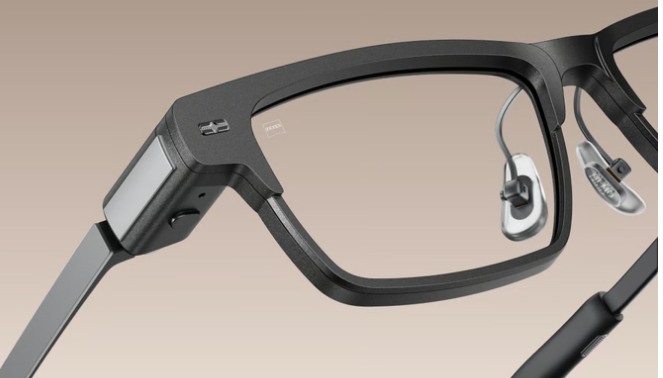
The MemoMindOne deliberately omits a camera, a conscious product decision rather than a cost-saving measure.
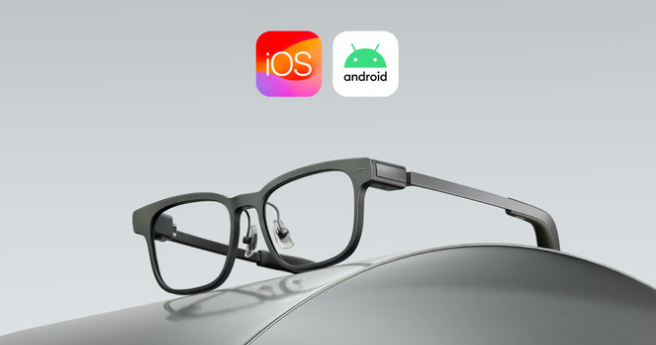
Weighing just 46 grams, the device features β-titanium alloy frames available in three styles (square-round, round, square) and seven color options. It also supports Zeiss prescription lenses, making it accessible to users with vision correction needs.
This camera-free design aims to eliminate concerns about surreptitious recording in social settings, directly addressing a long-standing social acceptance issue faced by products like the Meta Ray-Ban series. However, the lack of a camera means visual AI functions, such as object or text recognition, are not possible, limiting the device's AI capabilities to audio and display interactions.

Multi-LLM Hybrid AI System
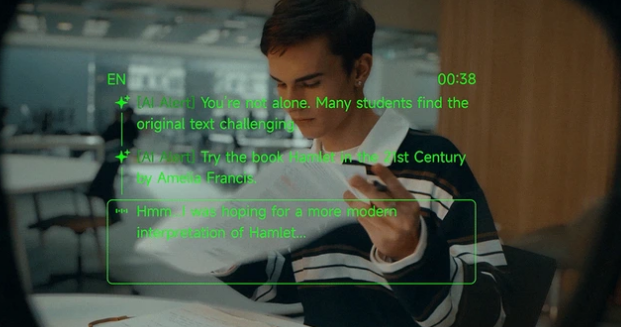
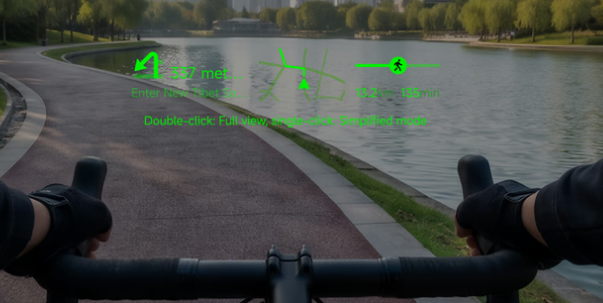
The device integrates a multi-LLM hybrid AI operating system, supporting real-time voice translation in over 26 languages. It offers two translation modes: Listen-in Mode for passive translation of ongoing conversations, and Dialog Mode for real-time, bidirectional translation in two-person exchanges. Additionally, it provides real-time subtitles, voice AI Q&A, navigation guidance, and an adaptive teleprompter.
This suite of AI features offers tangible efficiency benefits for business travel, international meetings, and professionals who need to record content. However, AI response latency has been explicitly identified by media in hands-on tests as a significant experiential drawback.
Both The Verge and TechRadar noted considerable fluctuations in AI assistant response times, indicating it is not consistently fluid. This is an inherent limitation of server-side inference dependency and a common area where product demonstrations can differ from daily use.
MemoAI Long-Term Memory System (Memo+ Subscription)
The Memo+ subscription service processes users' daily audio through continuous recording via the device's microphone, operating across three dimensions. "Moments" organizes daily recordings into AI-generated text and image diaries; "UpNext" automatically extracts tasks, reminders, and intentions from conversations; and "MemoAI+" creates a unified search index across meetings, conversations, and records. This feature addresses a genuine pain point: people often struggle to recall meeting details or commitments afterward. Coupled with the aforementioned legal risks in 12 U.S. states regarding recording, this function faces not only technical challenges but also significant compliance boundaries in its real-world implementation.
Audio and Interaction Methods
The MemoMindOne features built-in Harman-tuned open-ear speakers, designed to deliver vocal-quality audio for music, calls, and AI voice responses. Interaction methods include physical buttons, voice commands, and head gestures, with future OTA updates planned to add support for third-party Bluetooth controllers.
TechRadar's hands-on review provided a distinctly negative assessment of the audio output, deeming it unsatisfactory. For a product featuring the Harman brand, this discrepancy with user expectations is a tangible concern.
Company Background and Market Overview
MemoMind is an AI hardware sub-brand incubated by XGIMI Technology, a global leader in smart projectors headquartered in Chengdu, China, with public financing records on Nasdaq and NYSE. Leveraging over a decade of experience in optical engineering and consumer electronics manufacturing, XGIMI has expanded into the AI wearable device sector. The MemoMindOne, first unveiled at CES 2026, represents XGIMI's initial formal foray from projectors into AI wearables. Backed by its parent company's manufacturing capabilities and optical engineering expertise, MemoMind undoubtedly possesses stronger credibility in supply chain and mass production execution compared to typical first-time crowdfunding startups.
AI smart glasses represent one of the fastest-growing categories in the current hardware market. Counterpoint Research data indicates that global smart glasses shipments surged by 210% year-over-year in 2024, followed by a 139% year-over-year increase in the second half of 2025. The Meta Ray-Ban series alone captured over 60% of the market share in 2024, becoming the single largest driver for this category.
Regarding market size, Citi Research projects the market to grow to $40 billion by 2030, with a Compound Annual Growth Rate (CAGR) of approximately 112%. The AI smart glasses sub-segment is expected to grow at a CAGR of about 12% to 27% from 2030 to 2034. Growth drivers include rapidly increasing consumer demand for hands-free AI assistance, continuous miniaturization of display technologies (Micro-LED, waveguide), and the category education effect brought by the intensive entry of major tech companies such as Meta, Google, Samsung, and Apple.
Competitive Landscape and Market Risks
In the competitive landscape, the Meta Ray-Ban series leads significantly with over 60% market share, driven by its camera-equipped Look and Ask visual AI features and fashion distribution channels through EssilorLuxottica. The EvenRealities G2, priced at $599, is the most direct competitor in camera-free AI display glasses, focusing on a single-eye display and minimalist design. MemoMindOne notably surpasses it in dual-eye display and AI feature completeness, while also offering a lower crowdfunding price. XREAL and Rokid provide dual-eye AR display solutions, but their larger form factors position them more as display extensions rather than everyday wearables.
The MemoMindOne differentiates itself through a unique combination of a camera-free design, dual-eye display, prescription lens support, and a comprehensive AI suite—a product profile currently scarce in the market. From a market risk perspective, media outlets like TechRadar have already highlighted shortcomings in AI response speed and audio performance during testing. The MemoMoments continuous recording feature poses legal compliance risks in 12 U.S. states. Furthermore, as a Chinese enterprise, XGIMI faces increasingly complex scrutiny regarding data sovereignty and supply chain compliance in the U.S. market.
Camera-free AI display glasses represent a clearly defined and viable niche. The MemoMindOne, leveraging XGIMI's optical manufacturing background and aggressive pricing, has found an effective entry point into this competitive landscape. Its ultimate success hinges on whether its AI response speed and MemoMoments' privacy compliance strategy can withstand sustained scrutiny from media and users after initial deliveries.
The MemoMindOne deliberately omits a camera, a conscious product decision rather than a cost-saving measure.