Xiamen Brand's OMNIX1 Smart Home Gym Targets $5 Million on Kickstarter
Campaign Teardown · · PledgeRadar Editorial

The OMNIX1, an integrated smart fitness machine from INNODIGYM, offers a comprehensive strength training solution designed for home use, eliminating the need for a gym membership. It features a dual-servo smart resistance system that integrates two sets of adjustable dumbbells (2-60kg), a squat rack, a multi-functional selectorized training station, and an assisted pull-up system. Remarkably, the entire unit occupies just 0.12 square meters and is fully foldable for storage.
Campaign Launch and Early Success
Currently in its pre-launch phase on Kickstarter, the OMNIX1 allowed early adopters to reserve a unit with a $30 refundable deposit, securing a minimum price of $1,799. Since its launch on June 23rd, the project rapidly exceeded $1 million, reaching over $1.7 million within three days from more than 600 backers. This marks INNODIGYM's fourth product launch on crowdfunding platforms; their previous P1Plus, P1Max, and P1Lite models collectively raised over a million dollars on Kickstarter and Indiegogo, demonstrating a consistent track record of successful deliveries. This history provides a solid foundation of trust for the OMNIX1. Prior to the crowdfunding campaign, INNODIGYM showcased the OMNIX1 at the FIBO fitness exhibition in Germany, allowing athletes, coaches, and fitness enthusiasts to experience the product firsthand. This proactive approach to seeking professional validation before launch also generated significant media exposure and enhanced brand credibility.
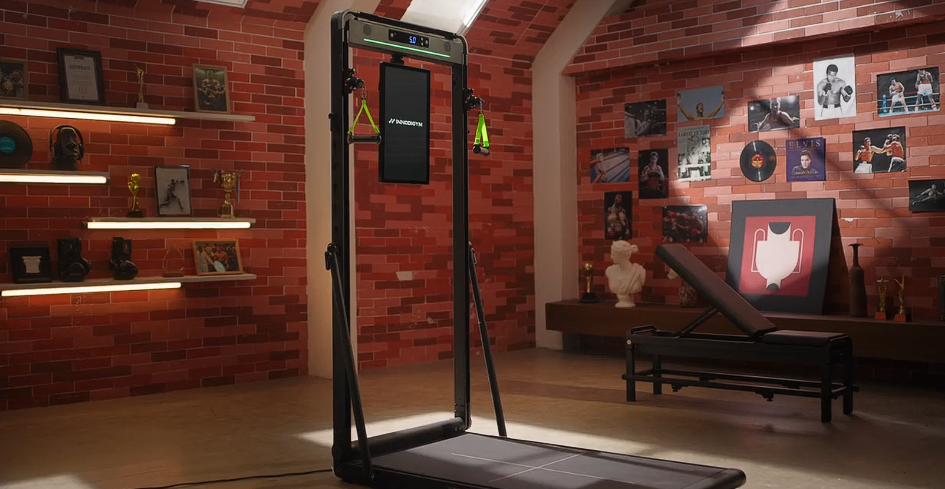
Key Product Features
The OMNIX1 utilizes a dual-servo motor-driven smart resistance system, integrating two independently adjustable 2-60kg digital resistance units, a squat rack, various selectorized strength training stations, and an assisted pull-up system into a single device. This allows users to seamlessly transition between different training stations without interrupting their workout rhythm.
This design directly addresses the core challenge of limited space in home gyms. Traditional setups require separate dumbbell racks, squat racks, and multi-functional trainers, each occupying significant space. The OMNIX1 replaces physical weight plates with motor-driven digital resistance. The responsiveness and long-term stability of the dual-servo system under high-load, continuous switching conditions are critical engineering metrics determining the fluidity of the seamless transition experience.
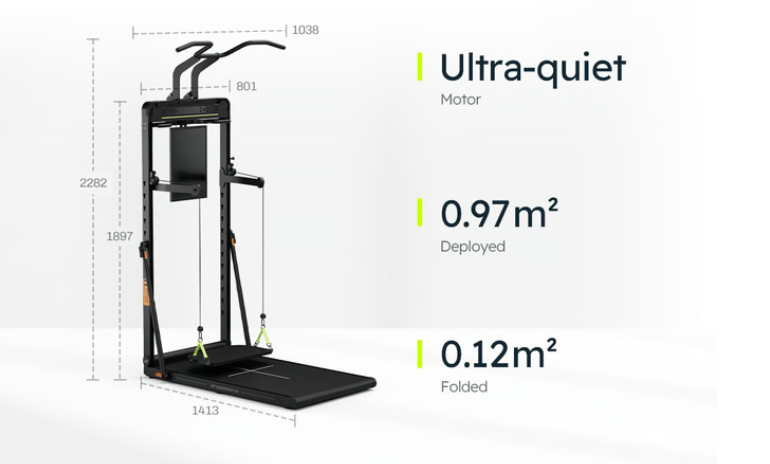
The machine features a high-strength aluminum alloy frame, complemented by precision CNC machining, aiming to deliver a smoother, quieter, and more realistic strength training feel. Its ultra-quiet motor design enables users to train at any time without disturbing cohabitants, which is particularly important for those in apartments or shared living spaces.
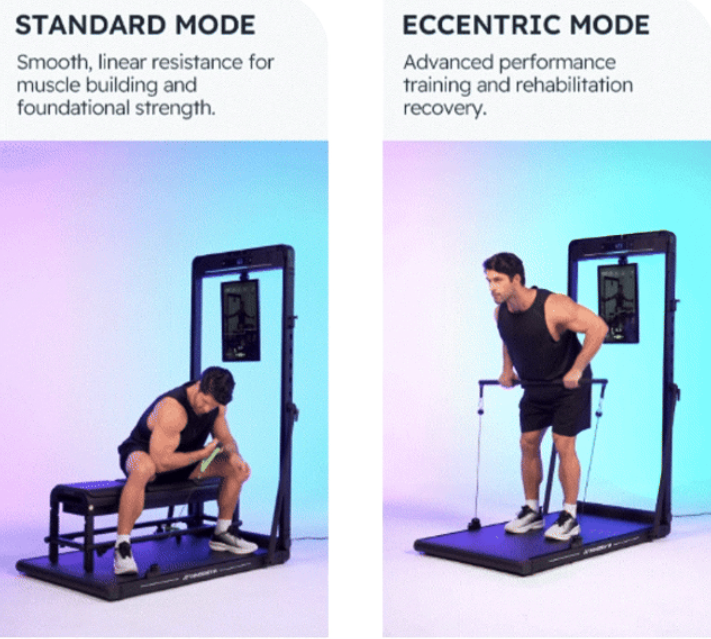
The realism of digital resistance, compared to traditional weight plates, has long been a point of contention. For professional trainers, a key detail during real-world testing is whether the resistance curve simulated by the servo motors can replicate the natural inertia of weight plates during the eccentric contraction phase (e.g., the lowering phase of a squat).
Ultra-Compact Foldable Design
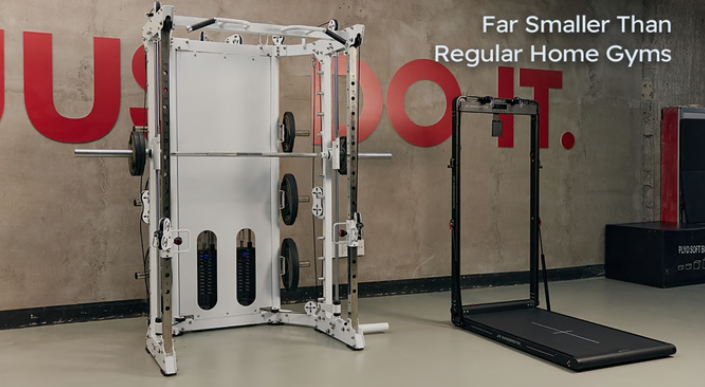
The device supports complete folding for storage, occupying a mere 0.12 square meters, specifically designed for space-constrained home environments. It also includes reserved interfaces for future functional expansion.
This footprint is remarkably aggressive; most all-in-one training towers require dedicated wall or floor space. The OMNIX1 attempts to achieve an almost invisible presence when folded. The ease of unfolding/folding the mechanism and whether the folded unit's weight allows for single-person relocation are crucial details for the actual deployment experience, for which independent third-party review data is not yet available.
Intuitive Interface and Training Modes
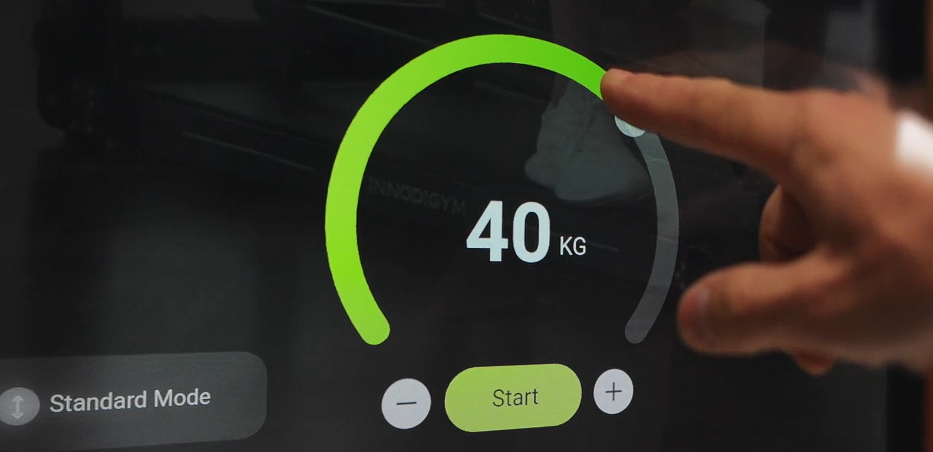
The device features an upgraded LED control panel, wrapped in a fabric material to present a cleaner, softer, and more premium aesthetic. This design allows it to integrate more naturally into modern home spaces, avoiding the industrial look of traditional fitness equipment.
Users can freely choose between four modes, each focused on different training effects, to build targeted strength training plans. The long-term durability and stain resistance of fabric material on fitness equipment, compared to traditional plastic or metal panels, pose certain maintenance considerations that users will need to monitor over extended use.
Evolving Software and Future Innovations
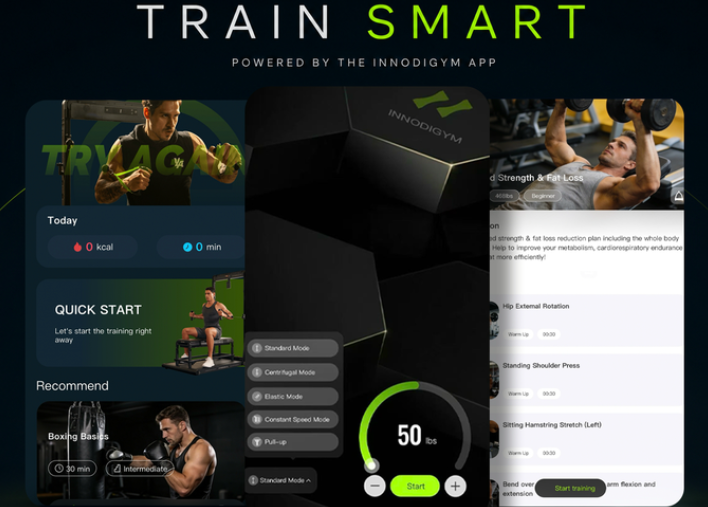
The brand has committed to continuously rolling out smart personalized training programs and adaptive training features through App updates, with the first updates scheduled to begin in October 2026. More notably, INNODIGYM has revealed it is developing the world's first laser-based strength training motion tracking system for intelligent form correction, with this technology currently planned for release in the second half of 2027.
This implies that early OMNIX1 users are investing in a continuously evolving software platform rather than a static, one-time hardware purchase. Laser motion tracking, as a forward-looking technology still in development, carries significant uncertainties regarding its actual implementation timeline and functional completeness. Purchasing decisions should primarily be based on currently confirmed hardware features, rather than future promises that are yet to be delivered.
INNODIGYM is a brand under Xiamen Renhe Sports Equipment Co., Ltd., a company specializing in the R&D of smart home fitness equipment. It currently holds 84 patents and exports products to global markets including Europe, Asia, North America, South America, Africa, and Oceania, with established partnerships in countries like Russia, the UK, Canada, the US, Germany, New Zealand, Turkey, Spain, and Thailand. The brand's previous P1 series (P1Plus, P1Max, P1Lite) successfully completed crowdfunding on Kickstarter and Indiegogo and have been delivered. Third-party fitness equipment review media have positively evaluated the P1 series for its compact design and digital resistance adjustment, recognizing its market positioning as a compromise between high-end wall-mounted smart gyms and older, space-consuming training racks. The OMNIX1 appears to be a crucial step for the brand towards a more premium, all-in-one product line.
Global Market Analysis and Competitive Landscape
The smart home fitness equipment market is substantial, with varying estimates from different institutions. Several research firms project the 2024 market valuation to be between $1.8 billion and $3.2 billion, with an anticipated CAGR of 4% to 12.5%, reaching $3.5 billion to $6.7 billion between 2032-2034. The discrepancies primarily stem from whether cardio equipment (treadmills, bikes) is combined with strength training equipment in the statistics. Growth drivers include increasing health awareness, more time spent at home due to continued hybrid work models, and the rapid penetration of AI and IoT technologies in fitness equipment. However, budget-sensitive consumers still face a significant acceptance barrier for premium connected fitness equipment priced above $2,000, which is a core factor limiting market penetration speed.
In terms of competitive landscape, Tonal is the market benchmark for wall-mounted smart strength training systems, holding a leading position in the high-end home fitness market with its mature digital resistance technology and AI-guided coaching features. However, its products require permanent installation on a load-bearing wall, making them unsuitable for renters or users with limited space. Speediance's GymMonster series is the closest competitor to the OMNIX1 in the all-in-one integrated machine segment, also emphasizing AI resistance adjustment and compact design. Vitruvian offers a similar multi-functional training experience with a floor-based rack structure. A common characteristic of these brands is their established AI coaching software ecosystems, whereas the OMNIX1's smart training programming features are still in an early stage, scheduled to begin rolling out in October 2026.
The OMNIX1's differentiation primarily lies in its combination of a fully foldable design, ultra-low footprint, and dual-servo dual-resistance stations. Its folding storage capability goes a step further than wall-mounted solutions like Tonal, but its software ecosystem maturity currently lags behind platforms like Tonal and Speediance, which have been operating for years. This means the OMNIX1's current competitiveness largely relies on the hardware itself—its foldable design and quiet operation—while its long-term competitive advantage in software remains to be proven.
OMNIX1 attempts to achieve an almost invisible presence when folded.