xLeanTR1 Dual-Form Robot Cleaner Raises Over $2M on Kickstarter
Campaign Teardown · · PledgeRadar Editorial
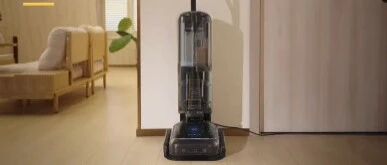
The xLeanTR1, a dual-form floor cleaning robot from xLeanRobotics, integrates a robot vacuum and a handheld wet vacuum into a single device. It operates autonomously for whole-house cleaning, but when faced with spills like drinks, kitchen grease, or pet paw prints, it can transform into a handheld mode in about one second by attaching a handle, allowing for direct user control.
Campaign Overview
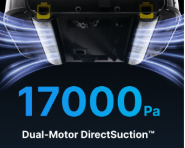
The cleaning system features a dual-motor DirectSuction™ system, boasting a claimed 17,000Pa suction power. It uses two approximately 10.4-inch roller brushes operating at 2x400 RPM, continuously spraying clean water. This setup is designed primarily for dust, hair, and solid-liquid mixed stains. The robot can cover up to 150㎡ on a single charge, positioning itself for deep cleaning of hard floors rather than traditional vacuuming and mopping. It's important to note that the TR1 currently does not support carpet or rug cleaning and will actively avoid them.
The project launched on Kickstarter on April 21, 2026, and concluded on June 20, running for 60 days. Kicktraq recorded approximately $1,855,600 from 1,748 backers by the official campaign end. The project then continued with Late Pledges, bringing its cumulative total to approximately $2.11 million from over 2,000 backers.
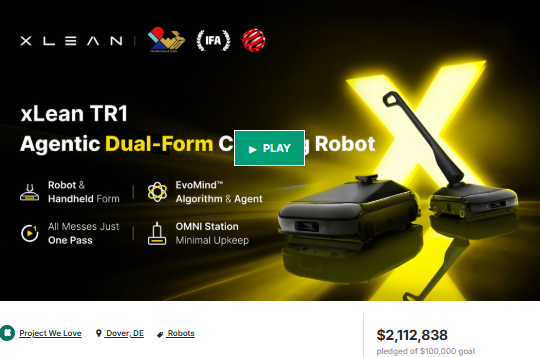
Dual-Form Design: Robot and Handheld in One
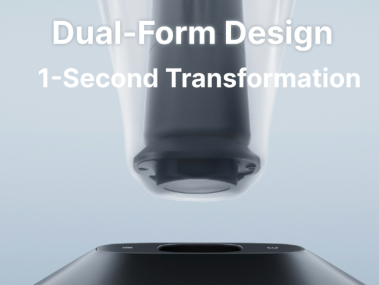
The TR1's most distinctive feature is its RobotForm + Handheld Form, essentially merging a robot vacuum and a wet vacuum into a single unit.
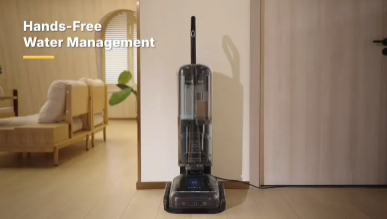
Normally, it functions as an autonomous floor cleaning robot. However, when spills like milk, sauces, or pet messes suddenly occur, users can attach a handle, secure it with an electronic lock, and switch to handheld wet vacuum mode in about one second.
This addresses a long-standing dilemma in robot cleaning: while robots are ideal for daily automated maintenance, dealing with a small, sudden heavy stain often proves quicker by hand than waiting for the robot to re-plan its route. The TR1 allows users to directly take over the same cleaning module.
To alleviate the burden of the unit's weight in handheld mode, the product incorporates omnidirectional power assistance, with drive motors aiding forward and backward movement. The official Red Dot 2026 jury specifically highlighted this dual-form switching as one of the product's most outstanding engineering designs.
Specialized Cleaning for Mixed Stains
Unlike typical robot vacuums primarily designed for dust, debris, and hair, the TR1 targets different challenges.
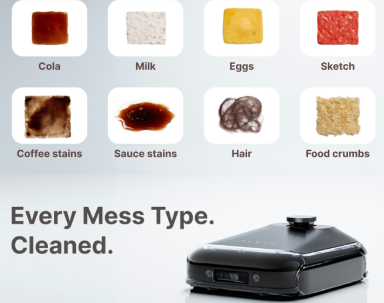
Its claimed 17,000Pa suction power, combined with the VortexMatrix Separation™ solid-liquid processing structure, specifically addresses scenarios that are difficult for traditional robots, such as beverages, food crumbs, and cat litter mixed with liquids. The machine itself has approximately 300ml of dirty water storage, allowing it to genuinely vacuum liquids into the machine, rather than just wiping them with a mop. This capability is fundamental to the dual-form concept.
If it could only vacuum dust, the handheld mode would offer little advantage. Its ability to directly handle wet waste and mixed stains truly brings it closer to the functionality of a traditional wet vacuum.
Advanced Roller Brush System
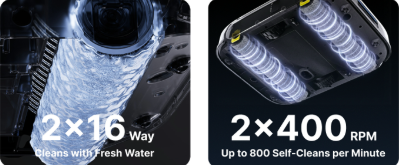
The TR1 utilizes two large roller brushes on its underside, departing from the single mop pad or rotating mop common in traditional robot vacuums. Each roller brush can reach up to 400 RPM.
The front roller brush breaks up and removes stains, while the rear roller brush performs a second cleaning pass and recovers residual water from the floor. This system, coupled with 2x16 clean water spray nozzles, ensures the roller brushes continuously contact relatively clean water during operation, rather than dragging an increasingly dirty mop across the entire house.
The dual roller brush design also positions the TR1 closer to high-end wet vacuums, effectively integrating a structure typically pushed by a user into an autonomous robot.
AI and Smart Navigation
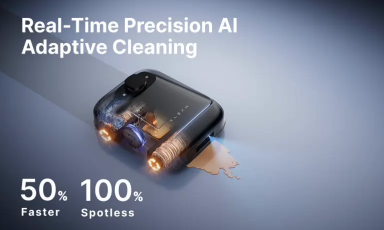
The TR1 does not apply a uniform cleaning intensity across all areas. Its front is equipped with a green laser stain sensor, which, combined with the EvoMind™ Algorithm, assesses the degree of floor contamination in real-time. For heavily soiled spots, the robot increases its cleaning intensity, while for ordinary areas, it employs a faster cleaning strategy.
Concurrently, the navigation system integrates sensors such as 360° dTOF LiDAR and RGB-D vision. The manufacturer claims it can identify over 400 types of household obstacles, including power cords and pet waste.
Its AI goes beyond merely adding a chat interface; it aims to integrate real-time understanding of detected stains and appropriate cleaning methods directly into the robot's operational logic.
As traditional robot vacuums gain more features, their app interfaces—with maps, zones, no-go areas, and scheduling—become increasingly complex. The TR1 takes a different approach.
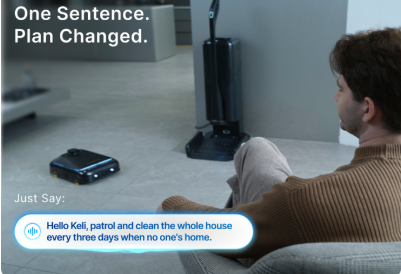
The EvoMate™OS incorporates natural language interaction, allowing users to simply state commands like 'clean the entire house every three days,' and the system automatically converts it into a cleaning task, eliminating the need to manually adjust settings within the app.
The brand also emphasizes self-evolution as a key aspect of the TR1. In its Kickstarter FAQ, the company states that the system will leverage user operation data from handheld mode to understand human cleaning methods for different stains through reinforcement learning, subsequently improving the robot's path planning, obstacle avoidance, and cleaning strategies.
However, this aspect largely pertains to long-term software capabilities, and the ultimate extent of its 'Self-Evolving Intelligence' will require validation from long-term use by official users.
Automated Maintenance and Company Background
Another challenge posed by high-intensity wet cleaning is that the robot itself can get dirty. The TR1's accompanying OMNIStation automatically replenishes clean water, collects dirty water, and separates solid and liquid waste.
Upon returning to the station, the system uses hot water, up to approximately 75℃, to clean the roller brushes, dirty water channels, and other components. It then employs hot air, around 65℃, for drying, which helps reduce odors caused by prolonged dampness of the roller brushes. The station features a bagless design, with dry waste collected in a separate bin, eliminating the need for continuous purchases of disposable dust bags.
This project marks Granular Evolution (Shanghai) Robotics Co., Ltd.'s debut on Kickstarter. However, the team is not new to consumer robotics; xLean's core members hail from technology companies like DJI, XREAL, and Roborock, with expertise spanning robotics, AI, and materials. The team also secured a Series A funding round of tens of millions of US dollars late last year, suggesting that project delivery is unlikely to face significant issues.
Market Positioning and Strategy
The TR1 enters a substantial market. According to the latest data from Grand View Research, the global robotic vacuum cleaner market is projected to reach approximately $3.837 billion in 2025 and grow to about $8.614 billion by 2033. The broader global vacuum cleaner market is estimated at approximately $16.4 billion in 2025. However, this market is also highly saturated.
Brands like Roborock, Ecovacs, and Dreame have pushed robot vacuums and mops to advanced stages, incorporating features such as robotic arms, hot water mop washing, automatic water refilling/draining, and AI visual obstacle avoidance. Simply increasing suction power no longer creates significant product differentiation.
The TR1 carves out a different path: the robot handles cleaning when unattended, while the handheld mode addresses immediate spills and stains.
This approach consolidates what a household might typically purchase as separate robot vacuums and wet vacuums into a single product.
Naturally, the trade-offs are evident: the crowdfunding price of around $999 is not low, the overall structure is more complex than a standard robot, and it currently only handles hard floors, without direct carpet cleaning capabilities. However, the cumulative funding exceeding $2 million suggests that backers were not simply paying for another robot vacuum with slightly better specs.
Instead, they invested in a new, easily understandable product logic: a device that cleans autonomously and can also be used for immediate spot cleaning. In a highly mature cleaning robot market, this dual-form factor is the xLeanTR1's most valuable selling point, though it could also be a point of contention. Whether combining two established product categories into one device will gain sustained market acceptance remains to be seen.
The dual-form factor itself is the xLeanTR1's most valuable product differentiator.