ChatGPT Ads for Founders: Understanding Conversion Challenges and Testing Strategies
Market Trends · · PledgeRadar Editorial

ChatGPT advertising has recently entered the testing pipeline for many advertisers. However, a common challenge has emerged for those investing real money: ads generate clicks, but often fail to deliver significant sales or qualified leads. Many advertisers are spending their budgets without understanding the root cause. To assess ChatGPT's true value, it's crucial to understand how it differs from established platforms like Google and LinkedIn. Google Search excels at capturing active search intent, while LinkedIn is ideal for reaching audiences based on professional identity. ChatGPT ads, conversely, rely more on conversational contexts and a user's immediate needs.
User Intent vs. Purchase Readiness
Users might be comparing software, researching a problem, or seeking solutions. While this conversational context offers valuable relevance, a user in research mode isn't necessarily ready to purchase. High relevance, in this case, doesn't always equate to strong purchase intent.
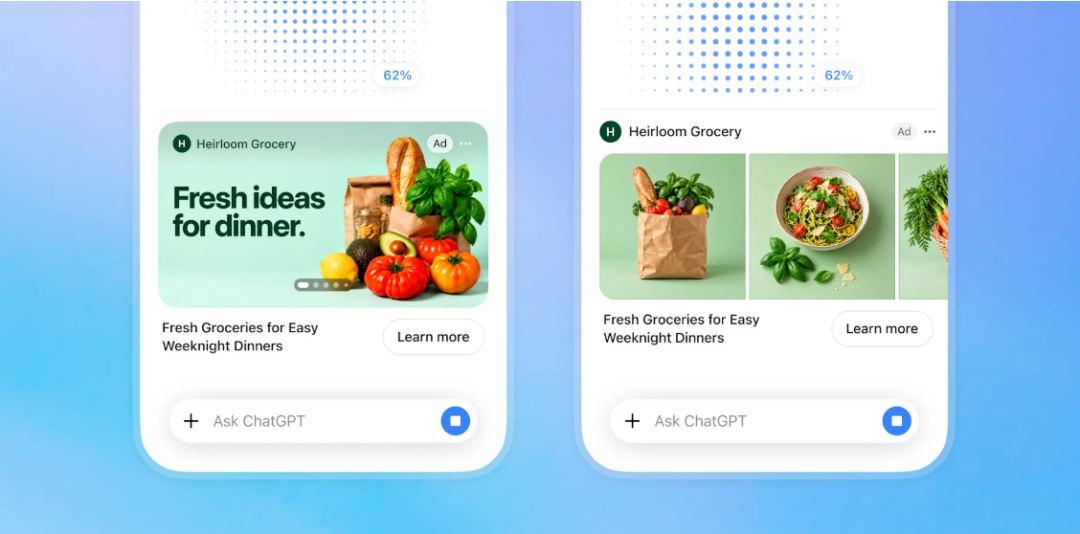
Why Clicks Don't Convert
Firstly, user intent differs significantly. For instance, a user searching 'Best Mountain Camping Tents' on Google is typically in the product comparison phase. In contrast, a user asking ChatGPT 'how to buy a mountain tent' might still be in the early stages of exploring their needs. Directing this exploratory traffic to a landing page optimized for immediate purchase can create a disconnect.
Secondly, the audience scope is currently limited. According to OpenAI's official statements, ads are progressively rolling out to eligible Free and Go users in select regions. Advertisers cannot assume that all ChatGPT users are reachable ad audiences, a point particularly relevant for B2B advertisers.
Evolving Attribution and Optimization Capabilities
ChatGPT already features a self-serve Ads Manager and is continuously expanding its click attribution, conversion data integration, and third-party measurement capabilities. In an update announced on October 5th, OpenAI further integrated measurement partners like AppsFlyer, Adjust, and TripleWhale, and is exploring geographic experiments to evaluate the incremental impact of ads.
While this means advertisers are gaining more measurement tools, the platform remains in a rapid iteration phase. It's crucial not to assume it possesses the mature optimization and diagnostic systems found in platforms like Google Ads.
Effective Testing Strategies for Advertisers
Match creative to user needs. Instead of solely highlighting product features, it's more effective to directly address potential user problems, allowing the ad to seamlessly integrate into the current conversational context.
Implement layered conversion paths. For products with longer decision cycles, monitor content interactions, qualified visits, registrations, qualified leads, and final sales, rather than focusing solely on last-click CPA.
Independently validate incremental value. Set up separate budgets and UTMs, then combine CRM data, conversion metrics, and subsequent sales to determine if these users genuinely represent new customers, rather than existing customers simply using a different entry point.
Strategic Approach to New Channels
At this stage, ChatGPT is best viewed as a new channel requiring validation, rather than a direct replacement for established, mature media platforms. While experimentation is encouraged, avoid immediately switching all your ad spend or adopting a 'cheaper alternative' mindset. What truly warrants sustained attention isn't whether it can generate clicks, but whether those clicks can translate into sustainable business value. The worth of a new channel is ultimately proven by incremental customers and real revenue, not just traffic data. Stay vigilant; in today's competitive landscape, earning revenue is challenging, so protect your investments wisely.
The value of a new channel is ultimately proven by incremental customers and real revenue, not just traffic data.